
See also


 25.11.2026 05:13 AM
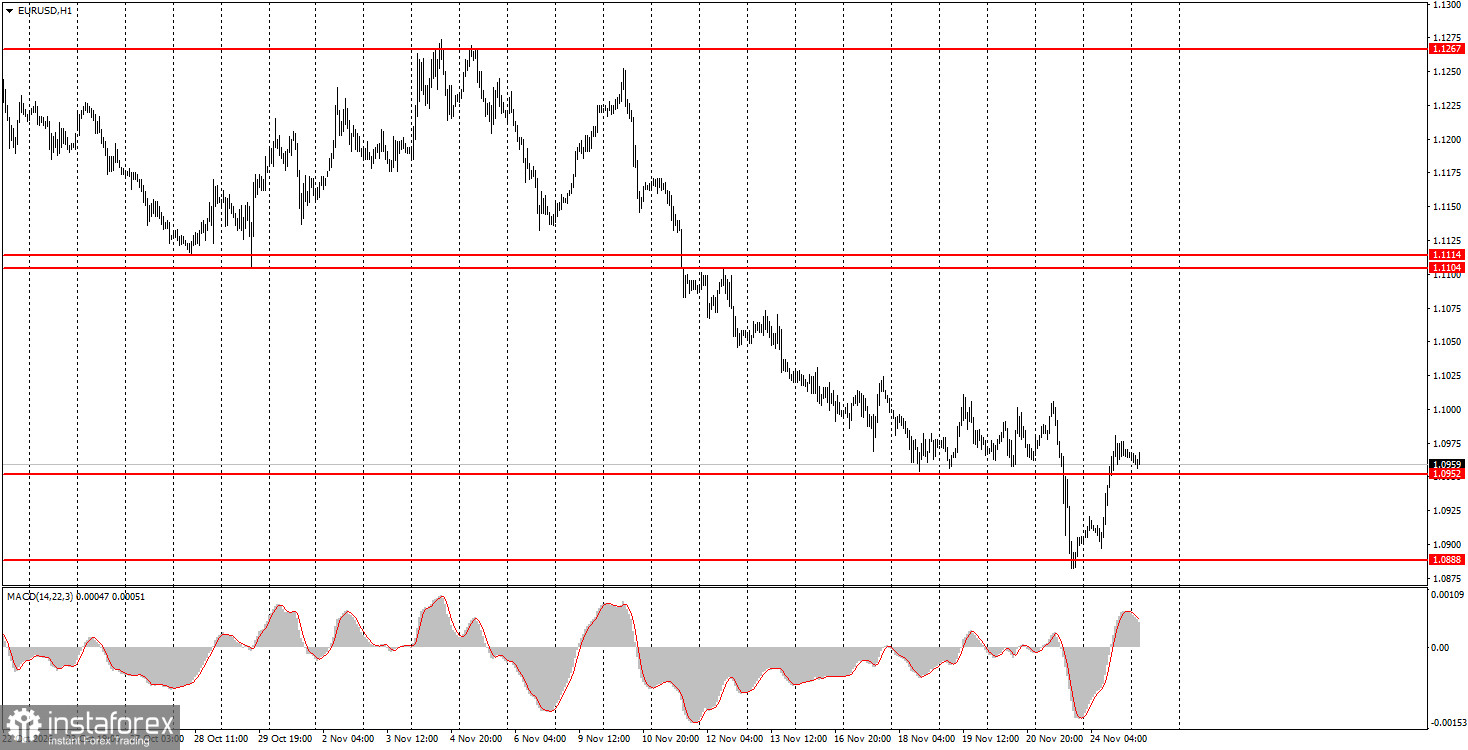
On Tuesday, EUR/USD unexpectedly showed growth. Were there any local fundamentals supporting euro strength? No — no events or releases during the day could plausibly have driven the move. Instead, we saw a technical retracement after prolonged selling (three months for the euro, two weeks for the pound). This again demonstrates a now-obvious fact: in recent months, price action has been largely disconnected from fundamentals and macro news. Dollar strength shows no consistent link to fundamental data. Increasingly, respected analysts point to capital-flow dynamics as the driver: market participants are reallocating capital between instruments and currencies, and those flows — not specific news — are driving FX moves. Thus, the euro rose yesterday without a clear fundamental trigger and could easily resume its decline today.
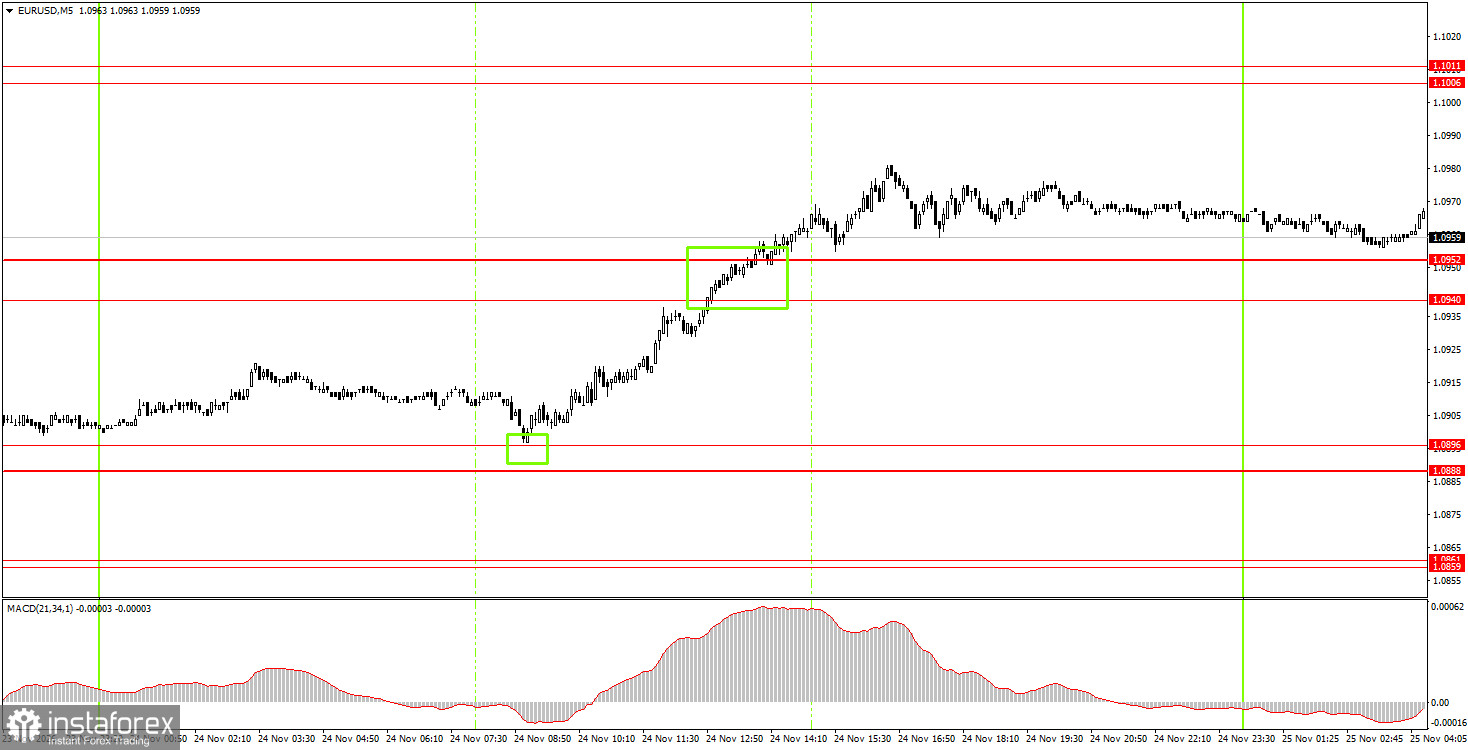
On the 5-minute TF, two strong trading signals formed on Tuesday. Early in the European session, price bounced from the 1.0888–1.0896 area, giving novice traders a chance to open long positions. Later, price cleared 1.0940–1.0952, allowing longs to be held. By the end of the day, those trades could have been closed for about 60 pips profit.
On the hourly timeframe, EUR/USD continues a three-month downtrend and has not managed a meaningful correction. Given recent months' events, we do not believe the euro had reasons for such a long, sharp fall with virtually no retracement. At present, the dollar looks overbought, and many euro-supportive factors are being ignored.
On Wednesday, novice traders may consider new short positions if price consolidates below 1.0940–1.0952, targeting 1.0888–1.0896. Consider long positions on a rebound from 1.0940–1.0952, targeting 1.1006–1.1011.
On the 5-minute TF consider these levels: 1.0797–1.0804, 1.0859–1.0861, 1.0888–1.0896, 1.0940–1.0952, 1.1006–1.1011, 1.1104–1.1114, 1.1198–1.1218, 1.1267–1.1275, 1.1366–1.1377, 1.1461–1.1474. Wednesday's key U.S. release is the PCE price index for October (the Federal Reserve's preferred inflation gauge), which can trigger volatility; other scheduled releases are secondary.
Price levels (areas) of support and resistance — levels that serve as targets when opening longs or shorts or as sources of signals.
Red lines — channels or trendlines that display the current trend and indicate the preferred trading direction.
MACD indicator (14,22,3) — histogram and signal line — an auxiliary indicator that can also be used as a source of signals.
Important speeches and reports (listed in the news calendar) can strongly affect a currency pair's movement. Therefore, when they are released, one should trade as cautiously as possible or step aside to avoid a sudden price reversal against the prior direction.
Beginner forex traders should remember that not every trade can be profitable. Developing a clear strategy and money-management rules is the key to long-term success in trading.


