
See also


 25.11.2026 05:50 AM
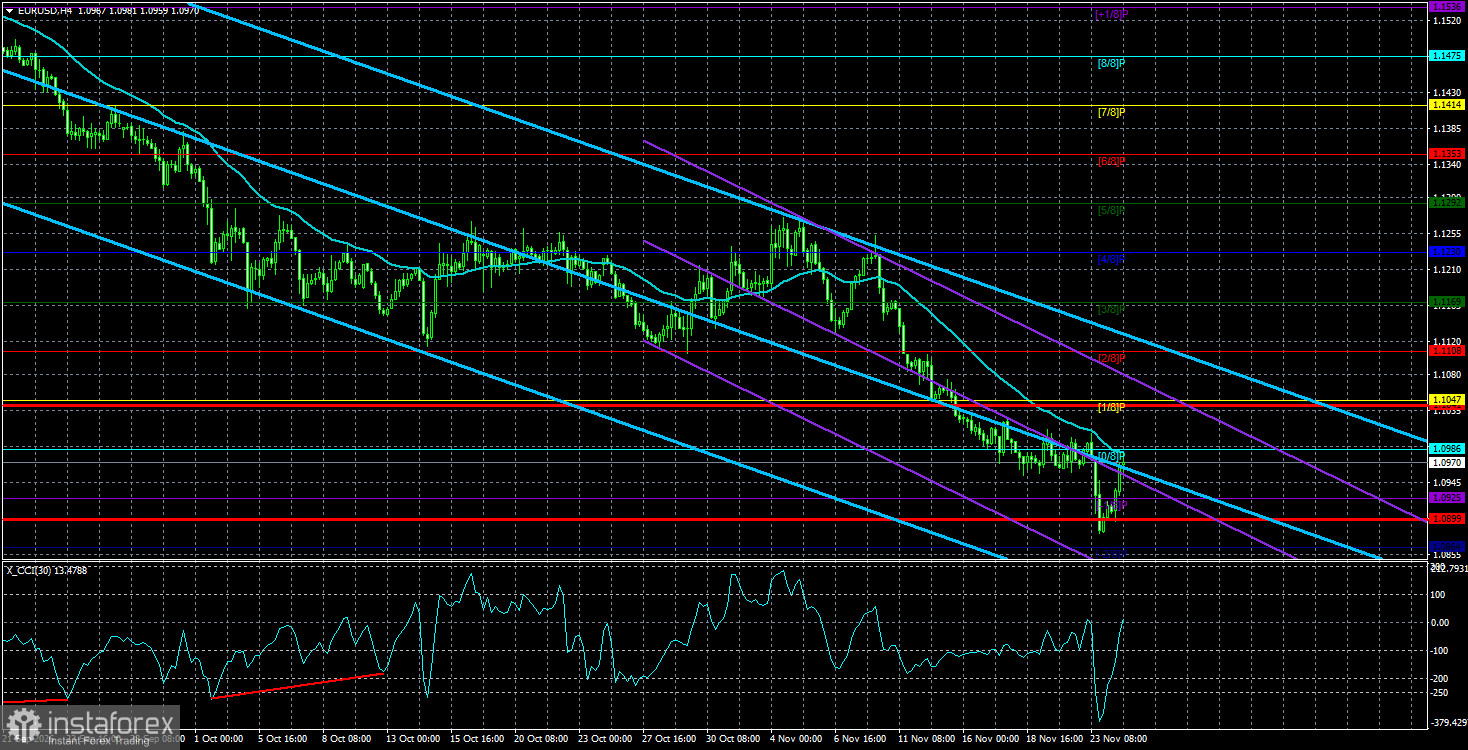
The EUR/USD pair posted a modest gain on Tuesday after collapsing by more than 100 pips the previous day for no clear reason. If anything, Monday's macroeconomic backdrop supported the euro — three of four German and euro-area PMIs beat expectations — yet the market continues to ignore either all macro data or at least the data that would support the euro. On Monday, New York Fed President John Williams also spoke and allowed for consecutive tightening at several meetings; in other words, the Federal Reserve could shift from "one hike per quarter" to "hikes at every meeting until the job is done." That theoretically gave the dollar fresh reason to rise earlier in the day, although the statement added nothing fundamentally new.
Let me ask this: if the market is still pricing hikes in December, January and March, what was it doing for the past three months when the dollar rose almost every day? In other words, how long will the dollar keep rising on the single theme of "strengthening hawkish Fed expectations"? We believe that factor has supported the dollar in recent months, but it isn't strong enough to prevent the euro from producing at least one meaningful correction over that period.
Interestingly, after three months of EUR/USD decline, analysts are finally acknowledging that the dollar's rise looks unnaturally strong. Better late than never. The key point is that this seemingly unjustified euro decline can end at any time—it will end when the market fully prices in future Fed tightening and traders start taking profits.
When that will happen is hard to say, so we recommend following technicals. To claim the 2026 downtrend is over would require a serious signal — for example, liquidity removal at a clear daily or weekly low, or a decisive break above the daily Kijun-sen line. In short, the market needs a strong signal that it is ready to stop indiscriminately buying the dollar. So far we do not see such a signal.
What was notable about FX markets on Tuesday? Aside from Fed and European Central Bank officials' remarks — which the market interprets in a single way — nothing. No major data were published, and secondary prints are pointless to consider because they have no impact on the pair or trader sentiment right now. The euro remains oversold and the dollar overbought. For now, we can only wait for the illogical, speculative fall to end and for genuine reversal signals to appear. On Tuesday, the euro managed a small rebound from its knees, but this is far from enough to call the downtrend finished.
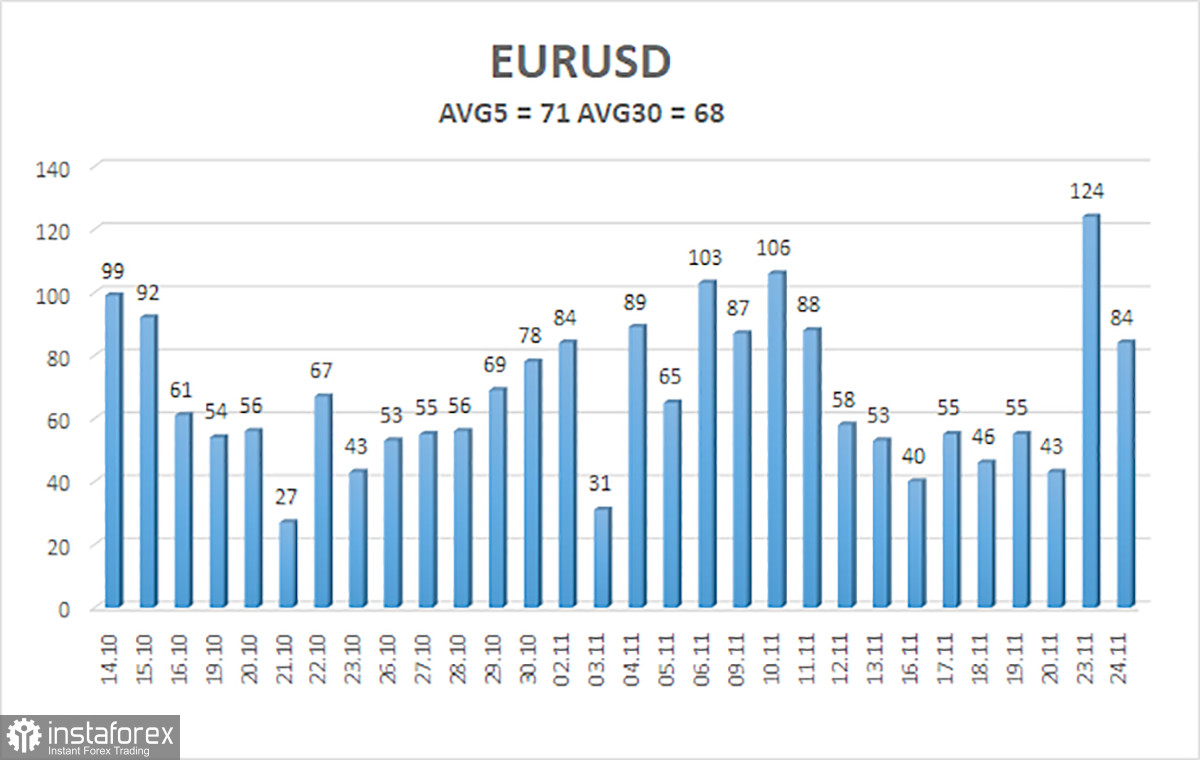
The average volatility of the EUR/USD pair over the last 5 trading days as of November 25 is 71 pips and is characterized as "average." We expect the pair to trade between 1.0899 and 1.1041 on Wednesday. The higher linear-regression channel points down, indicating a downward trend. The CCI indicator has again entered the oversold area — the fifth or sixth time in recent months — signaling a possible end to the decline.
S1 – 1.0925
S2 – 1.0864
R1 – 1.0986
R2 – 1.1047
R3 – 1.1108
EUR/USD remains in a downtrend with insufficient fundamental, macroeconomic, or geopolitical justification. The global fundamental backdrop for the dollar is negative overall, but in 2026, geopolitics first and then the Fed's hawkish tilt have provided strong support for the U.S. currency. Practically all other factors have been ignored over the past three months. With price below the moving average, consider shorts with targets of 1.0925 and 1.0899, since the trend remains downward. Above the moving average, consider long positions with targets of 1.1108 and 1.1169 — the illogical decline will end sooner or later.


