
See also


 26.11.2026 11:21 AM
On Wednesday, EUR/USD rebounded from the 1.0938–1.0954 support level, reversed in favor of the euro, and resumed its upward movement toward the 1.1081–1.1086 resistance level. Consolidation below the 1.0938–1.0954 support level would favor the US dollar and a resumption of the bearish trend toward the 1.0781–1.0797 support level. Bears are beginning to put up resistance against the bulls.
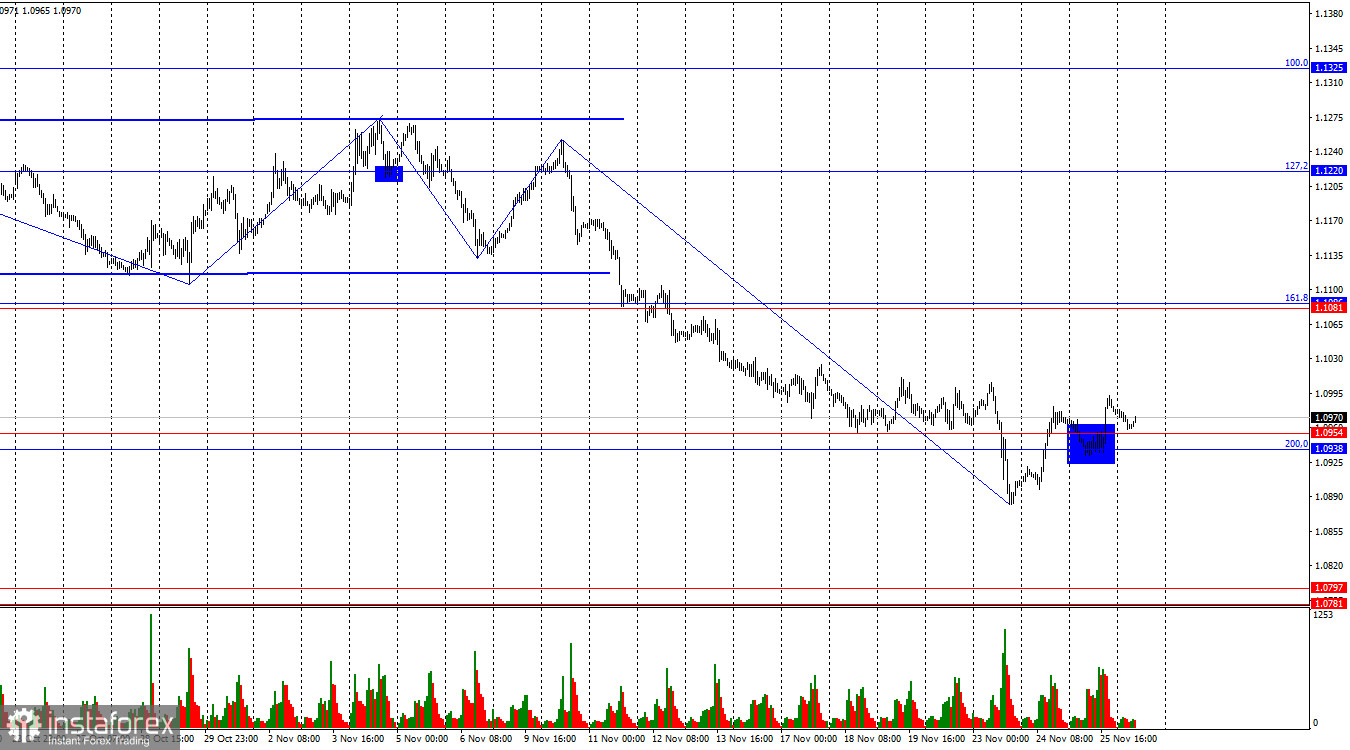
The wave structure on the hourly chart remains bearish. The latest completed downward wave broke below the previous low, while the new upward wave has not yet come close to the previous peak. Following the September FOMC meeting, traders expect at least one more round of monetary policy tightening by the end of the year and anticipate the possibility of two additional rounds next year. This factor continues to support the US dollar. The bearish trend can be considered over once two bullish waves have formed.
Wednesday's news background was relatively strong and interesting. It was reported that US core PCE inflation rose to 3.3% year over year in October, while the headline PCE index reached 3.8%. In both cases, traders' forecasts were almost exactly in line with the actual figures. In addition, the third-quarter GDP report showed that the US economy grew by 4.3%, exceeding expectations, while durable goods orders increased by 0.2%. Taken together, these three reports could have provided further support for the bears, as inflation continues to rise while the economy remains strong enough to ease concerns about its condition and allow the Fed to continue tightening monetary policy. However, for the second consecutive day, bears have made virtually no attempts to attack, although bulls also lack sufficient strength to launch a strong advance. Perhaps the market has already priced in the Fed's December and January policy tightening, which now seems almost certain? In this case, the euro's upward movement will continue. In any event, a technical buy signal is present and should be taken into account.
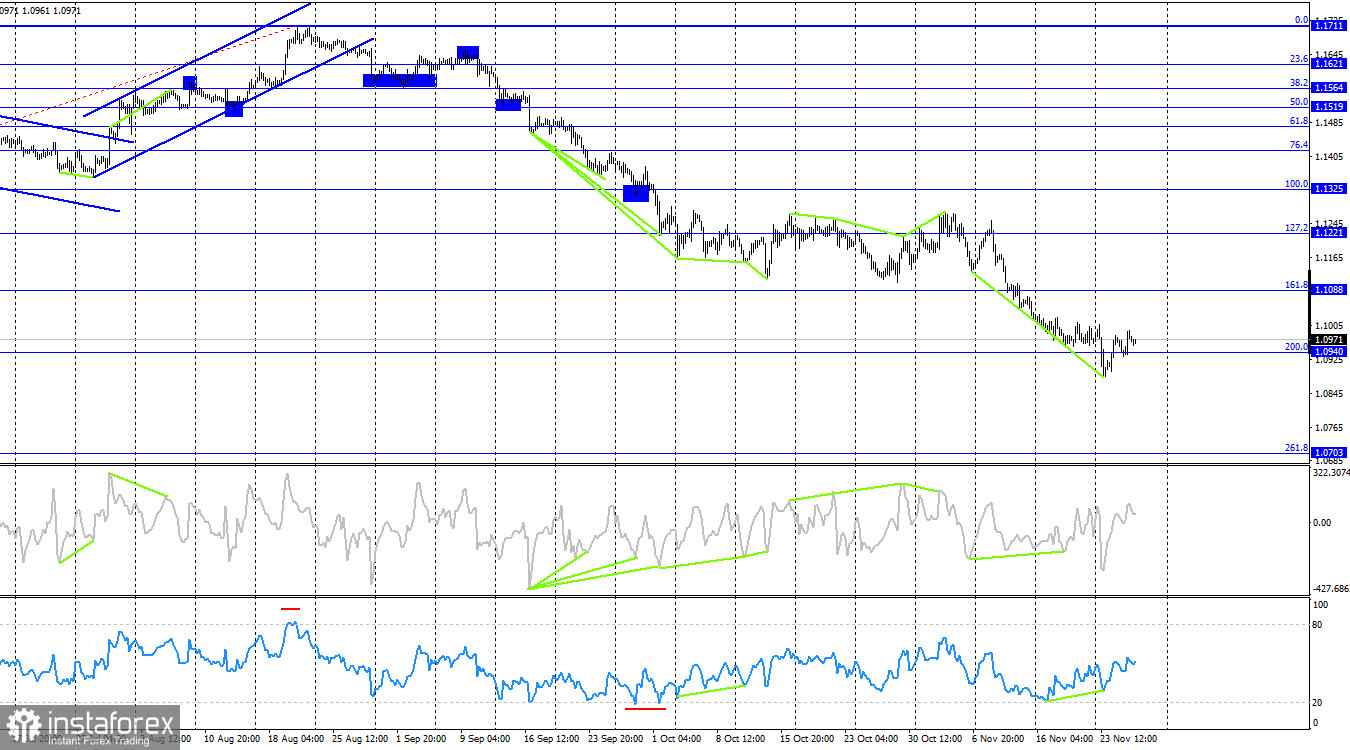
On the 4-hour chart, the pair reversed in favor of the euro after a bullish divergence formed on the RSI indicator. Therefore, the upward movement may continue toward the 161.8% Fibonacci level at 1.1088. Consolidation below 1.0940 would favor the US dollar and a resumption of the decline toward the 261.8% retracement level at 1.0703. No emerging divergences are currently observed on any of the indicators.
Commitments of Traders (COT) Report:
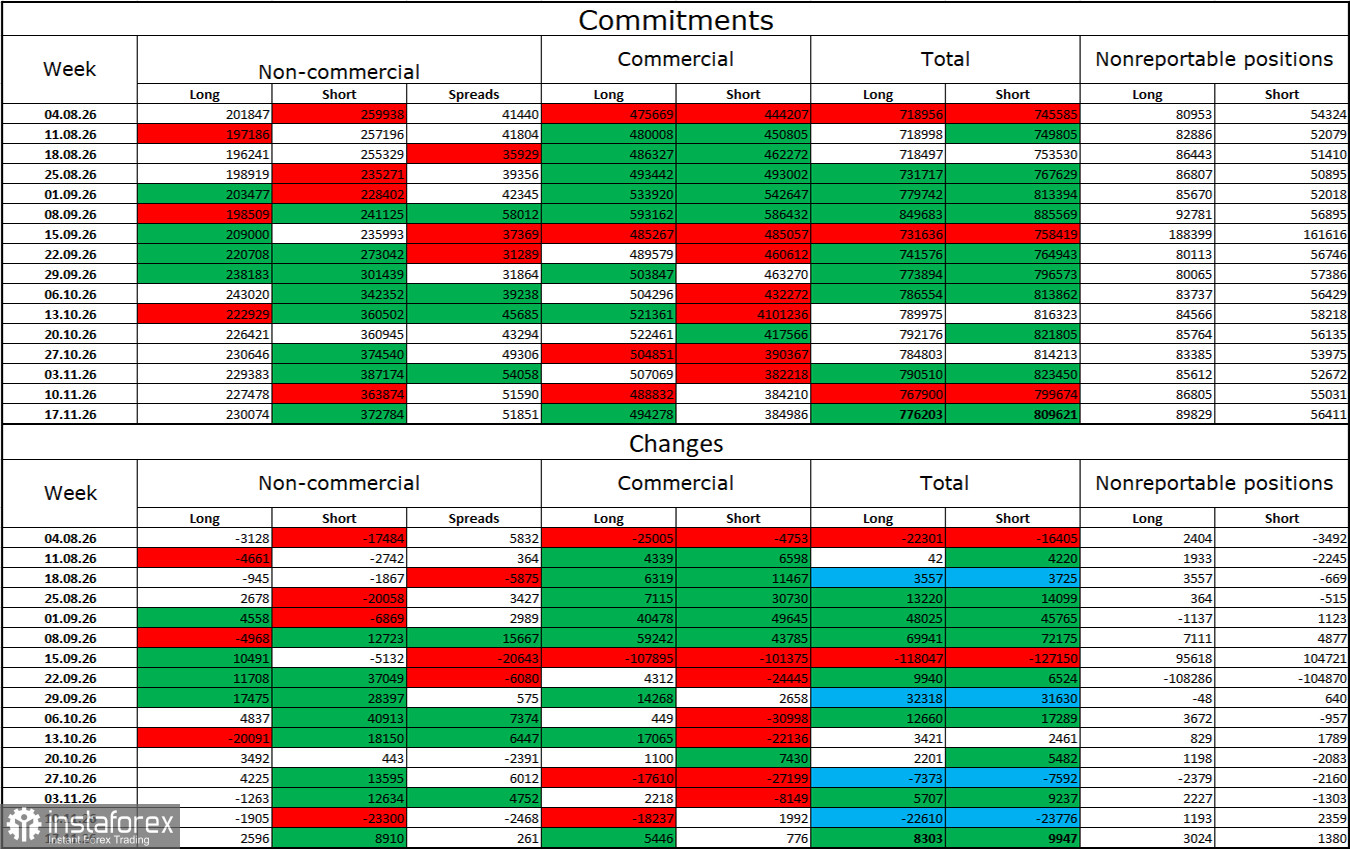
During the latest reporting week, professional traders opened 2,596 Long positions and 8,910 Short positions. The total number of Long positions held by speculators currently stands at 230,000, while the number of Short positions amounts to 373,000. Bears maintain their lead, and the euro continues to be sold more frequently than it is bought. This can be attributed to the complicated geopolitical situation in the Middle East and the Fed's willingness to continue tightening monetary policy. The market believes that the Fed will raise interest rates for as long as necessary.
Overall, over the long term (several years), market participants continue to view the euro with considerable interest. Admittedly, various global events, which have been abundant in recent years, influence investor sentiment and put pressure on risk-sensitive currencies. Furthermore, 2026 could set a record in terms of the number of events that could not have been anticipated in advance. Therefore, the euro is waiting for its opportunity.
US and EU Economic Calendar:
On November 26, the economic calendar contains one event, which is unlikely to attract traders' attention. The economic news background will have no impact on market sentiment on Thursday.
EUR/USD Forecast and Trading Tips:
Buying opportunities arose following a rebound from the 1.0938–1.0954 level on the hourly chart, with a target of 1.1081–1.1086. These positions can remain open today. Selling opportunities may arise if the pair consolidates below the 1.0938–1.0954 level on the hourly chart, with a target of 1.0781–1.0797.
The Fibonacci grids are drawn from 1.1325 to 1.1712 on both the hourly and 4-hour charts.


