
Lihat juga


 04.11.2026 09:12 AM
Last night, the euro rallied sharply against the dollar, the pound showed a similar surge, and the U.S. currency lost ground across most markets. The cause was the outcome of the midterm elections, in which Democrats won majorities in both the House and the Senate. The market's initial reaction is clear, but the persistence of this move will depend on what happens next with legislation, oil, and bond yields.
The new Congress in its renewed composition will convene in early January, and for Trump this is a significant defeat. Democrats will be able to block unwanted bills but will not be able to pass their own without his signature, and they lack the two-thirds majorities needed to override vetoes. Recall that on the eve of the vote Trump said he was ready to be "Mr. Veto," so the sides will have to seek compromises. Notably, if the president begins blocking high-profile health or broad-based social bills, that could further damage his approval—which, by NYT poll aggregates, is already among the lowest for presidents since World War II.
The election result is unlikely to change foreign policy much. The war with Iran began without formal Congressional approval—although Trump could have sought it—so I do not expect major shifts. A new escalation is still probable: Israel insists on continuing the conflict, and negotiations have stalled. Through the Strait of Hormuz shipments have been restored; Saudi, UAE, Iraqi, and Kuwaiti exports rose about 10% in October to a touch above 15 million barrels a day, but I believe a structural deficit remains, and Iranian strikes on Saudi and UAE facilities and infrastructure continue to affect prices. Oil supports inflation and weighs primarily on the U.S. economy, so a new flare-up would very quickly revive demand for the dollar and could end the current euro and pound rallies.
The dollar is falling despite solid data. JOLTS showed U.S. job openings at 7.5 million in September versus a 7.11 million forecast, yet these figures did not sustain the currency. On October 28 the Fed left rates at 3.75–4.00% with a 10–2 vote; two members dissented in favor of a hike, and a move at the December 9 meeting remains the market's baseline. It follows that dollar buyers are now waiting less for data than for new triggers, and the primary candidate for that trigger is Treasury yields.
For today, the calendar contains a lot of services-sector activity data for the eurozone. Manufacturing readings for the eurozone and the U.K. were broadly encouraging, and services give reason for cautious optimism. Eurozone services PMI is preliminarily expected at 51.7 versus September's 53.0, according to S&P Global. The decline is concerning, but the figure is preliminary; if it holds, I expect demand for the euro to remain more or less intact. The one problem area is France, where service activity is contracting, and the preliminary print is 48.8 versus 48.4 previously. If the data come in materially worse than forecasts, the euro would be affected to some degree, but I judge that outcome unlikely. U.K. services PMI is in good shape; the preliminary read was 53.1 versus 52.1 in September, and an upward revision would keep sterling's momentum. That matters ahead of Thursday, when the Bank of England is expected to raise rates from 3.75% to 4.00%; Megan Greene on October 20 argued for a hike, saying the labor market is tighter than previously thought.
The main focus today will be eurozone consumer price data for October. Inflation is forecast at 4.0% after 3.8% in September, with core inflation expected at 2.5%. Recall that inflation has accelerated since June—2.8% in June, 2.9% in July, 3.2% in August, 3.8% in September, and a projected 4.0% in October. It would be wrong to assume the ECB will remain dovish or even patient; I do not rule out a firmer, more aggressive approach. The deposit rate currently stands at 2.50% after two hikes in June and September, and the market expects a final move to 2.75% at the December 17 meeting, where the ECB will publish projections through 2029. If inflation exceeds economists' forecasts, that would support the euro at least temporarily.
Also due is the ISM services index for the U.S., forecast at 54.9—the same value as in September. If the print beats expectations, it will help the dollar in the near term, but it is unlikely to materially change the broader balance of forces. Separately, the U.S. Treasury will publish its quarterly refunding statement, and U.S. public debt has reached $40 trillion, so bond yields will remain in focus. With the dollar under pressure and no new statements from Trump, including on Iran, I lean toward further dollar weakness and lower yields—but everything can change quickly.
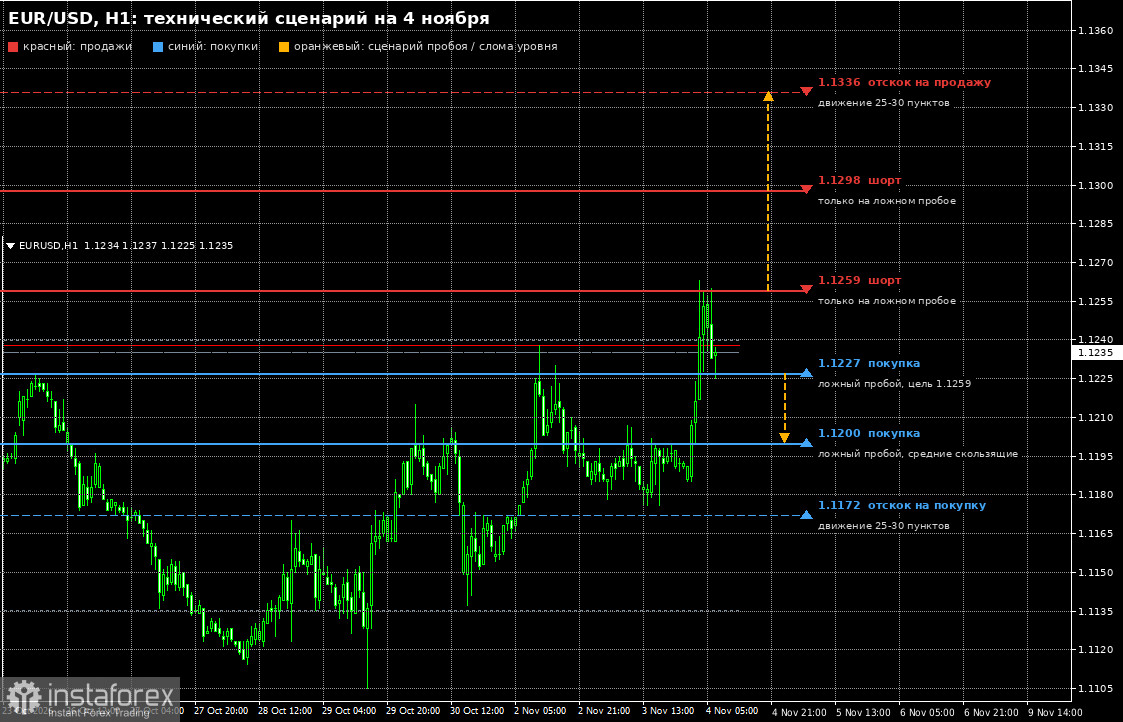
EUR/USD—for longs I see 1.1227 as an entry on a false break that can lead to 1.1259. A break beyond opens the path to 1.1298, with a more distant target at 1.1336, where I will look for short-on-bounce trades of 25–30 pips. I would consider short positions from 1.1259 and 1.1298 only if those turns prove false. If buyers at 1.1227 do not materialize, wait for a deeper correction toward 1.1200, where moving averages lie. A false break there would be a good long entry; I look to buy bounces from 1.1172, targeting 25–30 pips.
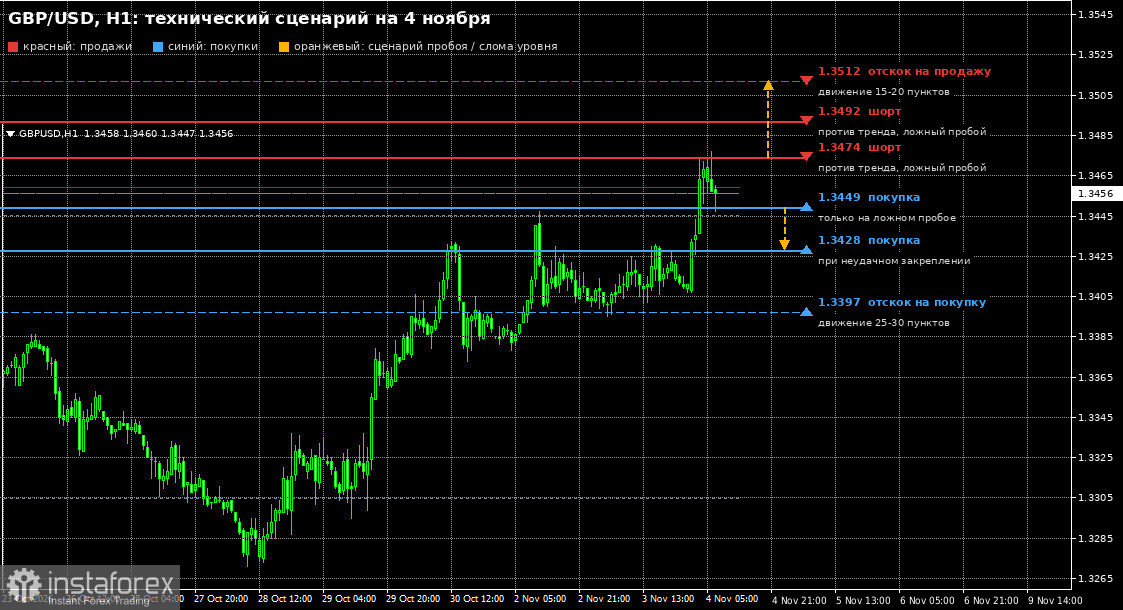
GBP/USD—a similar story: weekly highs have been updated, and, with a Bank of England hike expected Thursday, the pound has many cards to play. Strong services data would push it higher. A false breakdown to 1.3449 would be a cue to add longs. A break above 1.3474 and a retest would open a move to 1.3492 and 1.3512, which are today's primary upside targets; I will look to short bounces there for 15–20 pips. I allow counter trend shorts on false breaks at 1.3474 and 1.3492 if closes fail. If bulls at 1.3449 do not appear, sterling will likely correct deeper toward 1.3428, where longs are interesting on failed closes, while buys on a bounce from 1.3397 target 25–30 pips.
I lean toward the euro and pound retaining their advantage until eurozone inflation and the ISM print are released, because the dollar currently lacks support both from policy and from yields. How durable is this rally? That depends first and foremost on Iran: in the absence of new statements from Trump, downward pressure on the dollar is likely to continue, but any escalation would quickly restore dollar demand. The pound looks stronger than the euro thanks to the Bank of England meeting, while France's contracting services sector is a lingering downside risk for the euro. I will refrain from firm conclusions before the inflation release: much can change in a single day.


