
Lihat juga


 26.10.2026 03:41 PM
The euro rises on bad news and falls on good news. This usually happens when major market participants close positions ahead of an important event. There is little need to speculate about which event it is: the Fed meeting is keeping investors on edge. Given accelerating inflation, Kevin Warsh is expected to take a hawkish stance and signal a rate hike in December. If the Fed Chair fails to do so, EUR/USD will surge toward 1.13.
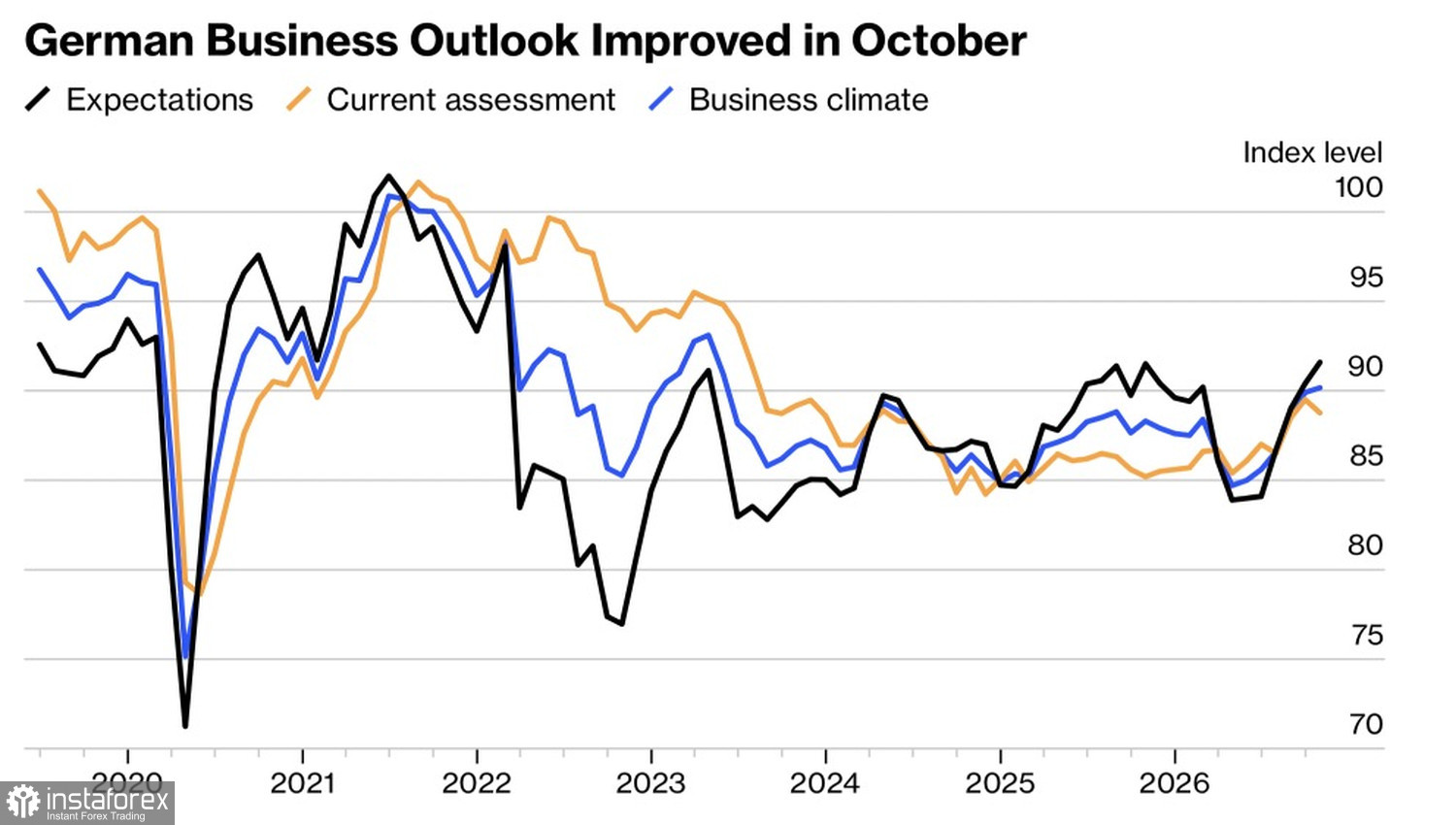
Against this backdrop, the euro's rally following disappointing European business activity data and its subsequent decline in response to the sixth consecutive improvement in Germany's IFO Business Expectations Index appear more predictable than unusual. When everyone is buying, there is an excellent opportunity to sell—and vice versa.
Germany's Business Climate Indices
Closing positions ahead of central bank meetings is not the only factor driving EUR/USD. The main currency pair is holding near the psychologically important 1.12 level, partly because oil prices have retreated from their highest levels in almost six months. The eurozone has to purchase crude oil at a significantly higher price than the United States. As a result, Brent's 85% rally since the beginning of the year poses far greater challenges for the eurozone economy than for the US economy. As soon as this pressure eases even slightly, the regional currency begins to recover.
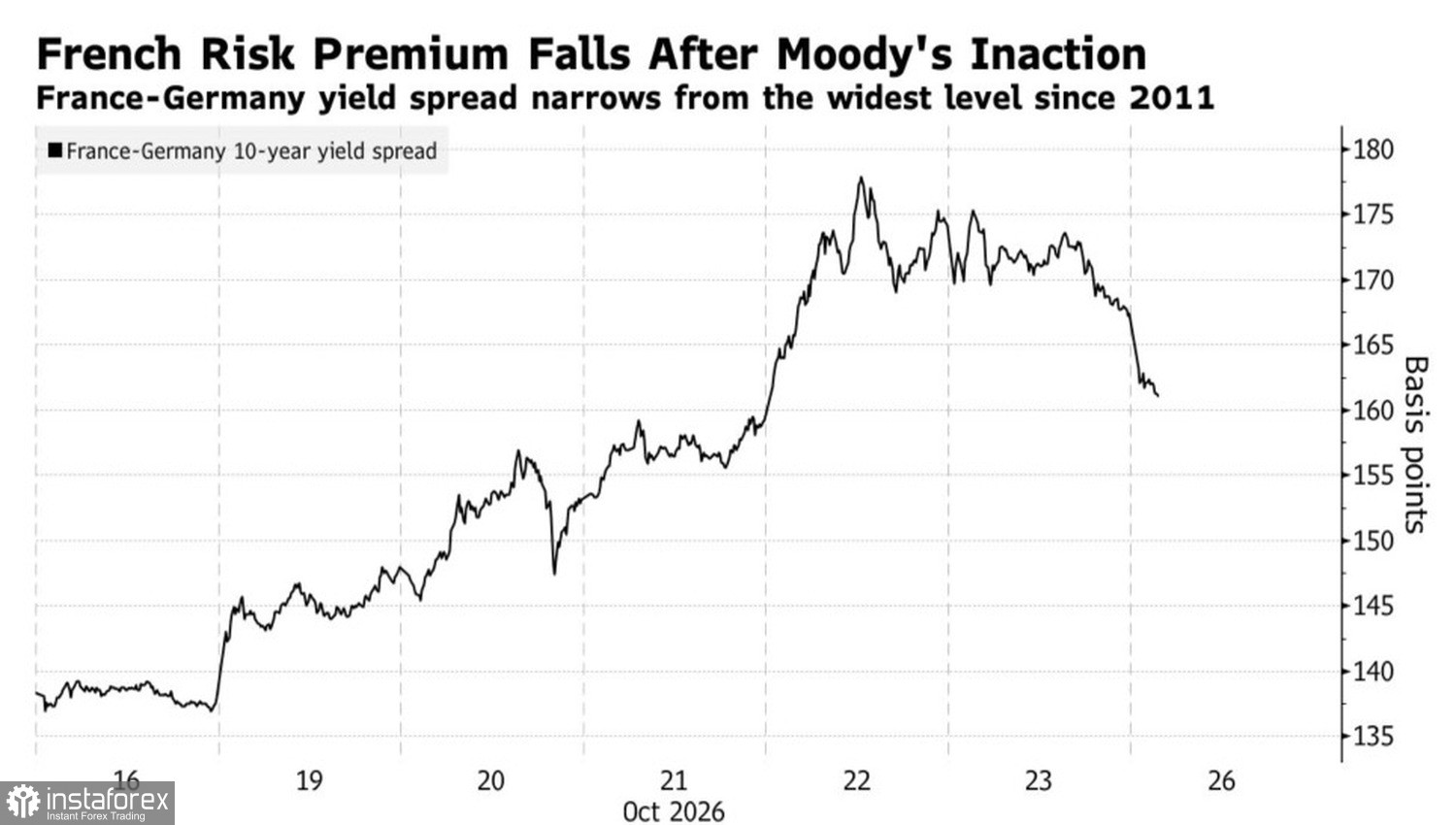
Market expectations also influenced EUR/USD, as investors sometimes adjust their positions ahead of an anticipated event and reverse them once the outcome is confirmed. The euro came under selling pressure amid expectations that Moody's would downgrade France's credit rating. However, the agency decided to maintain the rating, as its base-case scenario assumes that the National Assembly will approve the government's budget plan to reduce the deficit to 5% of GDP. As a result, the yield spread between French and German bonds narrowed, providing support for the euro.
Yield Spread Between French and German Bonds
Markets are gradually becoming accustomed to the political turmoil in Paris, while some investors believe the EUR/USD sell-off has gone too far. For example, Australia's second-largest pension fund has begun buying French bonds, considering their prices attractive. The view is that markets have overstated the risks of a recurrence of the European debt crisis and a tightening of the ECB's monetary policy. The time has come to buy assets at lower prices.
The Fed is likely to provide a clearer picture. Despite expectations that rates will remain unchanged while Kevin Warsh delivers hawkish signals, there is a possibility that events will unfold as they did in July. At that time, the Chair failed to clarify his position adequately, triggering a sharp decline in the US dollar.
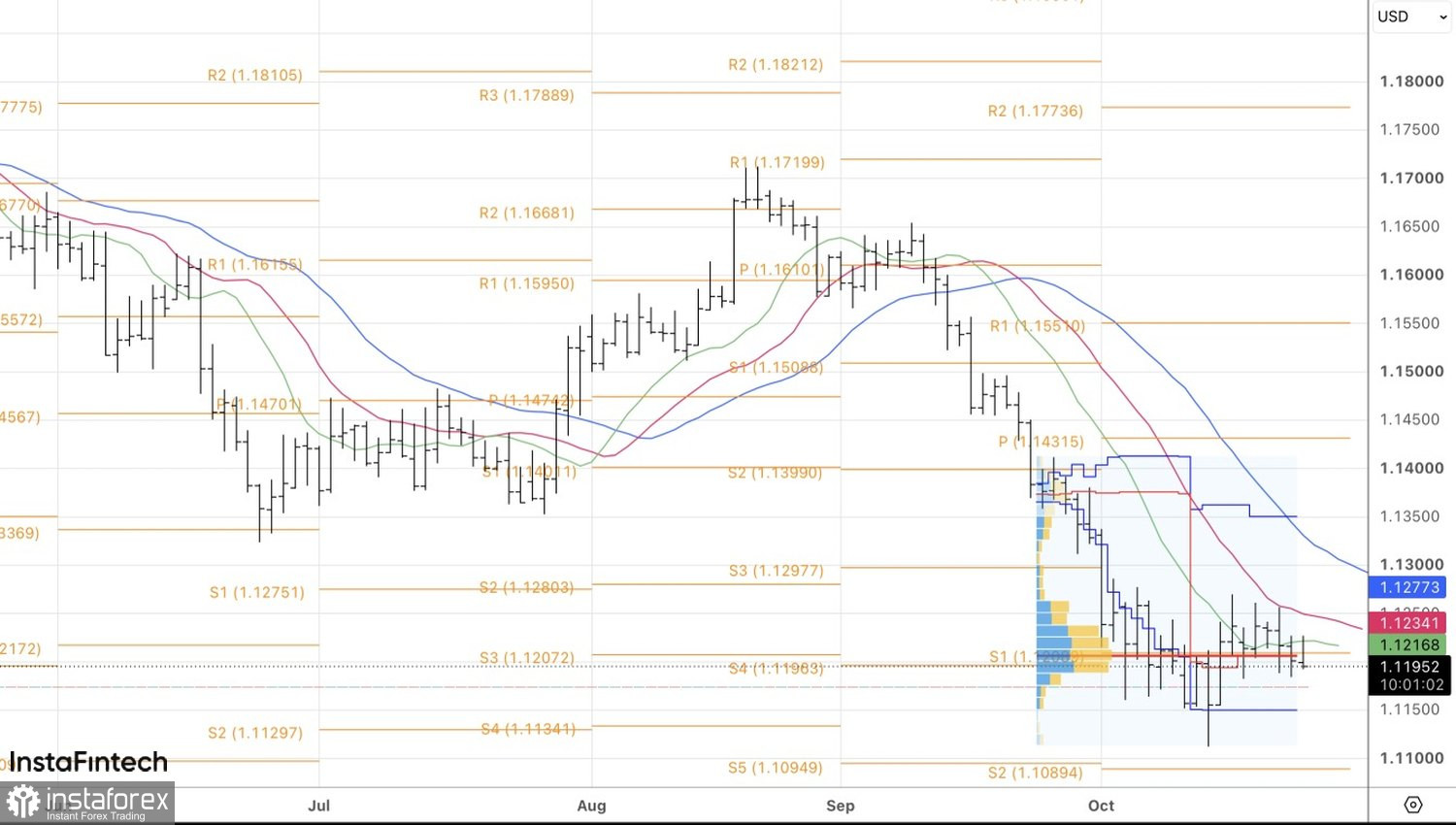
Technically, consolidation is intensifying on the daily EUR/USD chart within the 1.118–1.126 trading range. It makes sense to place pending orders to buy the euro at $1.126 and sell it at $1.118. The position should be maintained based on the closing level of the breakout candle.


