
Veja também


 05.12.2025 01:50 PM
The EUR/USD pair pulled back slightly on Thursday, but bulls held the support zone at 1.1645–1.1656. Therefore, a bounce from this zone today will favor the European currency and resume the upward movement towards the 38.2% corrective level at 1.1718. A consolidation of the pair below the 1.1645–1.1656 zone will increase the likelihood of a continued decline towards the support zone of 1.1594–1.1607.
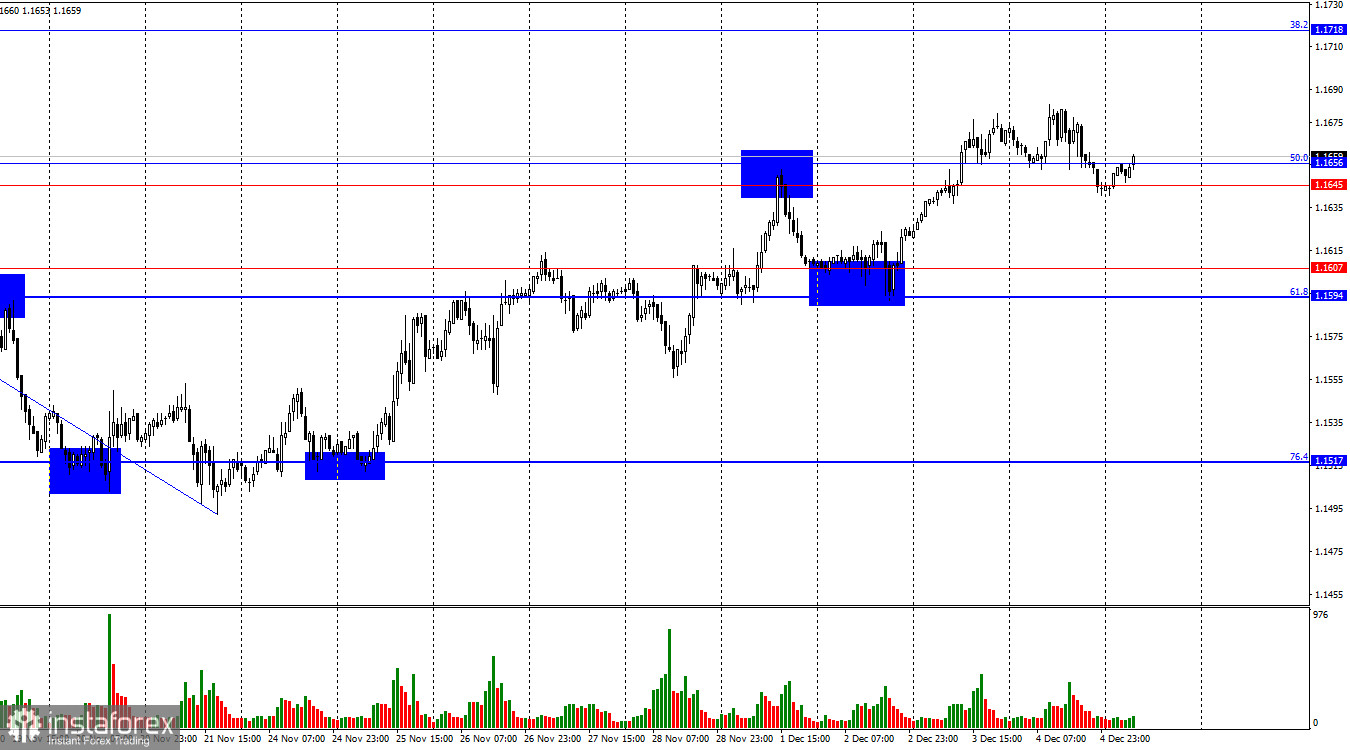
The wave situation on the hourly chart remains simple and clear. The last completed downward wave did not break the low of the previous wave, while the last upward wave broke the prior peak. Thus, the trend has officially changed to "bullish." It cannot be called strong, but in recent months, bulls have shown only one thing—weakness. The Federal Reserve's monetary easing should give them additional strength, as the European Central Bank has no intention of lowering interest rates in the near future.
On Thursday, traders took a brief pause following the atmospheric environment. Recall that on Wednesday, the ADP report on the US labor market essentially concluded the market's endless debate over whether the Fed will opt for further monetary easing next week. Since the ADP report came in significantly worse than even the most pessimistic forecasts, I believe the fate of interest rates is decided. I also want to note that the dollar is falling quite steadily. The first two monetary easing measures this year (in the fall) were openly ignored by traders, then they ignored the record "shutdown" in America, and now, with a third rate cut on the horizon, the dollar is falling calmly—no one in the market is panicking. Thus, bulls are still quite weak, and the market is hesitant to make long-term decisions, lacking data on the labor market, unemployment, and inflation, which will only be available after the FOMC meeting.
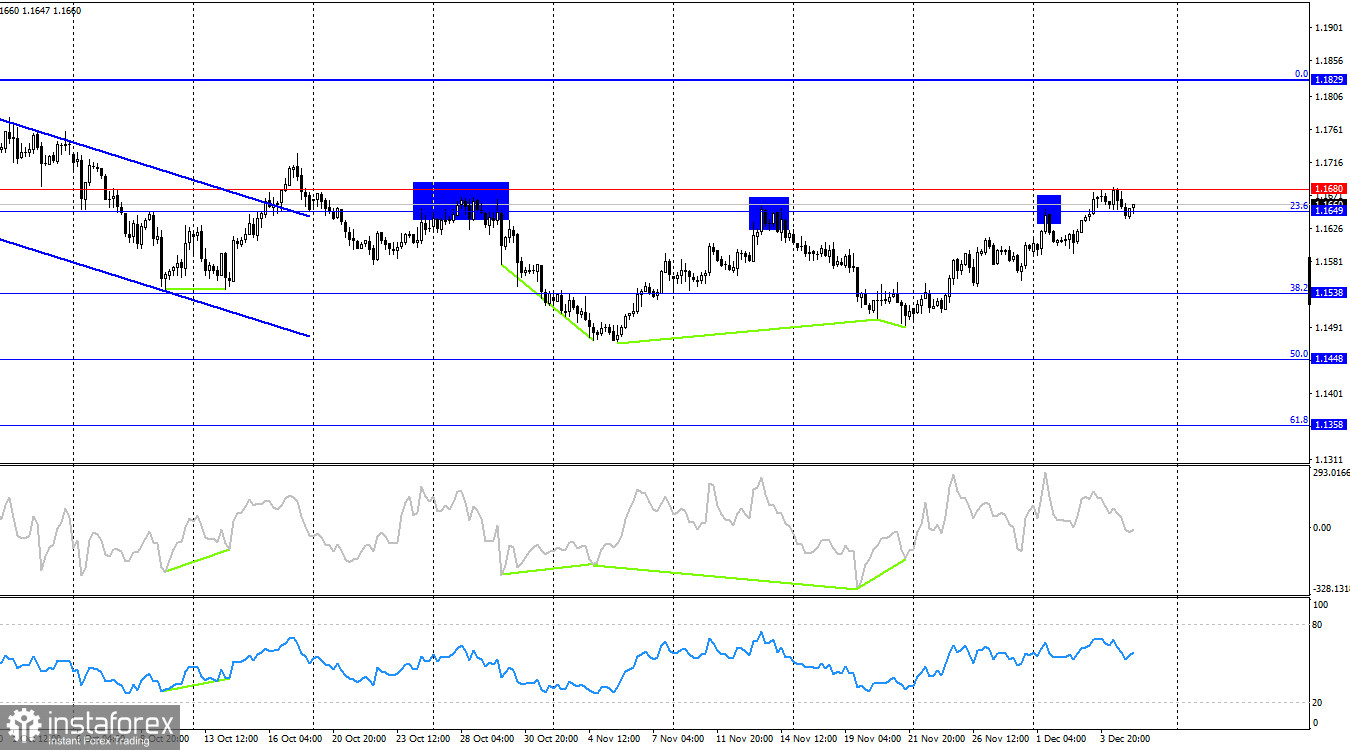
On the 4-hour chart, the pair has returned to the 1.1649–1.1680 resistance zone. A bounce from this zone will again favor the US dollar and lead to a decline toward the 38.2% Fibonacci level at 1.1538. A consolidation of prices above the resistance zone of 1.1649–1.1680 will increase the likelihood of continued growth toward the next Fibonacci corrective level of 0.0% at 1.1829. No developing divergences are currently observed in any indicators. The "bullish" trend has every chance of recovery.
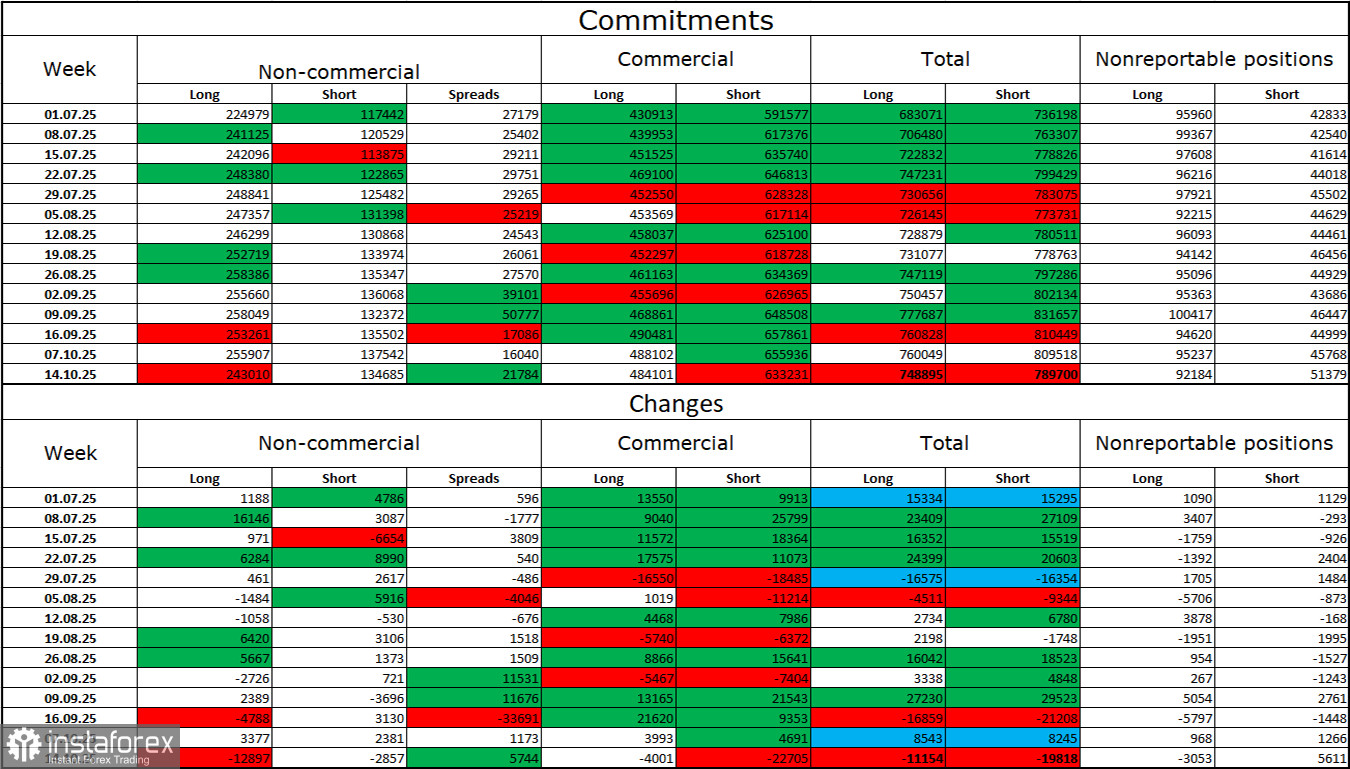
Over the last reporting week, professional players closed 12,897 long contracts and 2,857 short contracts. COT reports began to be released after the "shutdown," but the data is already outdated, as it pertains to October. The sentiment of the "Non-commercial" group remains "bullish," bolstered by Donald Trump and strengthening over time. The total number of long contracts held by speculators now stands at 243,000, while short contracts total 135,000.
For thirty-three consecutive weeks, large players have been shedding short positions and increasing long positions. Donald Trump's policies remain the most significant factor for traders, as they could create a host of problems with long-term and structural implications for America. Despite signing several important trade agreements, many key economic indicators are showing declines, and the dollar is losing its status as a "world reserve currency."
On December 5, the economic events calendar contains four entries, none of which stand out. The impact of the informational backdrop on market sentiment on Friday may be moderately influential throughout the day.
Short positions on the pair can be considered today if the pair closes below the 1.1645–1.1656 zone on the hourly chart, targeting 1.1594–1.1607. Longs can be opened from the bounce off the zone of 1.1594–1.1607 with targets of 1.1645–1.1656. The target has been reached. Today, longs can be opened with a target of 1.1718 upon a bounce from the zone of 1.1645–1.1656.
Fibonacci level grids are constructed from 1.1392–1.1919 on the hourly chart and from 1.1066–1.1829 on the 4-hour chart.


