
Veja também


 28.01.2026 10:44 AM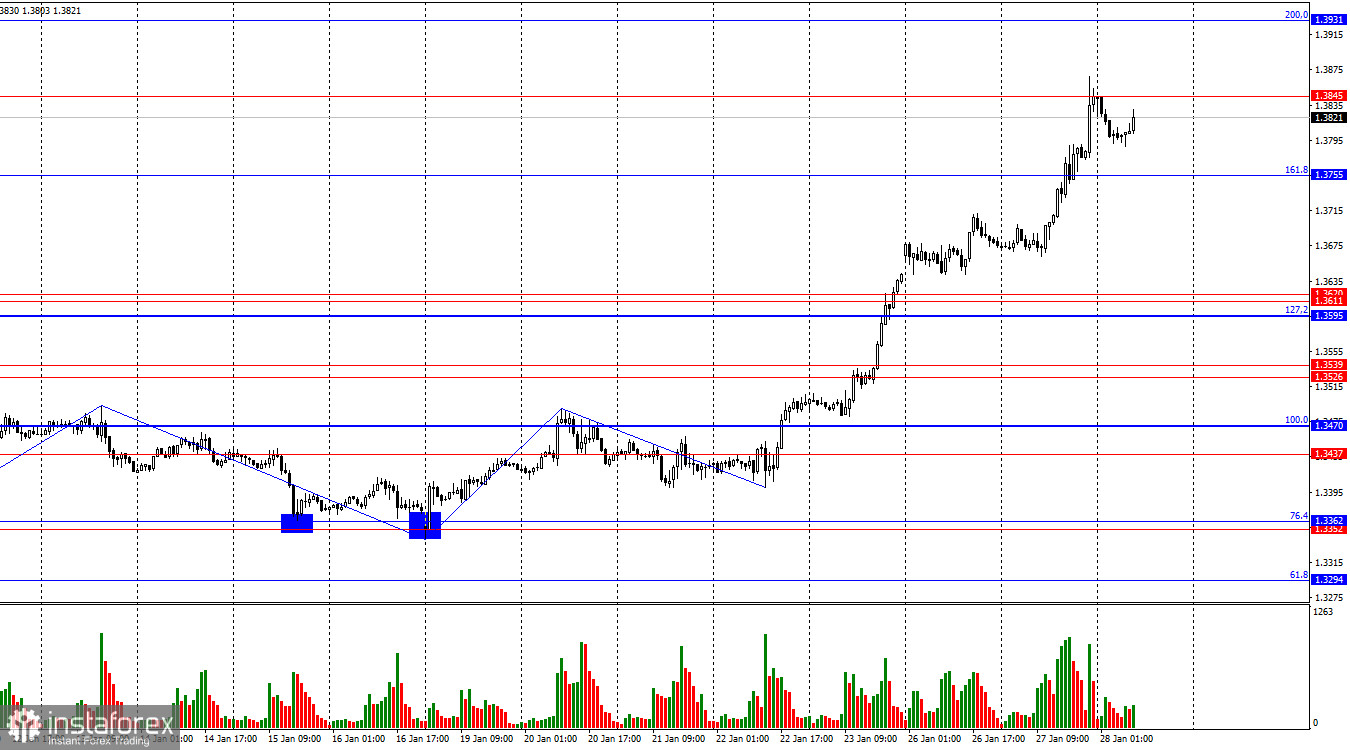
The wave structure remains "bullish." The most recent completed downward wave did not break the previous low, while the new upward wave broke the previous high. The news background for the pound has been weak in recent months, but the information background in the US is even worse. Donald Trump regularly provides support to the bulls, ensuring growth of the British currency.
The news background on Tuesday did not signal trouble for the dollar, but traders continued to price in a possible increase in tariffs for South Korea and Canada, interpreting them as a new escalation in Donald Trump's trade war. As a result, the dollar was falling almost all day, and in the evening Trump himself delivered the final blow by stating that a weak dollar is very good for the US economy. The FOMC meeting will take place this evening, and the key question today is whether the dollar will be able to recover at least slightly. At first glance, nothing threatens the dollar today. After strong growth, corrective pullbacks often begin, and the Fed is unlikely to decide on easing monetary policy parameters or signal readiness to cut rates at the next meeting. Thus, I believe the dollar will strengthen slightly today, but this recovery will not affect the long-term outlook in any way. Donald Trump himself welcomed the dollar's decline, which means the US government is fully satisfied with this course of events. Trump's policies continue to force bears (dollar buyers) to flee the market almost daily.
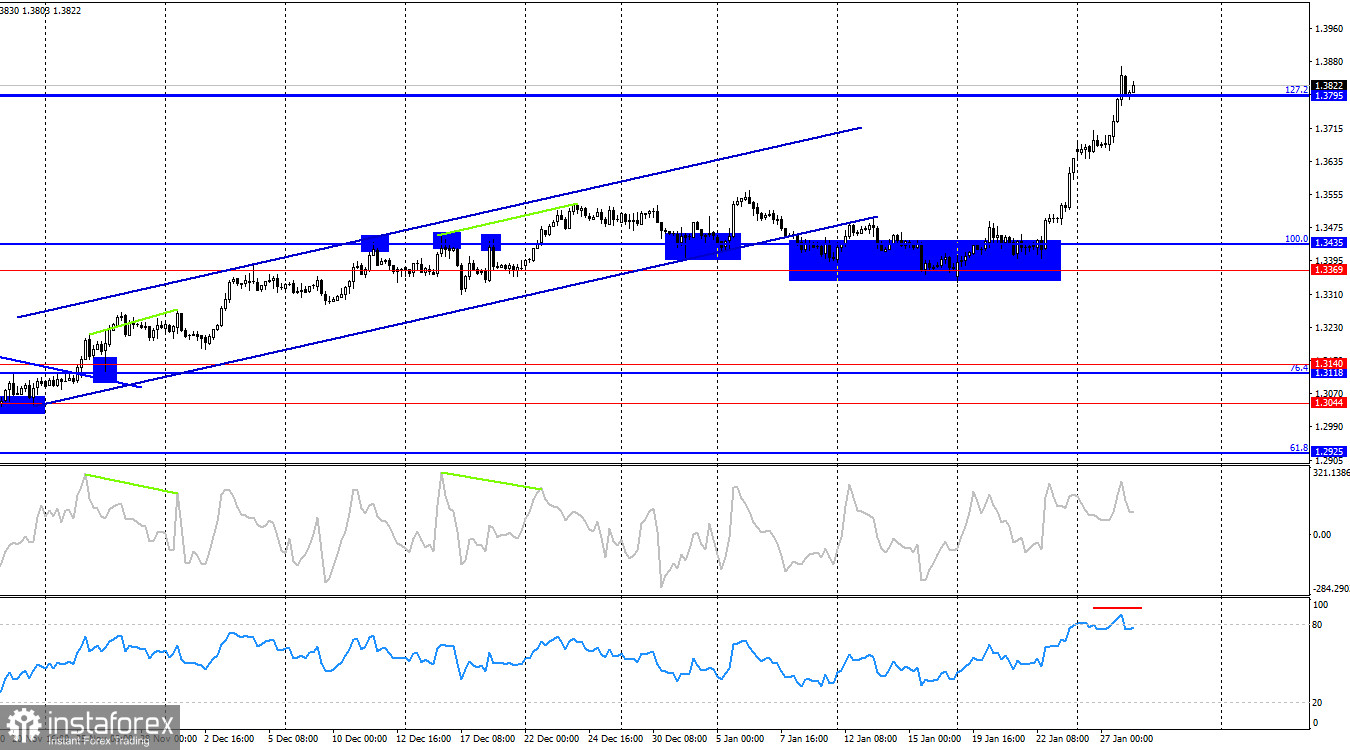
On the 4-hour chart, the pair rose to the Fibonacci 127.2% level at 1.3795. A rebound from this level would allow traders to expect a reversal in favor of the US dollar and some decline, though not a strong one. A consolidation above 1.3795 would increase the probability of continued growth toward the next level at 1.4020. No emerging divergences are observed today, but the RSI indicator is overbought, which may trigger a corrective pullback.
Commitments of Traders (COT) Report:
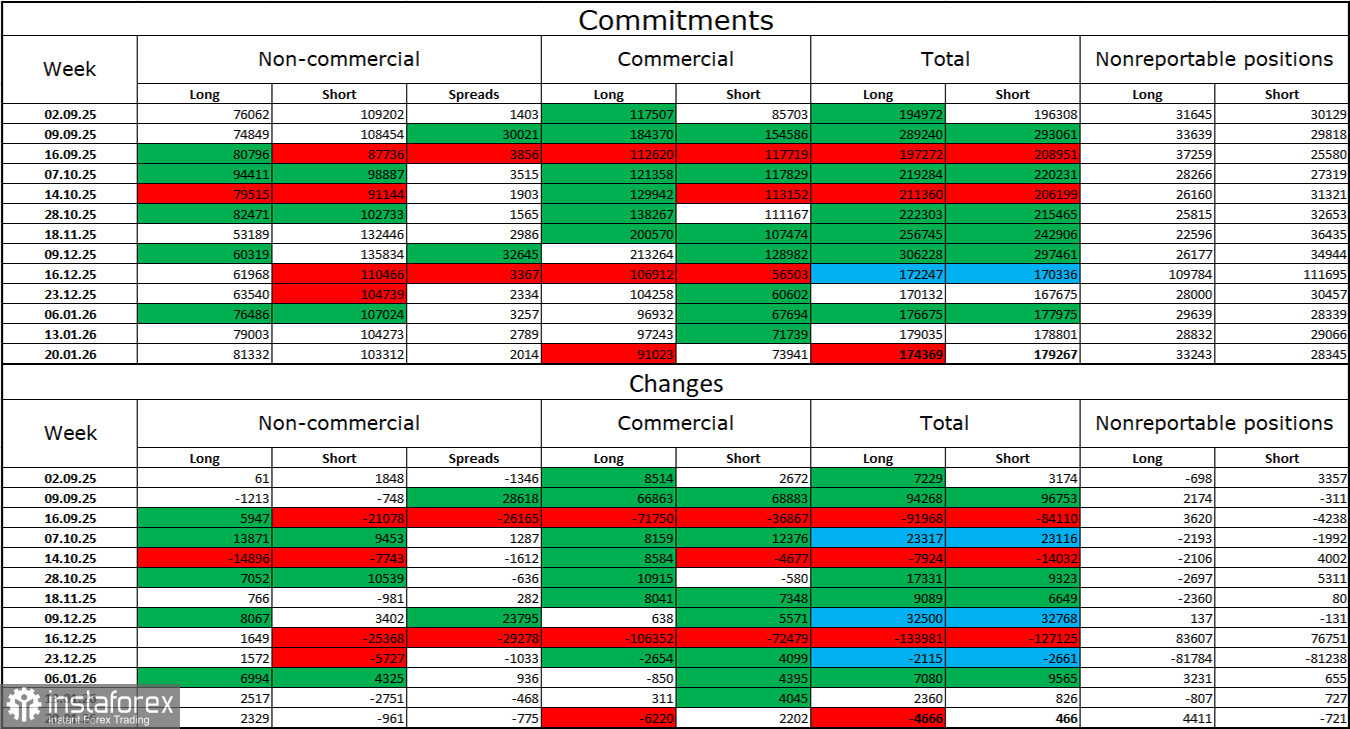
Sentiment among the "Non-commercial" trader category became more bullish over the latest reporting week. The number of long positions held by speculators increased by 2,329, while the number of short positions decreased by 961. The gap between long and short positions is currently approximately 81,000 versus 103,000 and is rapidly narrowing. Bears have dominated in recent months, but it appears they have exhausted their potential. At the same time, the situation with euro contracts is directly opposite. I still do not believe in a bearish trend for the pound.
In my view, the pound still looks less "dangerous" than the dollar. In the short term, the US currency may occasionally benefit from demand in the market, but not in the long term. Donald Trump's policies have led to a sharp deterioration in the labor market, and the Fed is forced to pursue monetary easing to halt the rise in unemployment and stimulate job creation. US military aggression also does not add optimism for dollar bulls.
Economic Calendar for the US and the UK:
The economic calendar for January 28 contains two entries, both of which are important. The impact of the news background on market sentiment on Wednesday may be felt in the evening.
GBP/USD Forecast and Trading Recommendations:
Selling the pair was possible on a rebound from the 1.3845 level on the hourly chart with targets at 1.3755 and 1.3620. Buying opportunities were available after a close above the 1.3437–1.3470 level with targets at 1.3526–1.3539, 1.3595, 1.3755, and 1.3845. All targets were reached. New buying opportunities are possible on a rebound from 1.3755 or after consolidation above 1.3845 with targets at 1.3931 and 1.4020.
Fibonacci grids are drawn from 1.3470–1.3010 on the hourly chart and from 1.3431–1.2104 on the 4-hour chart.


