
Veja também


 02.02.2026 09:58 AM
Donald Trump's selection of a new Fed chair hit the equity market harder than Apple's positive corporate report. The company delivered stronger?than?expected quarterly sales and more bullish 2026 guidance. Revenue jumped by 16% to $143.8 billion on robust demand for the iPhone 17. Nevertheless, Kevin Warsh at the helm of the Fed painted a rather gloomy picture for the S&P 500.
The former FOMC governor intends to shrink the Fed's balance sheet and lower rates. In his view, AI technologies allow the US economy to accelerate without rekindling inflation. AI boosts productivity. Under such conditions, the easing cycle should continue, which is good news for stocks. The bad news is a smaller balance sheet. This will push up long?term yields and increase companies' borrowing costs.
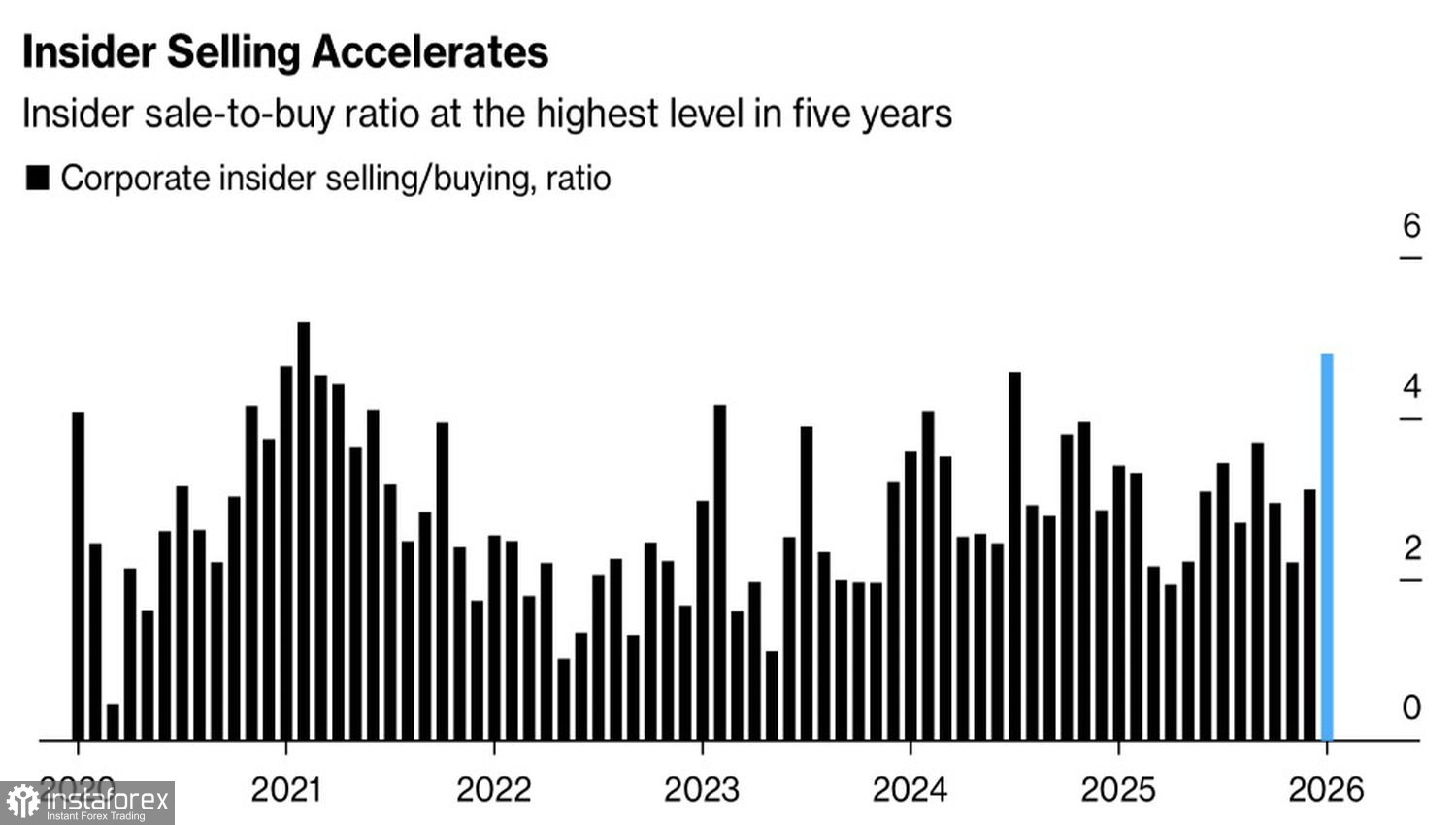
It is quite possible that expectations of a Warsh victory over other candidates contributed to the fastest insider sell?off of US equities in the past five years. Fish rots from the head: if corporate leaders are disposing of shares, investors have reason to doubt the S&P 500's ability to resume an uptrend.
Dynamics of insider net?sales of US equities
Markets hope that Kevin Warsh will restore confidence in the US dollar and end the "sell America" trend. Capital outflows from the United States are negative for the broad index. Moreover, money is leaving not only for overseas markets.
In 2025–2026, US equities have not been the most volatile asset class. Precious metals have easily outperformed them. Oil and even currencies have looked better. Volatility is traders' lifeblood. When it exists, assets are sometimes bought simply because they are moving.
Volatility dynamics across markets
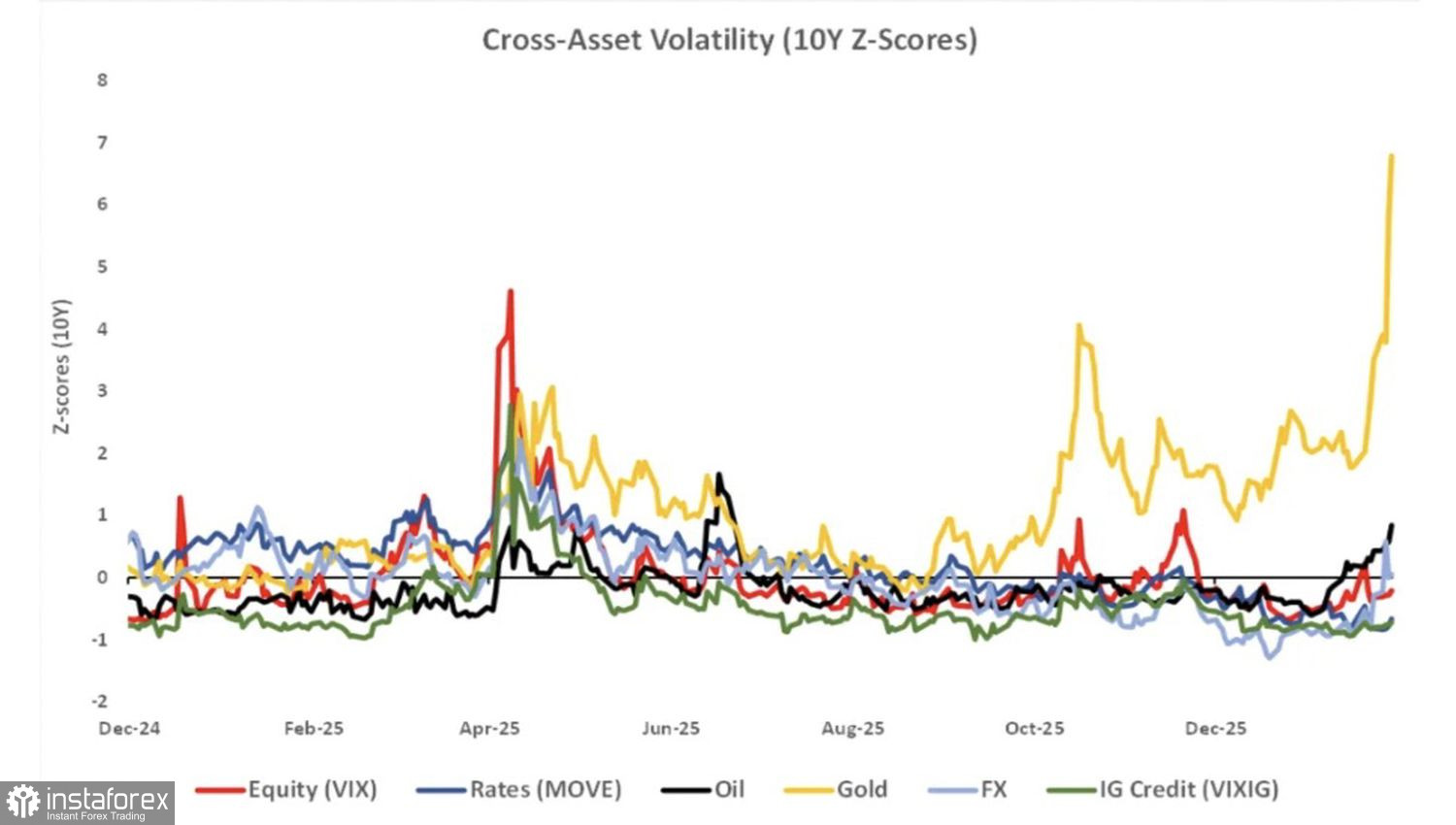
Still, the gold and silver rally played a trick on equities. Money flowed into precious metals, while they were rising. Because of large sell?offs at the turn of January–February, capital should start returning to equities, which in theory should support the S&P 500.
The US dollar reacted to the Warsh news by strengthening, as investors concluded that he would defend Fed independence. In reality, Washington needed to calm markets in order to be able to weaken the greenback in the not?too?distant future. That would be positive for the profits of US multinationals operating abroad.
There is a flip side. With a weaker dollar, foreign investors may be less enthusiastic about buying US assets. Import prices would rise, along with inflation.
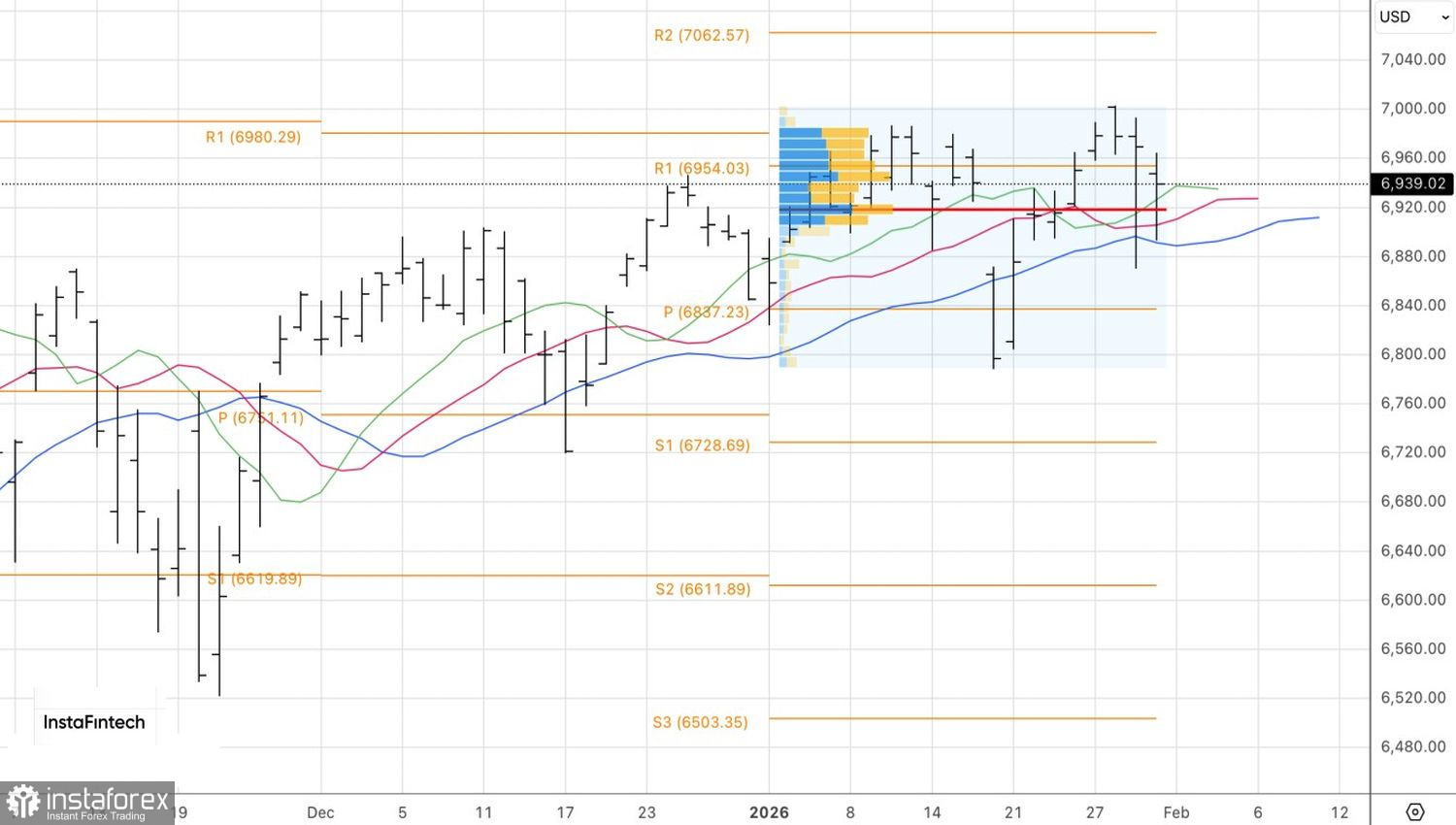
Technically, the daily chart shows that the S&P 500 has posted a second consecutive bar with a long lower shadow. This one is also an inside bar. It makes sense to place pending buy orders on the broad index at 6,965 and sell orders at 6,890.


