
Veja também


 17.06.2026 01:12 PM
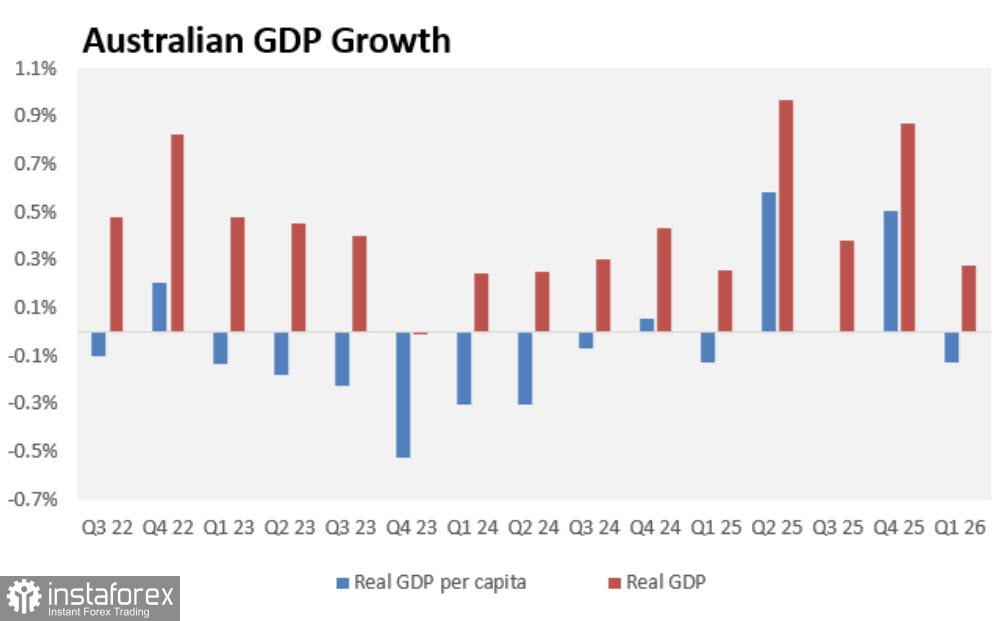
Real GDP per capita declined by 0.1% in the first quarter, marking the tenth contraction in the past 15 quarters.
The Westpac Leading Index, which is designed to forecast economic activity over the next three to nine months, remained at a weak -0.17% in May. Its decline from a relatively strong +0.40% six months ago points to slower economic growth in the second half of 2026. First-quarter national accounts also revealed a clear slowdown in business activity. Demand was virtually unchanged, with the exception of increased investment in data centers.
The situation is being compounded by additional indicators. The share of Australian employers actively seeking new employees is declining, according to reports from two financial institutions, Antipodean Macro and NAB.
Australians have experienced the sharpest decline in real wages on record. Real wages have fallen back to levels last seen in December 2011, and the Reserve Bank of Australia (RBA) does not expect a recovery over the medium term. The unemployment rate has risen to 4.5%, its highest level since late 2021, and is highly likely to continue increasing through the end of the year.
As widely expected, the RBA left its cash rate unchanged at 4.35% this week. However, comments from RBA Governor Michelle Bullock following the meeting were mixed. According to Bullock, inflation remains too high, and further monetary policy tightening cannot be ruled out if necessary to bring inflation lower.
Despite these remarks, financial markets remain unconvinced that the RBA will need to raise rates further. The probability of an additional rate hike before year-end is estimated at slightly above 50%.
Rising unemployment and slowing economic growth would normally suggest a need for lower interest rates, or at least argue against further tightening. However, inflation running at 4.2% points in the opposite direction, creating a policy dilemma for the central bank.
The accumulated net long position in the Australian dollar has been actively reduced for the third consecutive week. During the latest reporting week, net positioning declined by AUD 1.7 billion, while the overall bullish surplus narrowed to AUD 1.3 billion. The estimated fair value continues to trend lower.
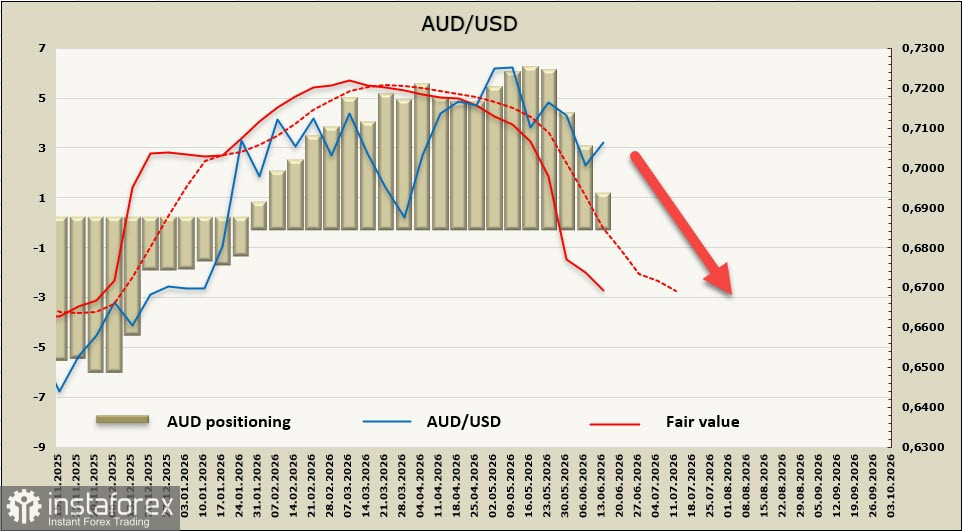
Last week, we forecast further downside in AUD/USD. However, the unexpected memorandum between the United States and Iran temporarily increased demand for risk-sensitive assets, leading to a modest corrective rebound in the Australian dollar. Nevertheless, the overall balance of factors continues to support confirmation of a bearish reversal.
We expect AUD/USD to retest the low at 0.6982. A sustained move below this level would further strengthen the bearish technical outlook, opening the way toward the next target at 0.6835.


