
Veja também


 20.08.2026 02:37 PM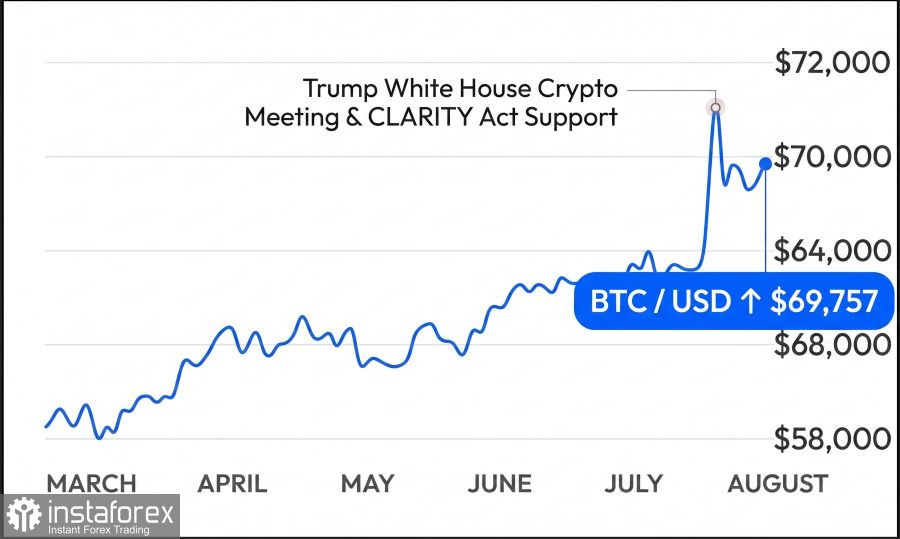
Em meados de agosto de 2026, o mercado de criptomoedas registrou sua maior alta diária desde fevereiro. O Bitcoin (BTC) subiu mais de 8%, atingindo momentaneamente US$ 69.757 (máxima desde 1º de junho), antes de se consolidar na faixa de US$ 69.000–69.500. Seguindo a principal criptomoeda, as altcoins também registraram fortes altas: o Ethereum (ETH) disparou quase 20%, superando com folga a marca de US$ 2.280; o XRP avançou 12%, para US$ 1,12; o Solana subiu 12,4%; e o token $TRUMP valorizou-se 20,2%. Essa rápida alta desencadeou um enorme short squeeze: segundo a CoinGlass, 110 mil traders foram liquidados em um único dia, totalizando mais de US$ 1,45 bilhão, dos quais US$ 1,29 bilhão correspondiam a posições vendidas, incluindo uma liquidação de shorts de US$ 700 milhões em apenas um minuto.
O principal catalisador do rali foram notícias políticas e regulatórias de Washington. O presidente Donald Trump realizou uma reunião na Casa Branca com o presidente da SEC, Paul Atkins, o presidente da CFTC, Mike Seliger, e altos executivos de grandes empresas do setor cripto, incluindo Robinhood e Kraken, antes da reunião do Comitê Consultivo de Inovação da CFTC. Trump reafirmou seu objetivo de consolidar os EUA como líder mundial na indústria cripto e instou o Congresso a aprovar a Digital Asset Market Clarity Act (CLARITY Act). Isso ocorreu após a iniciativa da SEC de implementar a "Regulation Crypto Assets", que propõe isenções do registro de valores mobiliários para captações de até US$ 5 milhões ao longo de quatro anos e de até US$ 75 milhões em 12 meses.
O mercado também recebeu forte apoio da decisão do Tesouro dos EUA de dobrar o volume de suas operações de recompra de títulos do Tesouro de longo prazo, com vencimentos de 10 a 30 anos, de US$ 2 bilhões para pelo menos US$ 4 bilhões por operação, no período de 9 de setembro a 4 de novembro. Isso provocou uma queda acentuada nos rendimentos dos títulos de 30 anos, de uma máxima de 19 anos de 5,34% para 5,19%, enquanto o rendimento dos títulos de 10 anos caiu para 4,64%. O mercado interpretou a queda nos rendimentos dos títulos livres de risco como uma forma de afrouxamento quantitativo (QE), o que reacendeu o apetite por risco e impulsionou US$ 1 bilhão em entradas em ETFs spot de Bitcoin nas primeiras semanas de agosto.
Apesar do forte otimismo no curto prazo, o mercado de criptomoedas continua sendo afetado por importantes fatores adversos:
1. Desequilíbrio fiscal e aumento da dívida pública dos EUA: A dívida pública dos EUA está se aproximando de US$ 40 trilhões. O programa de recompra de títulos do Tesouro tem como objetivo apoiar a liquidez no mercado de dívida, e não reduzir o peso da dívida. O programa não amplia o balanço do Federal Reserve, deixando sem solução as questões fundamentais relacionadas aos déficits orçamentários.
2. Pressões inflacionárias e geopolítica: O conflito militar com o Irã mantém os preços da energia elevados, alimentando a inflação geral nos EUA. Isso restringe as opções do Fed e reduz as chances de uma rápida mudança para uma política monetária acomodatícia.
3. Concorrência contínua dos rendimentos dos títulos: Apesar da queda pontual nos rendimentos dos Treasuries, taxas acima de 4,6%–5,2% continuam atraentes para investidores institucionais conservadores, limitando os fluxos de capital institucional de longo prazo para os ativos digitais.
4. Impasse legislativo no Congresso: A CLARITY Act, principal projeto de lei do setor, ainda não foi aprovada, enquanto as novas regras da SEC sobre a "Regulation Crypto Assets" continuam em fase de projeto. Isso mantém a incerteza regulatória e dificulta a entrada de grandes volumes de capital institucional.
5. Pressão técnica e excesso de posições vendidas: Uma parcela significativa da alta atual é atribuída à liquidação mecânica de US$ 1,45 bilhão em posições vendidas. Após uma queda de 40% em relação à máxima de US$ 115.000 registrada no ano passado, ainda há um volume substancial de posições no mercado, com investidores preparados para zerar suas posições no ponto de equilíbrio a cada forte recuperação.
Com base na comparação entre os fatores regulatórios e os riscos macroeconômicos, a perspectiva para a dinâmica do Bitcoin é a seguinte:
No curto prazo (agosto–setembro de 2026), após a liquidação das posições vendidas, o mercado deverá arrefecer e entrar em uma fase de consolidação. Um recuo técnico para a faixa de US$ 64.000–66.000 provavelmente aliviará as condições locais de sobrecompra. O início das recompras ampliadas de títulos pelo Tesouro, a partir de 9 de setembro, deverá criar um colchão de liquidez estável, evitando quedas acentuadas.
No médio prazo, o nível de US$ 58.000, estabelecido no início do verão, confirma seu status de fundo cíclico da correção. As entradas de capital em ETFs spot e as iniciativas regulatórias da Casa Branca formam a base para uma tendência moderadamente altista na faixa de US$ 68.000–78.000 até o final do outono. Entretanto, alcançar o patamar psicológico de US$ 100.000 e voltar a testar as máximas históricas exigirá a aprovação final do CLARITY Act pelo Congresso e a estabilização da situação geopolítica no Oriente Médio.


