
Veja também


 17.11.2026 05:30 AM
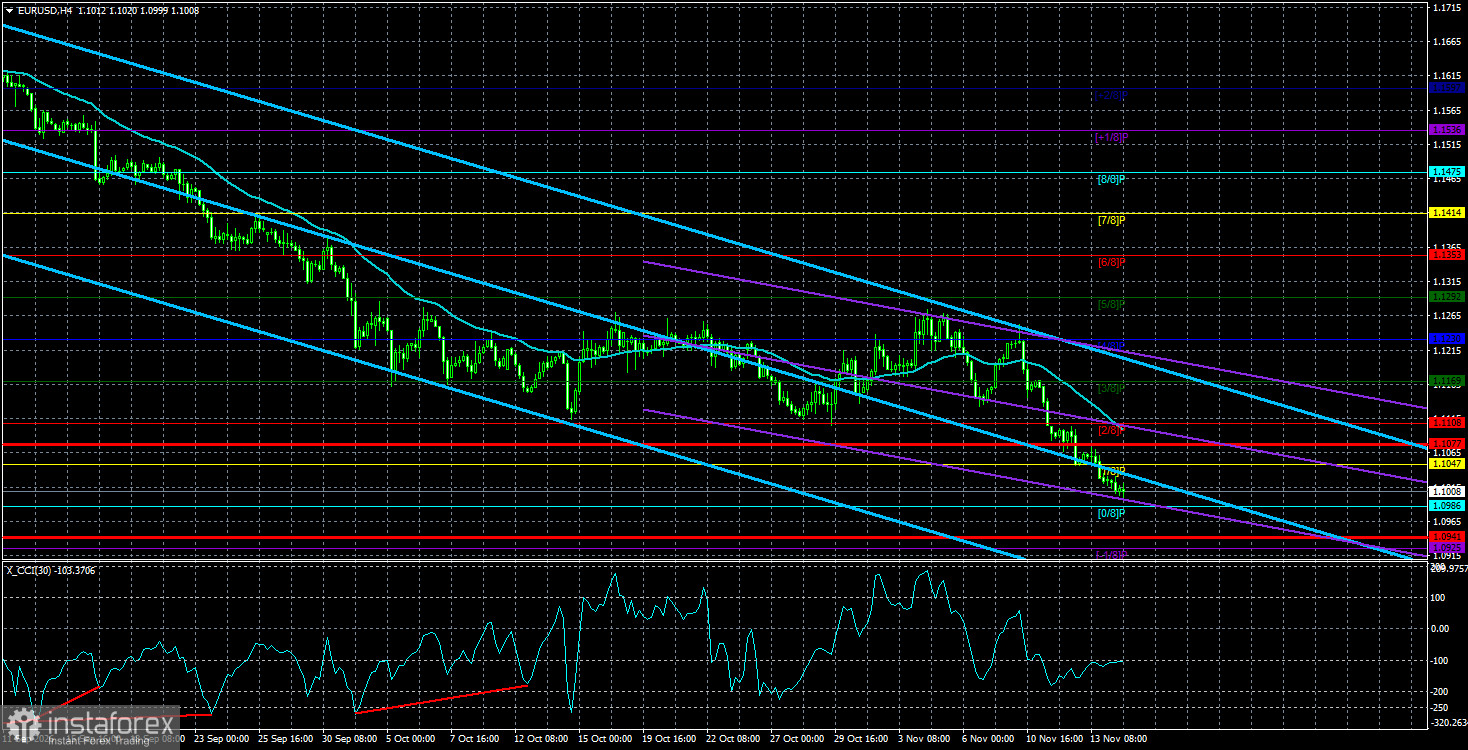
The EUR/USD currency pair continued its downward move on Monday, which probably surprises no one. The European currency fell almost all week, and reasons and pretexts, as always, are easy to find if one wants them. Moreover, you cannot say the dollar rose sharply on the first trading day of the week. No — it rises unhurriedly, by several dozen pips a day. But every day!
In fact, three months ago we already said that the US currency's rise in the current circumstances looks illogical. Throughout those three months, we repeatedly noted that the market buys dollars with all available funds, similar to how Strategy buys bitcoin. Strategy's example in the crypto market probably illustrates the current dollar rise best. Ask yourself: on what basis does Strategy continually and at any price buy "digital gold" for six years? Based on its own long-term strategy. Michael Saylor's company does not care what policy the Federal Reserve follows at the moment, what news arrives, or what prospects open for the crypto segment under the Democrats. It keeps buying at any price despite bitcoin's year-long decline.
Many currency market participants are acting the same way now. Even experts who constantly speak about Fed tightening or the weakness of the European economy are beginning to wonder whether the dollar can really rise for three months with almost no correction, based on one or two factors while ignoring practically all others. On Monday, the eurozone industrial production report had not even been released yet, and Kevin Warsh was only preparing to speak, but the dollar had already risen by several dozen pips. Thus, the speculative, illogical, and even anomalous move continues. The dollar continues to rise because it is being bought. And it is being bought because it is rising.
How did experts explain Monday's latest strengthening of the US currency? It's simple — "hawkish" Fed expectations are rising. Moreover, it is unclear by what measure the latest rise in hawkish expectations is judged. At this rate, and given this backdrop, the dollar could keep rising for another three months or more. After December's meeting, the market expects another tightening in March next year. This means the US currency has a good chance of continuing to rise for another 3–4 months. If someone believes this is absolutely logical and justified, well... we have nothing to add.
We have repeatedly said in our articles that traders must face reality. If a move does not align with fundamentals, macroeconomics, or geopolitics, one must admit the obvious—speculation has begun in the market. After all, no one can forbid market makers from buying the dollar against the grain. Therefore, the current movement can still be traded using technical factors and tools. Just remember: the dollar is rising not solely because of monetary policy, since the same factor cannot push the price in one direction for three months straight without a single correction.
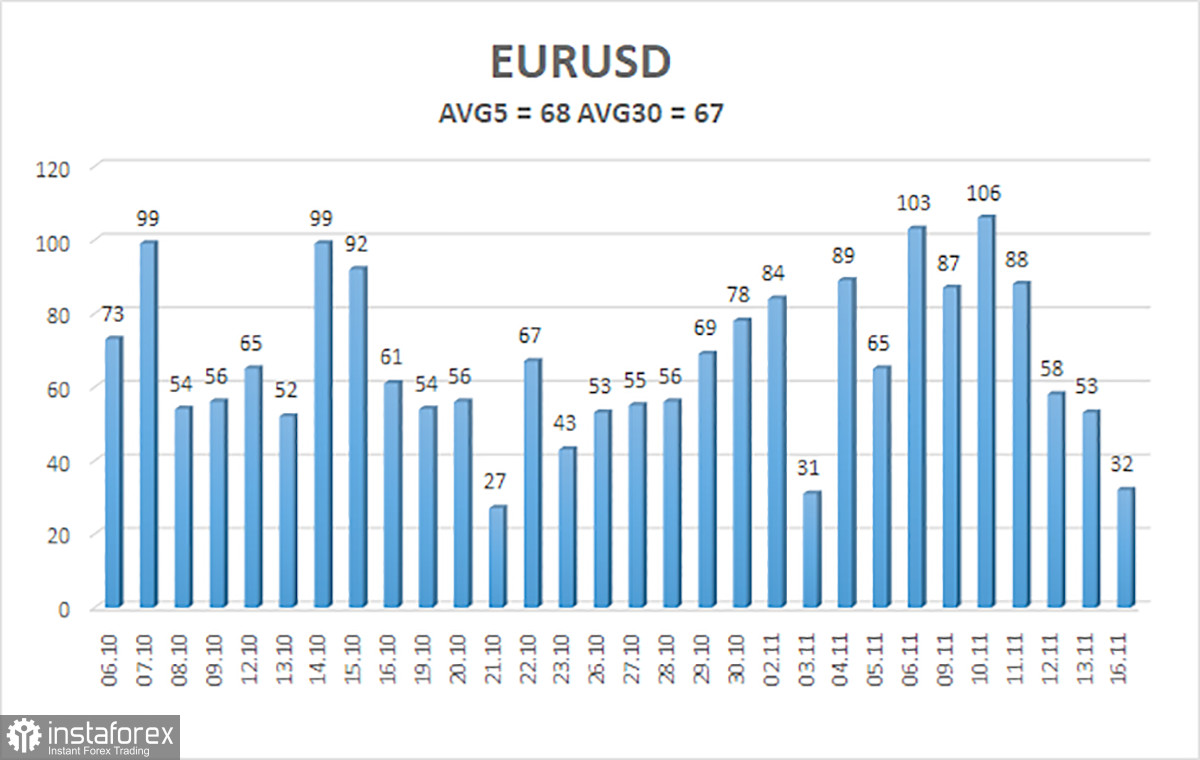
The average volatility of the EUR/USD currency pair over the last 5 trading days as of November 17 is 68 pips and is characterized as "average." We expect the pair to move between the levels 1.0941 and 1.1077 on Tuesday. The higher linear regression channel is directed downward, indicating a downtrend. The CCI indicator entered the oversold area five times and formed four "bullish" divergences, all of which were ignored. The illogical downward trend persists.
S1 – 1.0986;
S2 – 1.0925;
S3 – 1.0864
R1 – 1.1047;
R2 – 1.1108;
R3 – 1.1169
The EUR/USD pair remains in a downward channel with insufficient fundamental, macroeconomic, and geopolitical justification. The global fundamental backdrop for the dollar remains negative, but in 2026, first geopolitics and then the Fed's hawkish stance provided strong support for the US currency. Practically all other factors have been ignored for the past three months. With the price below the moving average, shorts can be considered, targeting 1.0986 and 1.0941, as the trend remains downward. Above the moving average, long positions can be considered, targeting 1.1169 and 1.1230; however, the euro has struggled to strengthen in recent months.


