
Veja também


 18.11.2026 02:41 PM
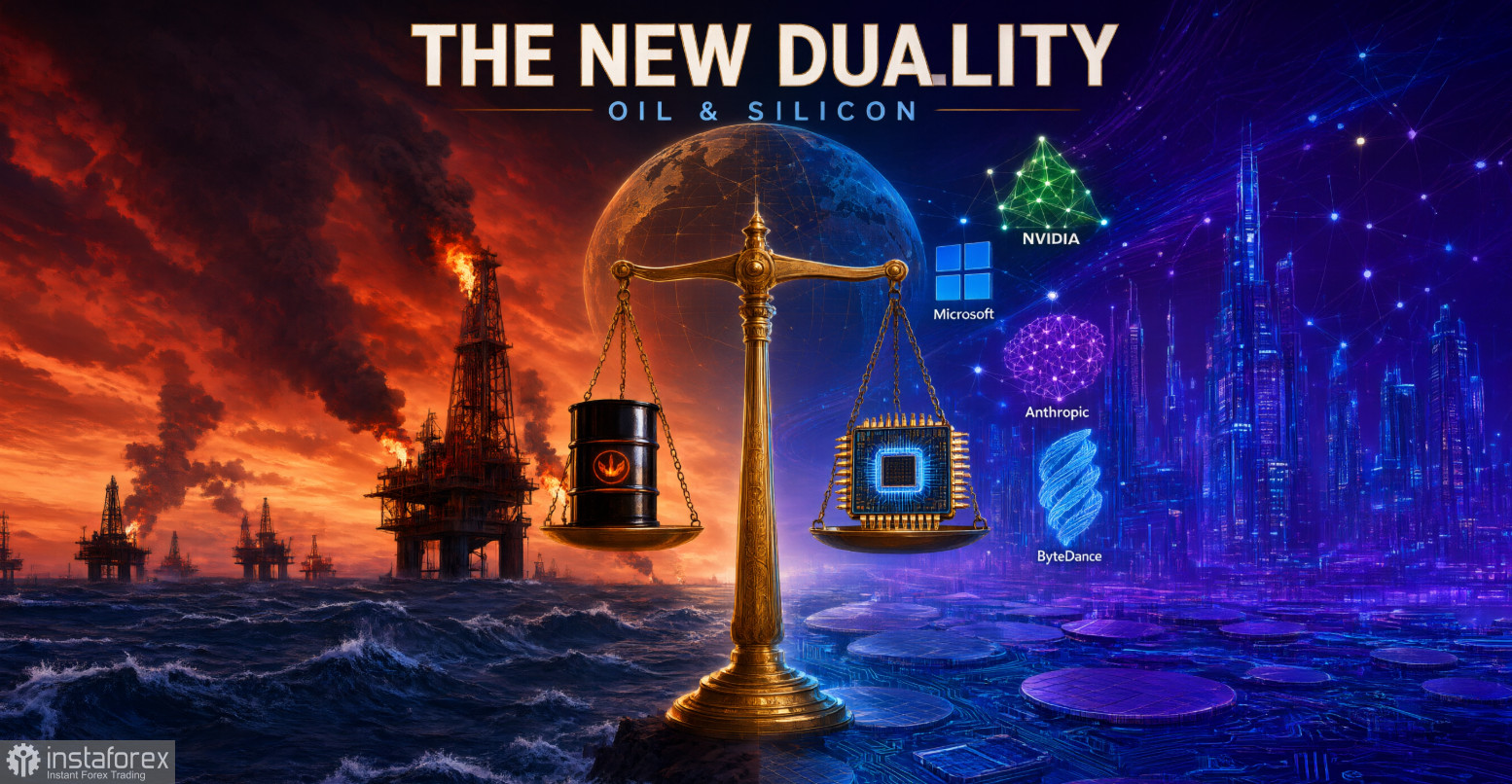
Commodities are jittery: the oil market is dangerously oscillating between rising US commercial inventories and acute escalation of the Middle East armed conflict.
In the tech sector, a real battle for technological sovereignty is unfolding. Anthropic's record IPO is putting pressure on Alphabet, while Microsoft is challenging incumbents by rolling out its own AI models.
New US export controls are blocking Chinese firms' access to Nvidia's advanced chips via cloud providers.
This note summarizes four key developments shaping today's global market landscape.
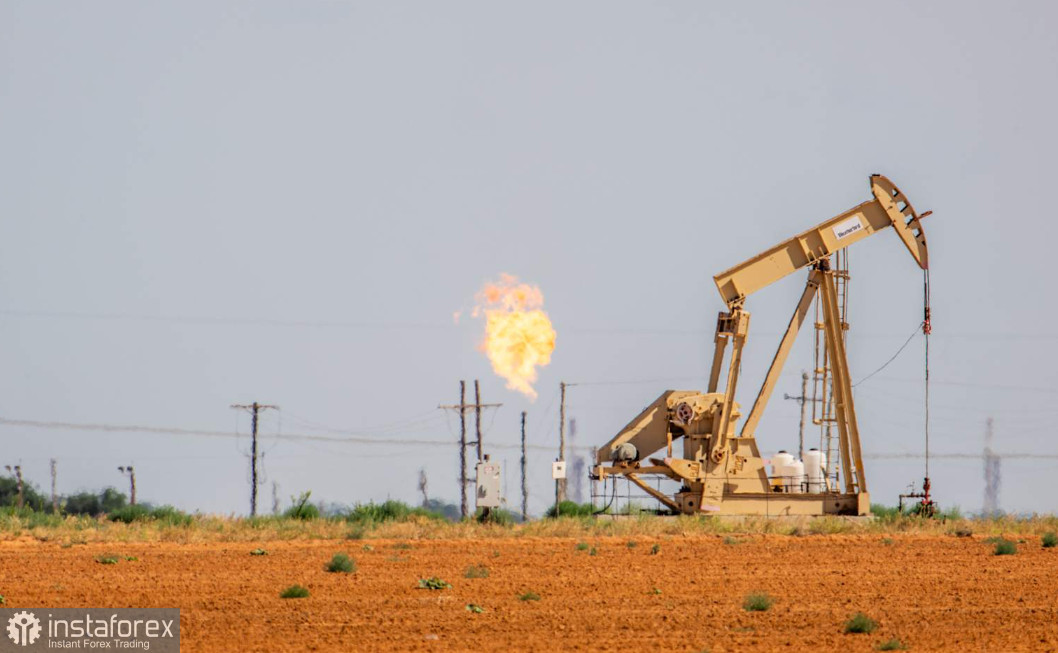
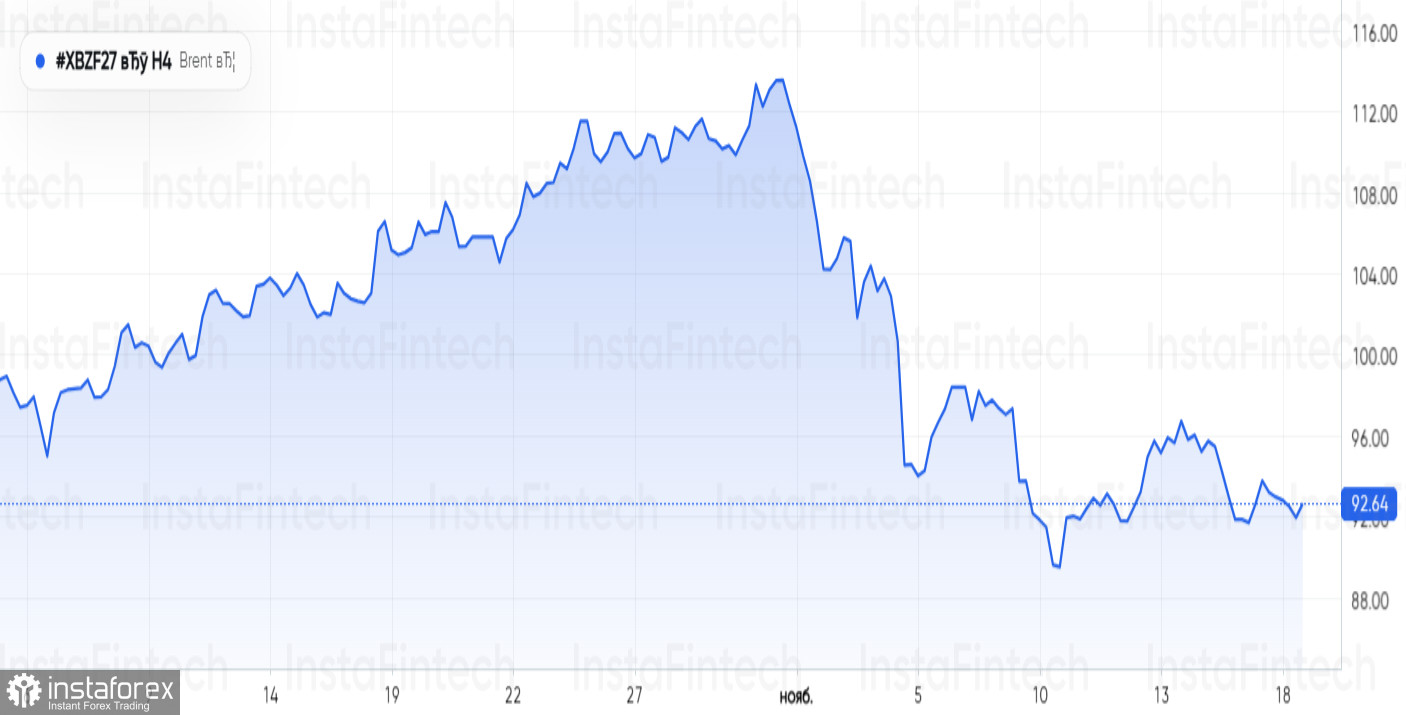
On Wednesday, November 18, oil prices resumed their slide. The session opened with losses after industry data showed a substantial increase in US crude and fuel stocks. Still, the pullback remained contained — geopolitical tension prevents a deep correction.
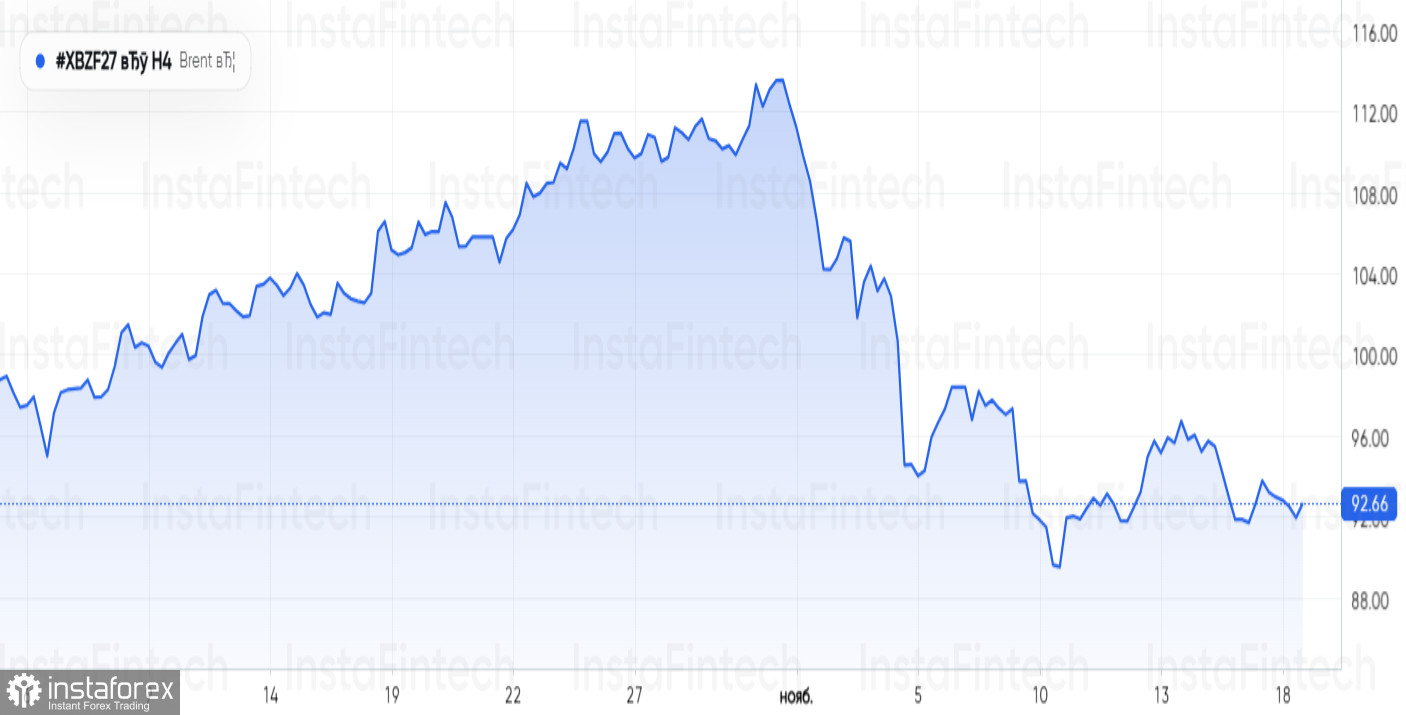
The US–Iran conflict and repeated attacks on vessels in the strategic Strait of Hormuz keep the market on high alert. Brent and US WTI futures were softer in Asian trading after a rebound on Tuesday. Moneycontrol reported Brent pierced $93/bbl to the downside.
The main trigger for sellers was API's industry report. Market sources say US commercial crude inventories jumped by about 5.28 million barrels in the week to November 13. Gasoline stocks rose by 5.12 million barrels and distillates by 351k barrels. API figures are preliminary and lead the government's official release, but investors preferred to lock in profits ahead of the official data.
On the other side of the market, the Middle East crisis is intensifying. Bahrain's defense forces reported intercepting Iranian air strikes on the kingdom, which hosts the US Fifth Fleet.
This came a day after another exchange of strikes between Washington and Tehran. Kuwait reported its air defenses engaged "hostile" drones, according to Al Jazeera.
Escalation is rising on both fronts. On Tuesday, Iran's Islamic Revolutionary Guard Corps said it destroyed a US radar system at Sheikh Isa air base in Bahrain. The US responded with a targeted strike on an IRGC missile launcher on Qeshm Island in the Strait of Hormuz.
According to the Associated Press, this was Iran's third attack on US facilities in Bahrain in five days. Reuters notes the heavy fighting continues despite mediation efforts by Oman and Qatar.
A severe risk to the global energy market remains maritime security. Off Oman, on Monday, a projectile struck an LNG tanker, and its crew had to be evacuated. Meanwhile, Houthi forces in Yemen used drones to hit pumping stations on the East-West pipeline in Saudi Arabia. CNBC notes this route is critical for Riyadh because it moves oil to the Red Sea port of Yanbu, bypassing the dangerous Strait of Hormuz.
All instruments mentioned in this article are available to trade on the InstaTrade platform. To catch opportunities amid elevated volatility, open an InstaTrade account and download the mobile app.
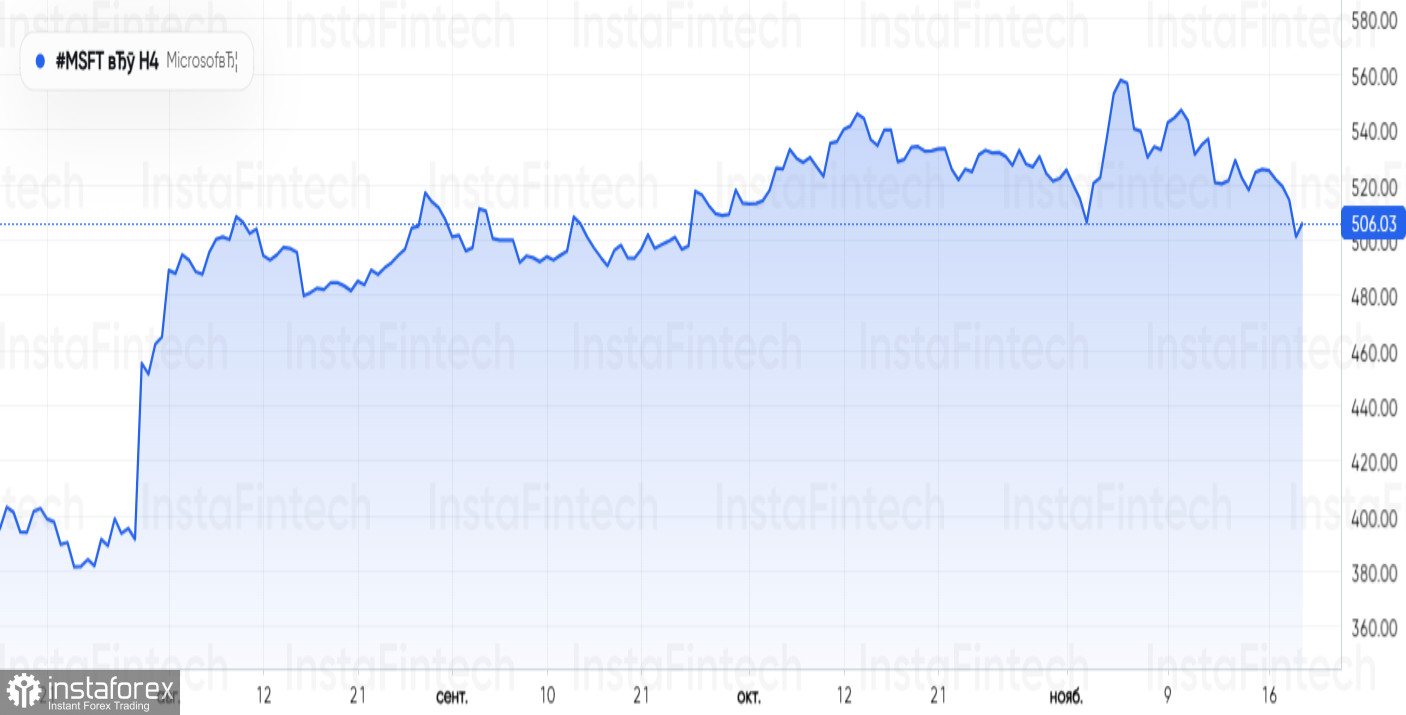
On Monday, November 16, Alphabet shares fell by nearly 3% in regular trading as the market braced for Anthropic's Nasdaq debut just three days away.
Starting slightly below $296 at the prior close, the tech heavyweight's stock plunged to about $285 by midmorning, Investor's Business Daily reports. Investors remain genuinely concerned: Alphabet's growing reliance on Claude, Anthropic's model, and the company's enormous expenditures have been weighing on the stock since late October.
Meanwhile, Anthropic itself is preparing a blockbuster market entry. Reuters reports the company plans to offer 825 million Class A shares in a $70-78 range, targeting roughly $64.4 billion in gross proceeds.
The final IPO price will be set on Wednesday evening, November 18, with trading scheduled to begin Thursday, November 19, under the ticker ANT, CNBC reports.
What is more, seven key partners will simultaneously take non-voting Class N shares worth $26 billion at the IPO price. According to TechCrunch, both Google and Nvidia are set to invest about $10 billion each in the deal.
If the price settles at the midpoint of the range ($74), Google would acquire roughly 135.1 million shares. That would raise its stake from 1.65 billion to about 1.79 billion shares, worth roughly $132.4 billion. The Globe and Mail's calculations show that the amount equals nearly 4% of Alphabet's total market capitalization.
The offering prospectus indicates these strategic investments are part of the financing agreed with Google as early as March 2026. As a result, as CNBC estimates, the search giant would control roughly 13% of Anthropic's stock.
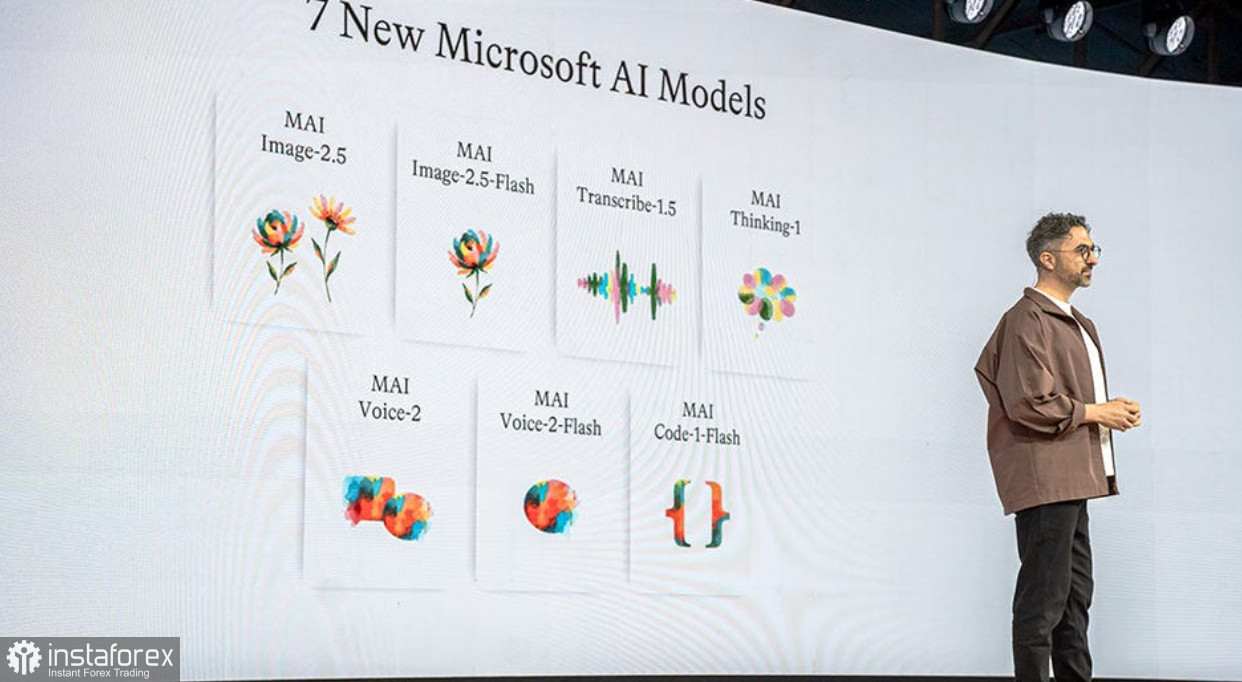
On Tuesday, November 17, at its Ignite conference in San Francisco, Microsoft unveiled a lineup of in-house artificial intelligence models covering programming, cybersecurity, image generation, and real-time voice interaction.
As Reuters notes, the company is targeting customers of OpenAI and Anthropic by offering comparable performance at materially more attractive price points.
Where Axios counted six new models in Microsoft's arsenal, the official announcement describes a family of seven, underscoring Microsoft's drive to reduce dependence on external partners for cutting-edge capabilities.
The flagship debut is a developer tool called MAI Code 2. Averaging results across four benchmarks (including DeepSWE 1.1 and Terminal Bench 2.1), Microsoft claims the model delivers about 98% of the performance of OpenAI's GPT-6.1 Sol at roughly 40% of the cost, and roughly 96% of Anthropic's Claude Opus 5.5 capability at about 5% of that competitor's price.
For routine coding tasks, Microsoft introduced a lighter MAI Code 2 Flash, which it says performs at the level of GPT-6 Luna (at ~65% of the cost) and Claude Haiku 5.5 (at ~20%). The company stresses these models are not intended for ultra-complex work such as foundational scientific research.
Both coding models are already available inside the GitHub Copilot ecosystem. The full-powered MAI Code 2 is integrated into Pro, Pro+, Max, Business, and Enterprise tiers; the Flash variant is accessible to Free and student accounts and is also available in preview on Microsoft Foundry.
The lineup also includes a specialist cybersecurity model, MAI Cyber 2 Flash. On the CyberGym benchmark, it reportedly matches GPT-6 Astra performance while costing under 2% per task. Access will be restricted to select customers, Reuters reports. The presentation is rounded out by a generative image model, MAI Image 2.7, and new solutions for high-quality transcription and real-time voice interaction.
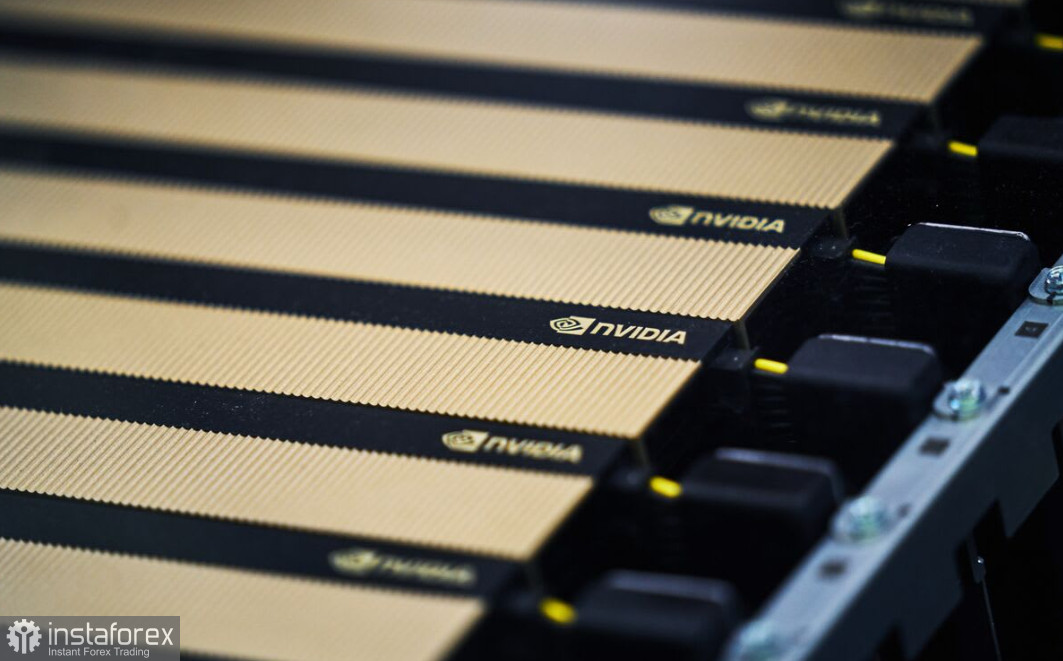
Tighter US export controls have triggered a serious financial market headache by stalling a $480 million deal intended to buy advanced Nvidia hardware on behalf of ByteDance, TikTok's parent.
According to Bloomberg, bankers at five lending institutions involved in the transaction faced a difficult choice: lawyers warn that the financing could violate the new US rules. The borrower is Singapore-based Aolani Cloud, which planned to purchase chips for a Malaysian data center that ByteDance would access remotely.
The incident is an early warning that Washington's anti-China strategy, aimed at restricting remote access to advanced US chips, is hitting more than just hardware makers and data center operators; it is now affecting the banks that finance those projects.
Recall that on November 16, the US Commerce Department's Bureau of Industry and Security published an interim final rule requiring licenses for shipments of advanced chips to Indonesia, Malaysia, Singapore, Thailand, and Brazil. The rules also cover any data center worldwide that provides Chinese entities with compute capacity above a defined threshold.
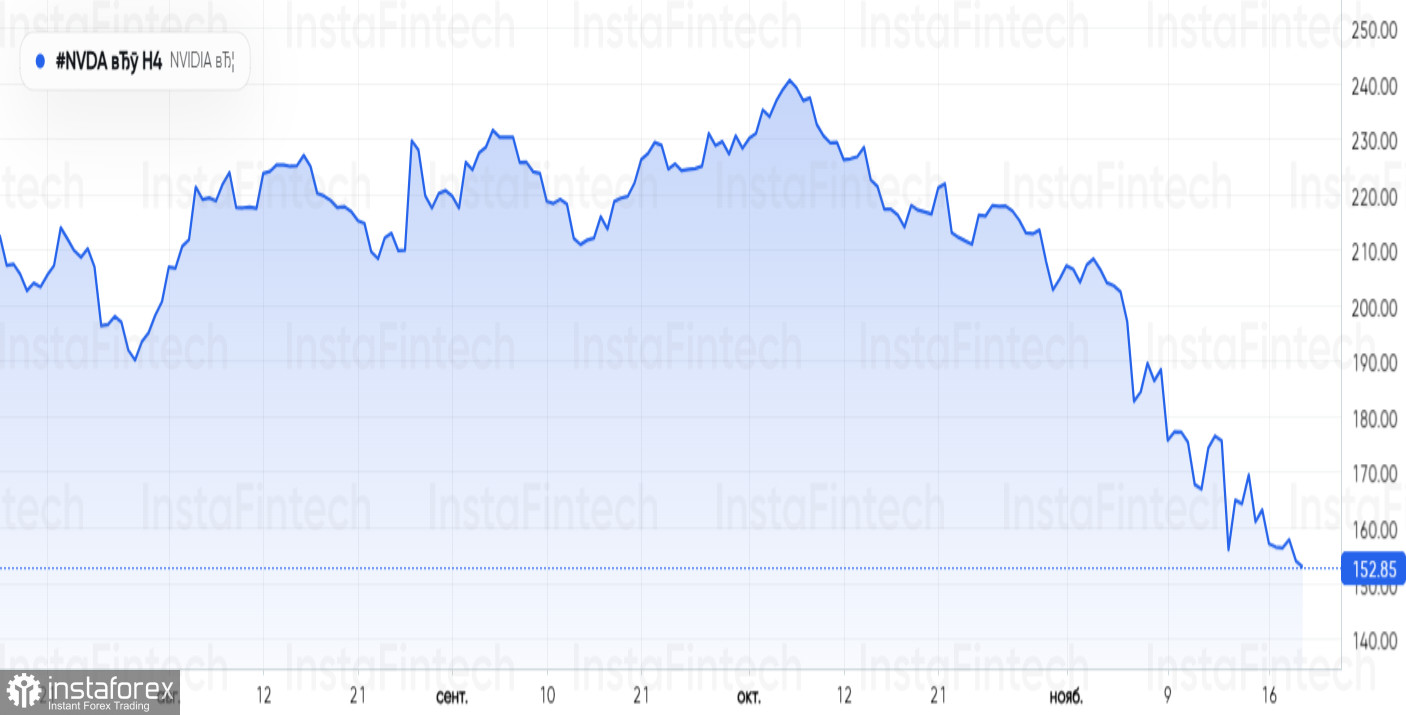
Datacenters already serving such clients have 90 days to obtain the necessary licenses. Notably, US-headquartered companies are exempted from those requirements for the five listed countries, Reuters adds. The new rules are expected to take effect on Thursday, November 19.
The Wall Street Journal reports that Aolani, a key cloud partner for Nvidia, had already financed roughly $2.5 billion of equipment purchases in Malaysia earlier this year, with ByteDance as the principal client.
Aolani representatives emphasize they have strict compliance controls. In a Bloomberg piece republished on ZeroHedge, an Aolani spokesperson said the company is "proactively working with regulators and our financing partners to ensure the project delivery goes ahead in full compliance with the new rule."
All instruments mentioned in this note are available to trade on InstaTrade. Open an InstaTrade account and download the mobile app to stay on top of market developments and execute trades in real time.


