
Vea también


 20.05.2026 11:40 AM
On the hourly chart, the GBP/USD pair reversed in favor of the U.S. dollar on Tuesday and consolidated below the 50.0% Fibonacci corrective level at 1.3408. Thus, the decline of the British pound may continue toward the support level of 1.3349–1.3355. Consolidation above the 1.3408 level would favor the pound sterling and the resumption of growth toward the 1.3454–1.3466 and 1.3526–1.3539 levels.
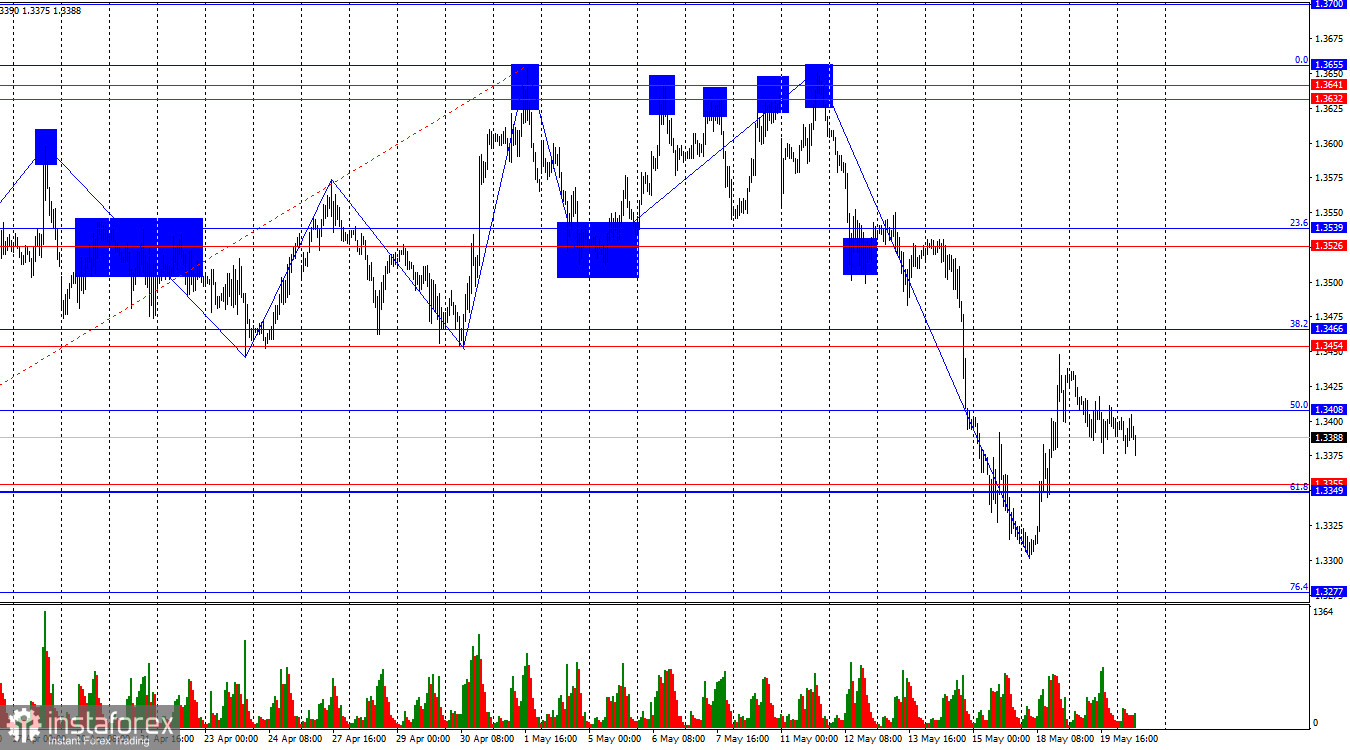
The wave pattern shifted to a bearish one last week. The latest completed upward wave exceeded the previous peak by only a few pips, while the latest downward wave confidently broke below the previous low. Geopolitics is currently supporting the bears, as the market has still not seen the signing of even a temporary memorandum of understanding between Iran and the United States. At the moment, the ceasefire remains in place, but the situation is moving toward escalation and a prolonged confrontation.
Tuesday's news background once again supported the bears. First, the unemployment rate in the UK rose to 5%, which traders had not expected. Second, geopolitical developments once again shifted toward the possibility of new strikes on Iran. However, bullish traders held their ground and did not allow the bears to launch a new offensive.
This morning, the UK released April inflation reports. As early as last week, traders had begun preparing for a slowdown in British inflation, which is another negative factor for the bulls and the pound. If inflation is falling, it means the UK economy is not reacting to rising energy prices. Despite the political crisis, the British government managed to prevent an acceleration in the consumer price index. The European Union and the United States clearly cannot boast the same.
Inflation ultimately slowed to 2.8% (even lower than forecasts), while core inflation came in at 2.5% (also below market expectations). Therefore, no tightening of monetary policy should be expected from the Bank of England at its next meeting. As I already mentioned, this is bad news for the pound, since a rate hike would have strengthened the bulls' positions. At the moment, the pound can only count on a continuation of the corrective rebound, and beyond that, everything will depend on geopolitical developments.
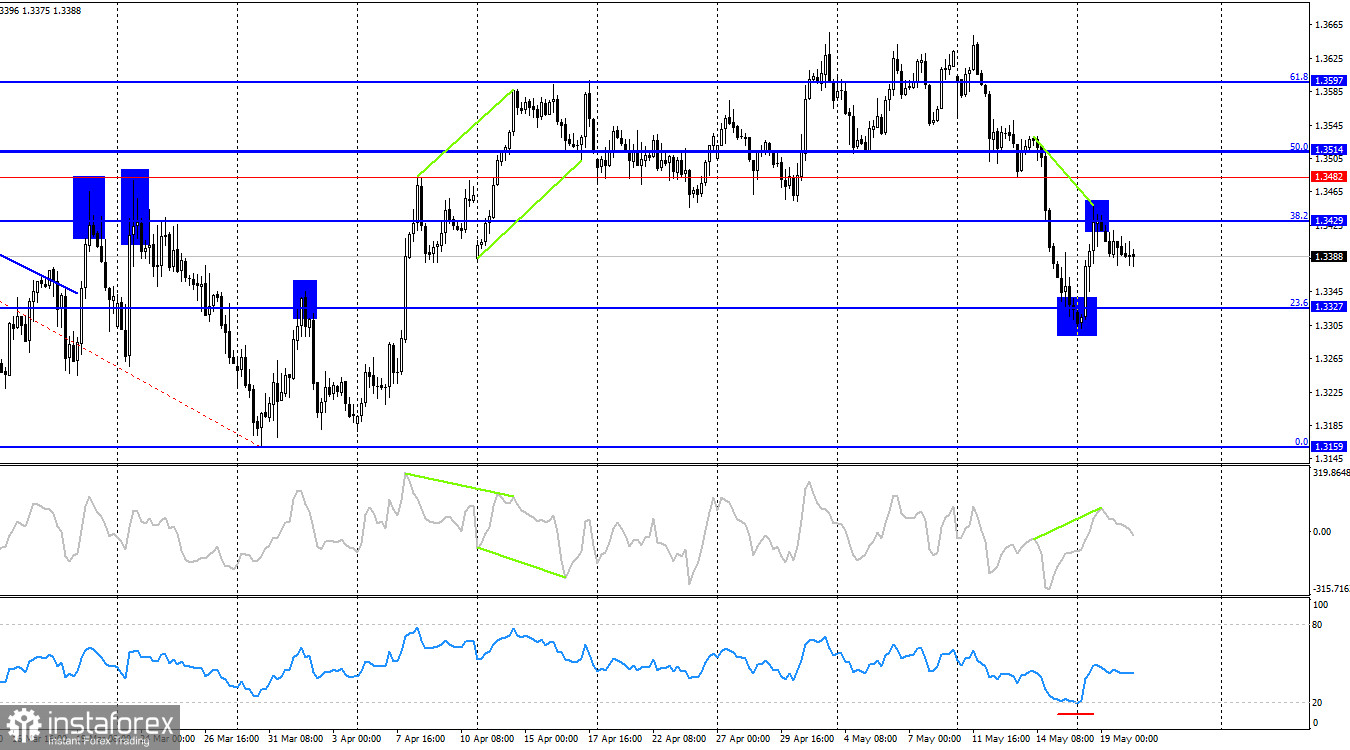
On the 4-hour chart, the GBP/USD pair rebounded from the 23.6% Fibonacci corrective level at 1.3327 and reversed in favor of the pound, rising toward the 38.2% Fibonacci level at 1.3429. A rebound from this level favored the U.S. dollar and the resumption of the decline toward 1.3327. A bearish divergence on the CCI indicator also supported the U.S. currency. Consolidation above 1.3429 would allow for further pound growth.
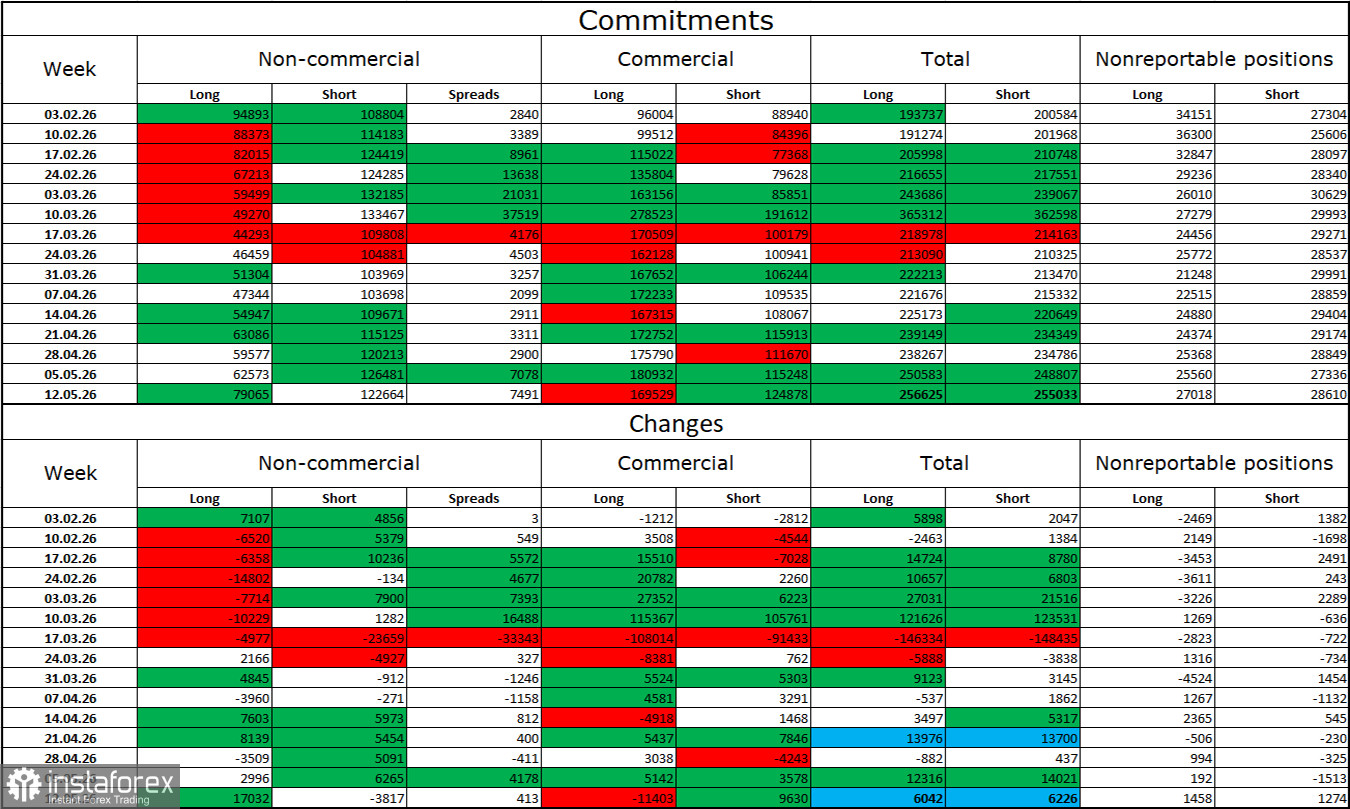
The sentiment of the "Non-commercial" trader category became less bearish over the latest reporting week. The number of long positions held by speculators increased by 17,032, while the number of short positions decreased by 3,817. The gap between long and short positions now stands at approximately 79,000 versus 123,000.
For six consecutive weeks in February and March, non-commercial traders actively increased sales and reduced purchases, which led to a significant imbalance between long and short positions. In recent months, the bears have dominated, which surprises no one given the geopolitical situation.
I still do not believe in a long-term bearish trend for the pound, but now everything depends not on economic indicators, Trump's trade policy, or central bank monetary policy, but on the duration, scale, and consequences of the war in the Middle East. In recent weeks, the market had shifted toward expectations of de-escalation, but recent news suggests that a full ceasefire is still far away, and the war could resume at any moment.
The May 20 economic calendar contains two entries, the most important of which has already been released to the market. The impact of the economic background on market sentiment may persist throughout Wednesday.
Selling positions were possible after a close below the 1.3408 level, targeting 1.3349–1.3355. These trades can still be kept open today.
Buying positions are possible after a close above the 1.3408 level, targeting 1.3454–1.3466 and 1.3526–1.3539. Alternatively, buys may be considered after a rebound from the 1.3349–1.3355 level.
The Fibonacci grids are built from 1.3158–1.3655 on the hourly chart and from 1.3866–1.3158 on the 4-hour chart.


