Vea también


 14.07.2026 08:54 AM
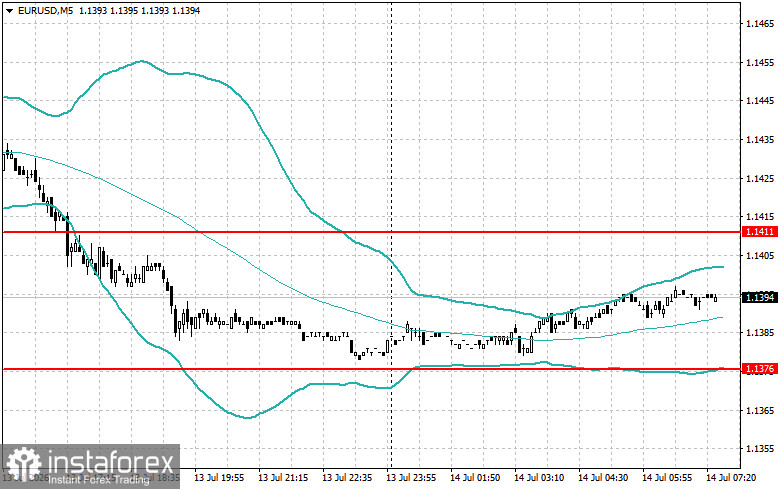
The U.S. dollar continues to be in demand and actively reclaims positions against the euro, pound, and other risk assets.
Yesterday, the dollar continued its active growth after the U.S. Navy announced a maritime blockade of the entire Iranian coastline. The restrictions come into effect on July 14 at 11:00 PM and cover all Iranian ports, oil terminals, and coastal areas, extending to vessels under any flag. Transit of neutral vessels through the Strait of Hormuz remains permitted, provided their routes are not connected to Iran. Such a sharp escalation has intensified the flight to safe assets, and the threat of oil supply disruptions has only spurred demand for the dollar as a safe haven.
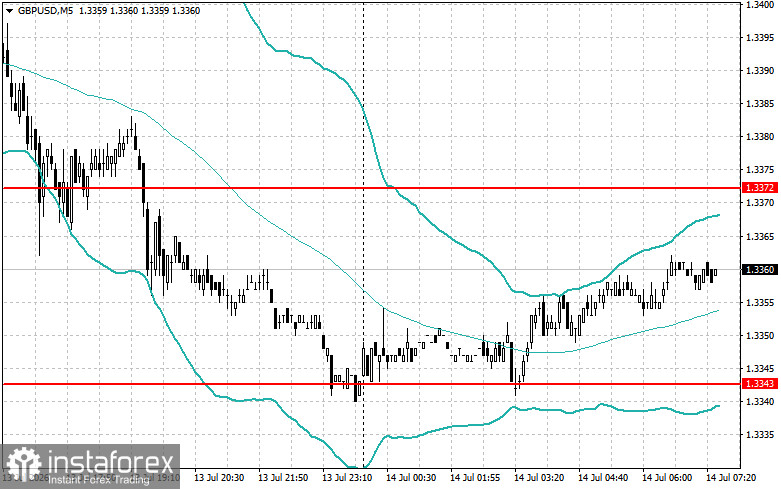
For the euro and pound, this backdrop is negative. The rise in geopolitical premiums once again undermines risk appetite, while the prospect of a spike in oil prices negatively impacts European economies dependent on energy imports. As a result, both EUR/USD and GBP/USD have come under pressure, reflecting traders moving into the most reliable instruments, and while the escalation continues, there are few reasons for a recovery.
Today, the European agenda appears light in the first half of the day, with attention focused on Germany's wholesale price index and the speech by European Central Bank President Christine Lagarde. The wholesale price index reflects the dynamics of goods' costs at the wholesale level and serves as an early indicator of inflationary pressure in the Eurozone's largest economy, thus indirectly influencing expectations regarding the ECB's policy. Lagarde's speech is more important than the figures, as any signals from her regarding the future trajectory of rates can significantly move the euro.
In the absence of loud statements from Lagarde, the euro may, as yesterday, slightly recover against the dollar. As long as the ECB head refrains from using harsh language, the EUR/USD pair retains the potential to recover some of its losses in the broader backdrop. Much will depend on the tone of her speech, and only an unexpectedly hawkish or dovish message can disrupt this cautious scenario before the end of the European session.
As for the pound, today's lack of fundamental data for the UK in the first half of the day is unlikely to set a direction. Without fresh data on inflation, employment, or business activity, traders will have no reason to reconsider their positions, as these indicators usually guide expectations regarding the Bank of England's rates and determine the direction of the British currency. When such reports are absent, the pound becomes dependent on external forces, with market sentiment toward the dollar and the situation in the Middle East remaining key benchmarks.
If the data aligns with economists' expectations, it is better to act based on a Mean Reversion strategy. If the data is significantly higher or lower than economists' expectations, it is advisable to employ a Momentum strategy.