
Vea también


 10.08.2026 09:25 AM
Bitcoin and Ethereum are still going through a correction, which could take quite a long time. Over the past month and a half, Ethereum and Bitcoin have managed a modest recovery, but there are still no signs that the downtrend that began last year has ended. The fundamental backdrop remains weak for the crypto market, primarily expressed in low spot demand, capital flowing into the artificial intelligence sector, and the Fed's commitment to bringing inflation to 2%, which implies at least a continued tight monetary policy. Thus, we still see no reason for a sustained rally in Bitcoin and Ethereum.
Meanwhile, MARA founder and CEO Fred Thiel — who has been frequently in the headlines recently — made several important statements. He said that electricity will become the most scarce resource in the near future. In his view, "whoever owns the energy owns the world." Thiel notes that electricity demand is steadily growing because of needs related to crypto mining and to artificial intelligence. MARA has already begun redirecting its compute and energy capacity to serve AI, but has not completely abandoned mining. Most likely, MARA will try to combine both activities. Over time, if Bitcoin rises again, the share of energy directed to mining could increase.
The expert also pointed out a major disadvantage of Bitcoin: it does not generate yield by itself. Its value depends entirely on how many people want to buy it versus sell it — an asset whose price is driven purely by supply and demand. The MARA CEO also believes that mining as an industry will disappear in the future; cryptocurrencies will be mined at a household level. He does not expect an explosive rise in Bitcoin, but the cryptocurrency itself could "live" for a very long time.
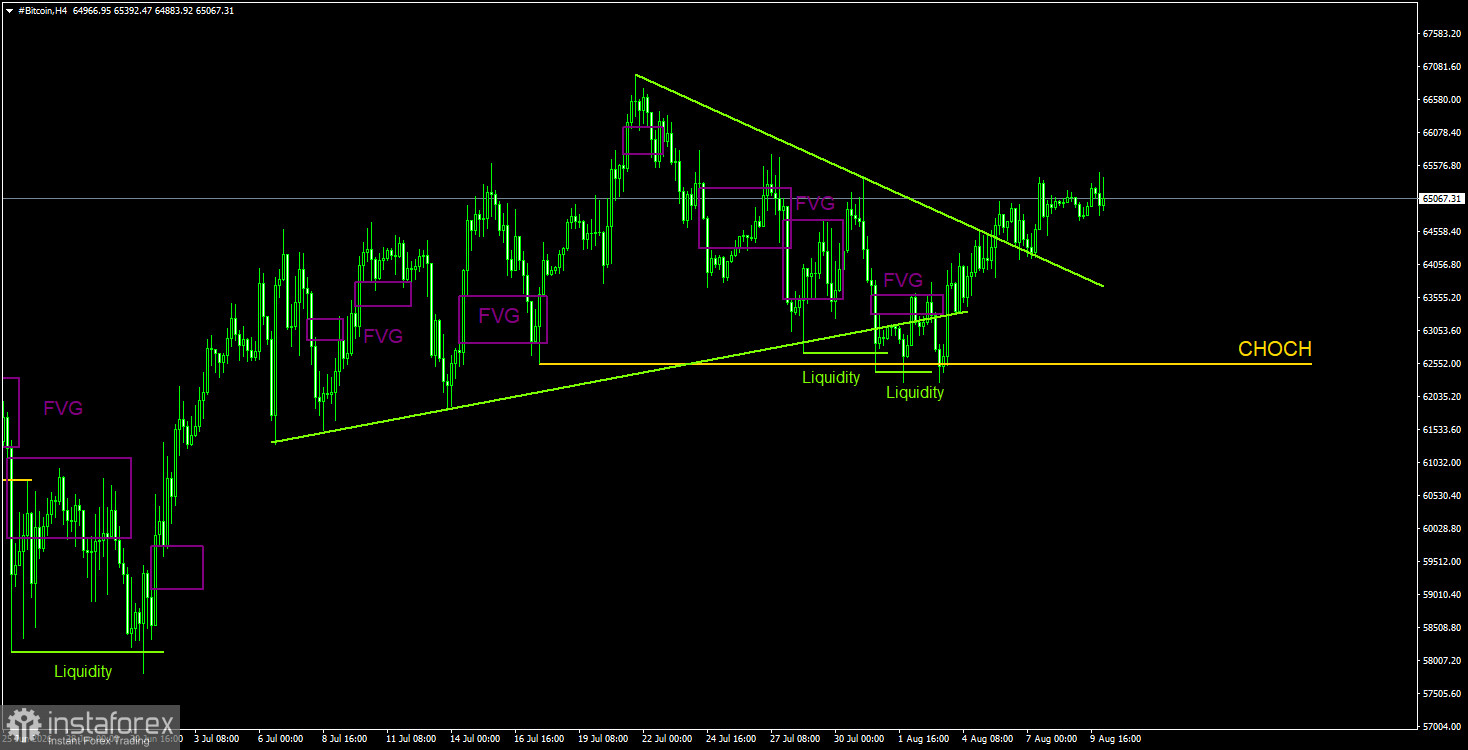
Bitcoin continues to form a full-fledged downtrend. We continue to expect a decline toward $57,500 (the 61.8% Fibonacci level of the three-year uptrend), although this level has essentially already been worked. We do not believe the downtrend is over. The last bearish FVG (fair value gap) formed in the $68,000–70,700 area on the daily timeframe, so that zone serves as a POI (point of interest) for short positions in the coming weeks. On the 4-hour timeframe, Bitcoin is again biased toward a decline, but moves are likely to remain choppy and "swingy." There are currently no bearish patterns on the 4-hour timeframe.
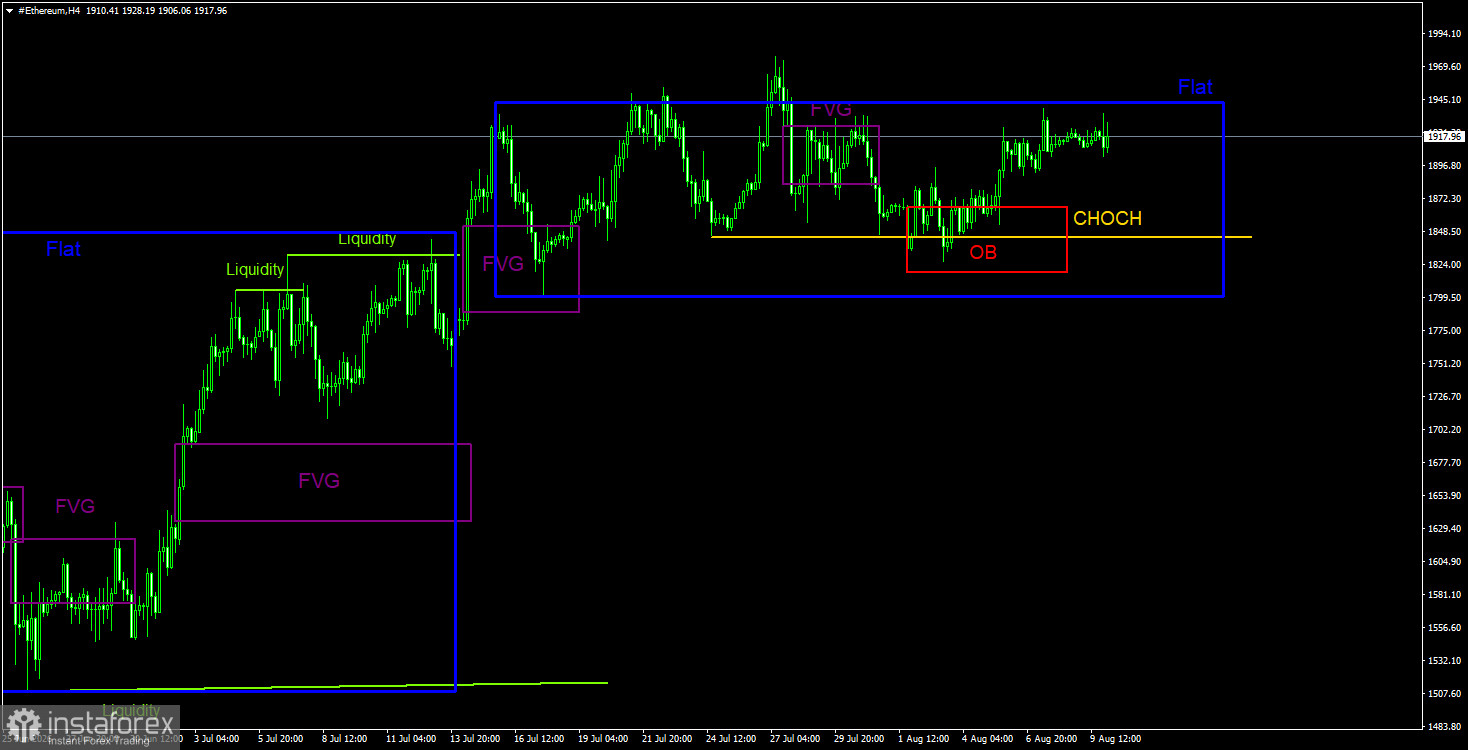
On the daily timeframe, the downtrend that began in August last year is still in place. The key sell pattern remains the bearish order block on the weekly timeframe. We do not think the current downtrend is finished, as there are no signs of its completion for either Bitcoin or Ethereum. Currently, a second phase of correction is underway, which recently transformed into a flat. In a flat market, you can trade only between its bands; the further direction will be defined after the flat ends. Right now, Ethereum is near the upper band of the sideways channel between $1,800 and 1,942, so we expect a rejection there as an opportunity to open short positions.
CHOCH is a change of character / break of the trend structure. Liquidity means traders' Stop?Losses that market?makers use to build their positions. FVG is Fair Value Gap (area of price inefficiency). The price often moves quickly through such areas, indicating the absence of one side in the market. Later, the price tends to return and react to these zones. IFVG stands for Inverted Fair Value Gap. After a return to such a zone, the price does not react but impulsively breaks through and then tests it from the other side.
OB means Order Block. A candle on which a market?maker opened a position in order to harvest liquidity and then form their own position in the opposite direction.


