
Vea también


 02.09.2026 06:17 PM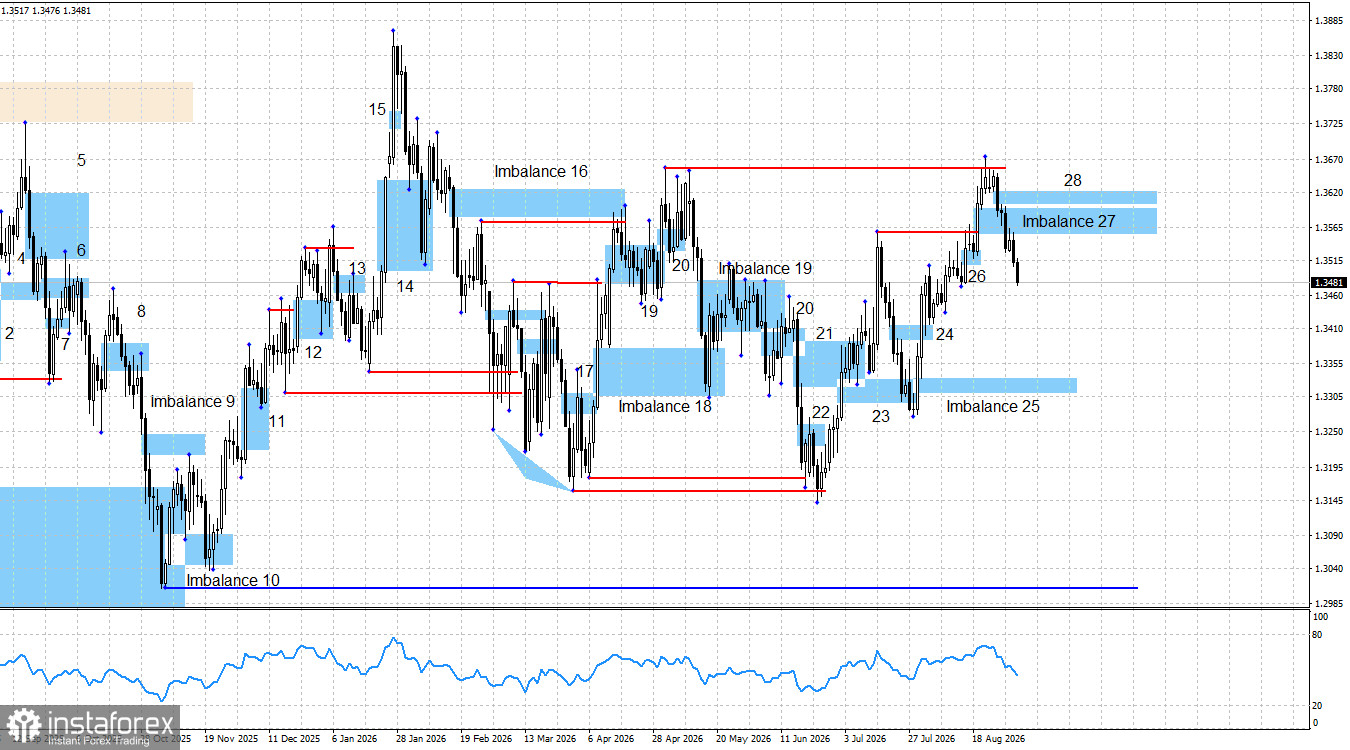
The GBP/USD pair has lost its bullish momentum. Unfortunately. In my view, saving the pound from another decline lies exclusively in the hands of... the euro. The euro currency is currently still maintaining its bullish bias and has not invalidated the last two bullish imbalances. These imbalances could save both the euro and the pound. As I said earlier, I see no reason for the bears to take control. For example, it is extremely difficult to explain today's or yesterday's decline in the pound. Today, the pound lost around 30 points even before the release of the only ADP report. Yesterday, the pound also lost around 30 points. In total, the pound has already fallen by 180 points, although I still see no compelling reasons for this decline. Unfortunately, only in hindsight can we assume that the market is once again concerned about a war in the Middle East, which is increasing demand for the dollar as a "safe haven." Or perhaps traders firmly believe that the FOMC will tighten monetary policy in September, which I personally find highly doubtful. In any case, all bullish patterns have been invalidated, and traders now have only two bearish patterns at their disposal — imbalances 27 and 28.
Over the past month, the dollar has received numerous blows, including the U.S. Treasury's decision to increase the volume of long-term bond buybacks, weak monthly Nonfarm Payrolls reports, a weak annual Nonfarm Payrolls report, a slowdown in the Consumer Price Index, a slowdown in GDP growth, and a decline in market expectations for tighter monetary policy by the Federal Reserve. However, at the most critical moment, with all the cards in their hands, the bulls retreat once again, showing that they are not interested in advancing further.
Do the bears have prospects at present? In my view, very few. As we have already established, the news background does not support the U.S. dollar. However, it should not be forgotten that not everything in the market depends solely on the news background. In the long term, the market has been range-bound for about a year. We have seen three waves to the upside, and everything points to the bulls forming a fifth wave as well. However, over the past year, we have observed an alternation of three-wave structures or similar formations. The liquidity sweep of the swing from May 1 could become a basis for a new bearish leg, which is completely inconsistent with the fundamental backdrop.
Geopolitics is no longer having a favorable effect on the dollar. Negotiations between the United States and Iran have completely become bogged down and are simply not taking place at present. From time to time, Iran and the United States exchange strikes, threats, and ultimatums, which has no effect whatsoever on resolving the conflict and ending the war. At present, no one can predict how much longer the conflict will continue.
Chart analysis shows that the picture changed from bullish to bearish in just a few days based on two highly ambiguous events. Perhaps the European currency will stop the pound's decline, but at present it is the bears who have two imbalances from which positions can be opened. The latest imbalance 27, which was initially bullish and is now an "inverted bearish" imbalance, has already received a market reaction, incidentally. However, yesterday I did not even consider the possibility that the decline would continue. I also believe that the pound's decline could end at any moment if the euro fails to overcome its imbalances.
The economic news background on Wednesday was extremely weak, while the U.S. data released in recent days does not provide a reason for the U.S. dollar's strengthening or the bears' continued attacks.
The overall news background remains such that, in the long term, I cannot expect anything other than a decline in the U.S. dollar. However, this decline once again appears to be postponed for some time. The war between Iran and the United States has not changed my long-term expectations. Geopolitics forced the market to remember the dollar's safe-haven status for several months, but the conflict has already passed its most active phase. The prospects for tighter FOMC monetary policy remain ambiguous, while the market itself constantly changes its expectations. Thus, in my view, any rise in the dollar is temporary and random in nature. I see no reason for a large-scale advance by the bears.
News calendar for the United States and the United Kingdom:
The economic events calendar for September 3 contains three entries, among which the ISM index stands out. The economic backdrop may affect market sentiment in the second half of the day on Thursday.
GBP/USD Forecast and Trading Tips:
The long-term picture for the pound remains bullish. After liquidity sweeps of the two most recent swings and the formation of a series of buy signals, the bulls may still continue their advance. Unfortunately, the bears have controlled the initiative over the past week, and all the latest bullish patterns have been invalidated. The bears currently have chart-based grounds for an advance. Only the euro currency can save the pound. The liquidity sweep of the swing from May 1 allowed the decline to begin; a sell signal was formed within inverted imbalance 27. How long the pound will continue to fall is difficult to say. Two bullish imbalances on EUR/USD could well stop the decline. On Friday, there will be important U.S. reports on the labor market and unemployment.


