
Vea también


 03.11.2026 06:00 AM
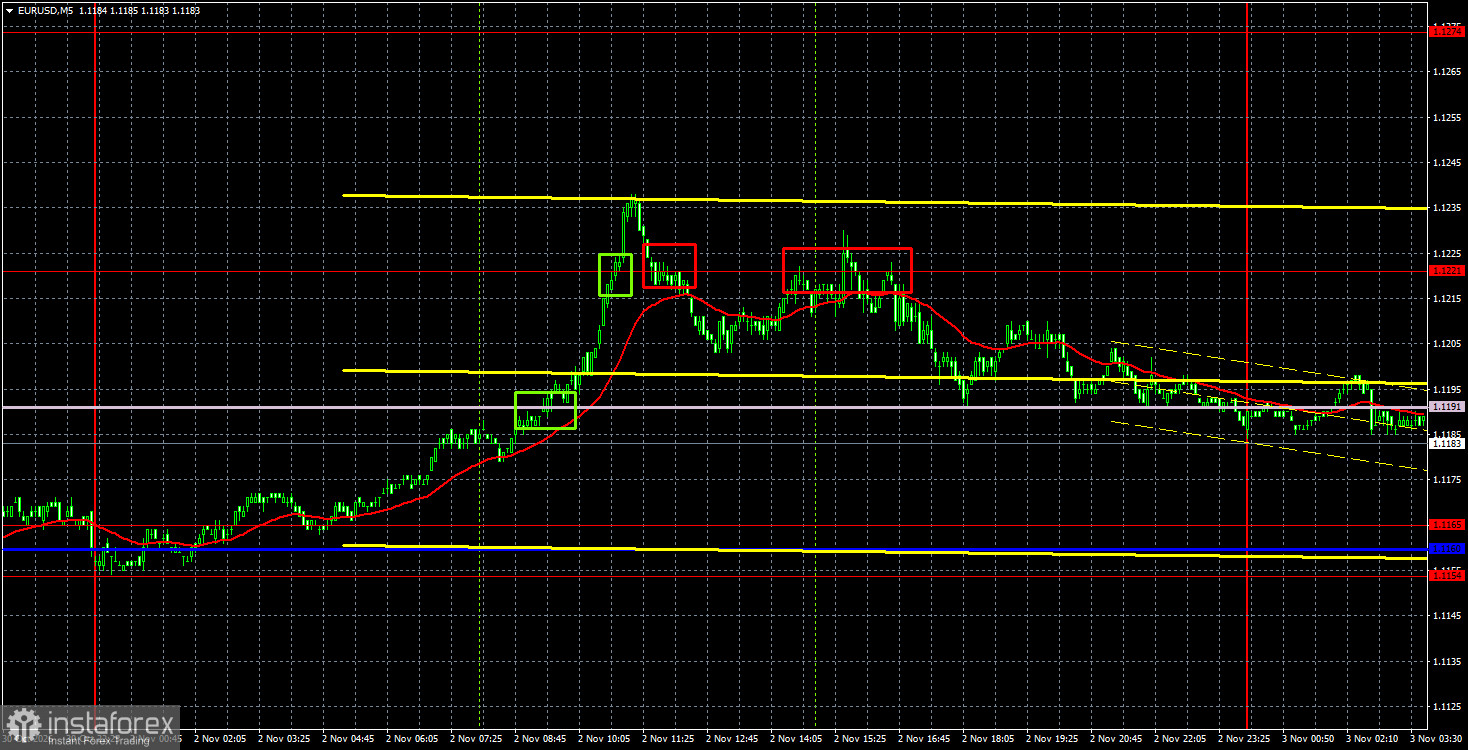
The EUR/USD currency pair showed little action on Monday, although the day's start was encouraging for the European currency. The euro posted a fairly decent rise amid a decline in geopolitical tension, which again may turn out to be a "false alarm." Recall that yesterday top US and Iranian officials allowed for the possibility of resuming peace talks, but this "possibility" does not mean that full-scale negotiations will take place tomorrow or in the near term. Moreover, Donald Trump has already deployed a significant military contingent to the Middle East, and Iran has targeted US military bases outside the region. Thus, Tehran and Washington have drawn their weapons and are preparing for a new war. Therefore, we would not take all talk of possible renewed negotiations seriously now. The market likely did not either, since the dollar was already strengthening in the afternoon. The ISM manufacturing business activity index, which came in higher than forecast, also gave the dollar modest support. However, macroeconomic data have long since ceased to be the top priority for EUR/USD traders. Essentially, the euro fell for two months straight and then entered a flat phase between 1.1115 and 1.1274. The flat is fairly wide, but the main problem now is the euro's inability to correct.
Technically, the downtrend may be over since the trendline was breached. The Ichimoku indicator line now supports the euro, but a new local trendline is also exerting pressure from above. And all of this is happening inside the sideways channel.
On the 5-minute timeframe, four trading signals were generated on Monday. In the morning, the price broke the Senkou Span B line and then the 1.1221 level. However, the subsequent rise was not continued, and two sell signals formed. Thus, traders could open a long position first and then a short position. In both cases, the price reached the nearest target.
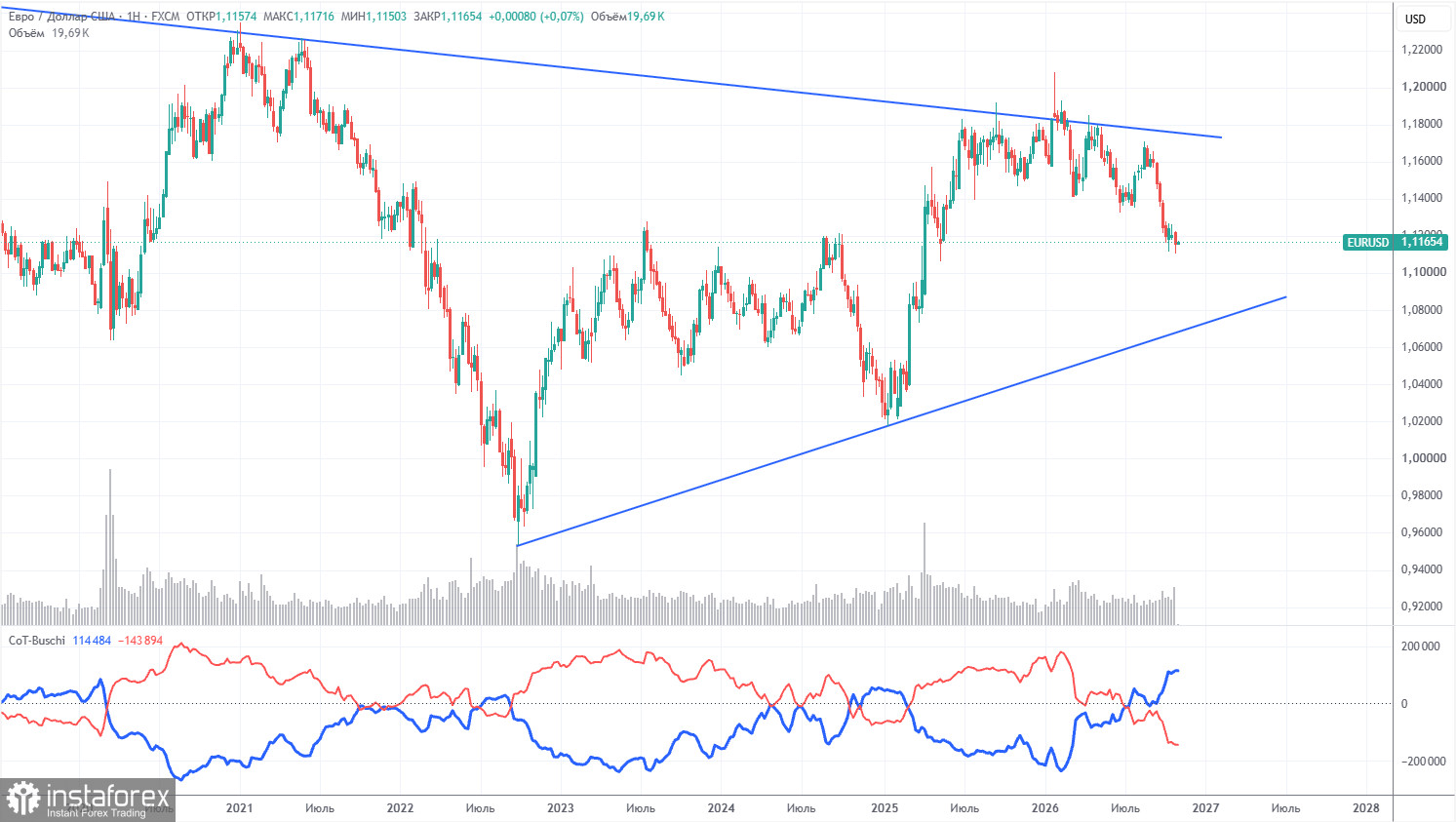
The latest COT report is dated October 27. On the weekly timeframe, the net position of non-commercial traders remains bearish and has fallen substantially in 2026 amid geopolitical events. Over the past eight months, traders have been exiting the euro in favor of the U.S. dollar. Donald Trump's policies have not changed, and the dollar has at times served as a reserve currency.
However, we still do not see fundamental reasons for sustained U.S. dollar strength. The Middle East war made the dollar temporarily highly attractive, and the Federal Reserve's policy stance surprised markets for the second time this year. Over the long term, the euro could fall to around $1.08 (the trend line), but the longer-term uptrend remains intact. Recently, the market has priced in only dollar-positive factors and ignored everything else.
The arrangement of the red and blue indicator lines points to a bears' advantage. During the last reporting week, long positions among the "Non-commercial" group rose by 4,200, while shorts increased by 13,600. Accordingly, the net position fell by another 9,400 contracts over the week.
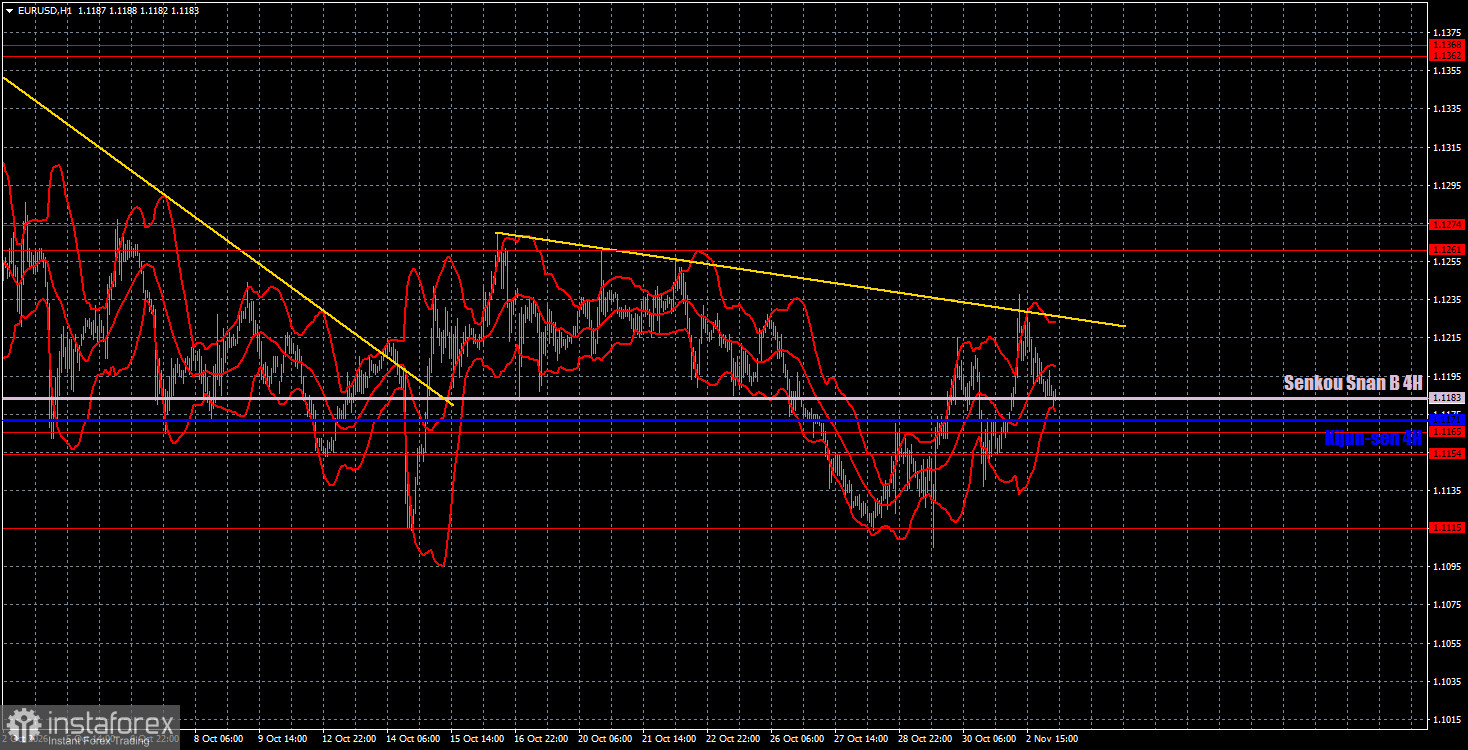
On the hourly timeframe, EUR/USD could form an uptrend, but for now it is firmly stuck in a sideways channel. On the daily and weekly timeframes, the chances of a strong, sustained trend remain high. However, for the euro to rise, it must be bought. Over the past two months, we have not observed much willingness in the market to buy the euro. Thus, based on market sentiment, we would say that the euro's rise still looks doubtful.
For November 3 we highlight the following levels for trading — 1.1006, 1.1115, 1.1154–1.1165, 1.1261–1.1274, 1.1362–1.1368, 1.1461–1.1473, 1.1536–1.1542, 1.1585, 1.1657–1.1665, as well as the Ichimoku Senkou Span B line (1.1183) and Kijun-sen (1.1171). The Ichimoku indicator lines may move during the day, so account for this when determining trade signals. Remember to move your Stop Loss to breakeven if the price moves 15 pips in the correct direction. This will protect against possible losses if the signal proves false.
On Tuesday, no important events or releases are scheduled in the eurozone, and in the US the JOLTS job openings report will be published today, which we do not consider important. Therefore, traders will have little to react to today, and the US election results will likely not be known before Wednesday.
Traders can consider targets for short positions near 1.1115 if the price consolidates below the 1.1154–1.1165 area. If price bounces from the 1.1154–1.1183 area, consider a long position at 1.1261–1.1274.


