
আরও দেখুন


 17.07.2026 02:06 PM
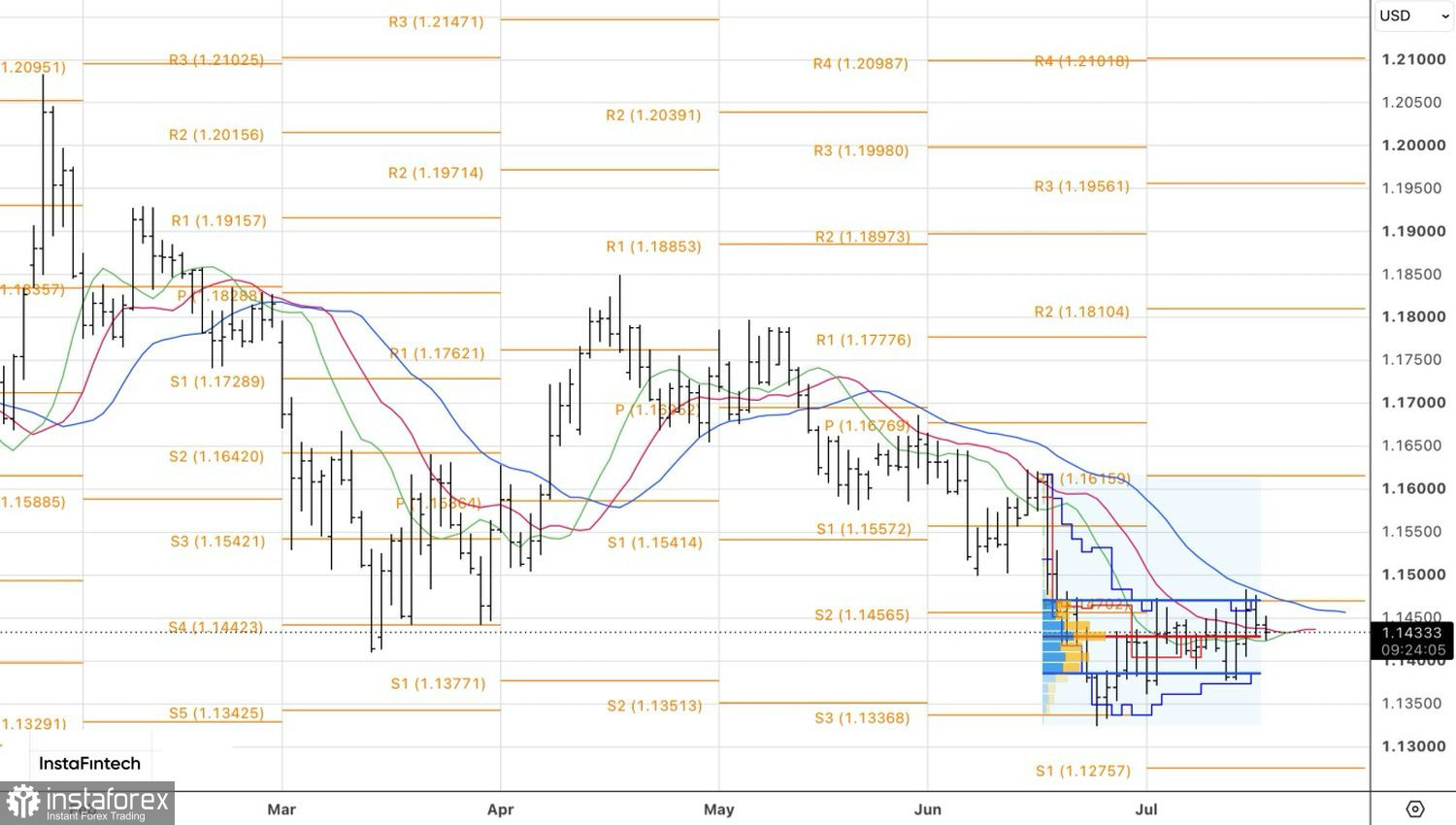
The European Central Bank (ECB) appears to be taking a cautious approach, with expectations that interest rates will remain unchanged in July before a final decision is made in September. Meanwhile, EUR/USD continues to trade within the 1.1370–1.1470 consolidation range as traders reduce their positions ahead of the ECB Governing Council meeting and upcoming business activity data releases.
A Bloomberg survey leaves little room for surprises: all respondents expect the ECB to keep its deposit rate unchanged on July 23. However, most economists anticipate a 25-basis-point rate increase to 2.50% in September, when the ECB will have updated quarterly economic projections. The reasoning is straightforward: the conflict involving Iran has driven oil prices higher, triggering the strongest inflation surge in the eurozone since 2023.
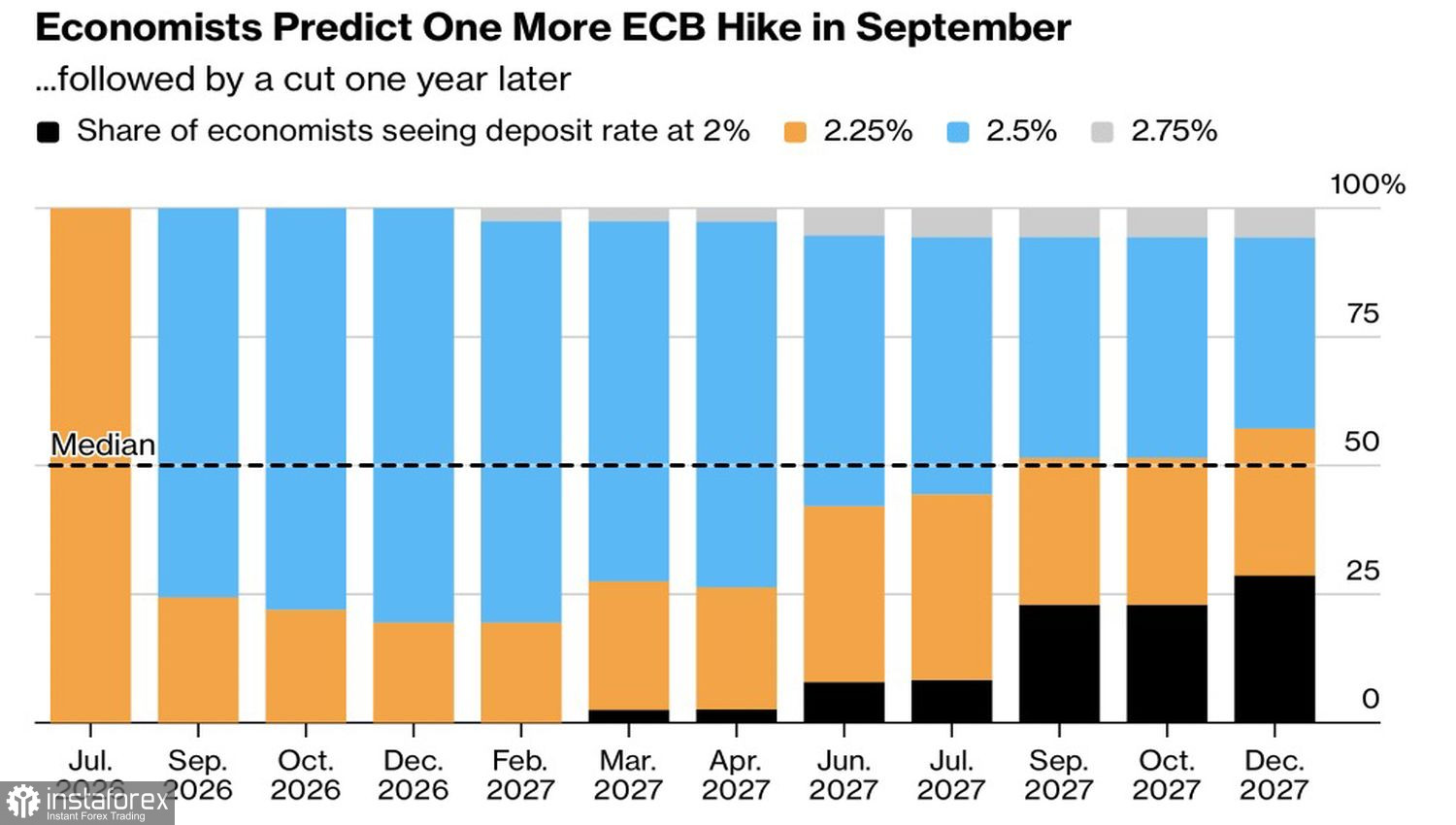
However, the hawkish scenario is far from certain. Inflation slowed more than expected in June, while there are still no signs of a wage-price spiral taking hold. Bundesbank President Joachim Nagel continues to call for vigilance, describing current interest rates as "appropriate," but has stopped short of explicitly endorsing a September rate hike. ECB President Christine Lagarde, for her part, has deliberately refrained from providing forward guidance, leaving markets to speculate about the central bank's next move.
As usual, developments in the Middle East remain the key variable. The fragile ceasefire between the United States and Iran reached last month has already given way to renewed military action. A limited escalation would likely justify an extended pause by the ECB, whereas a major disruption to oil and natural gas supplies could revive second-round inflation effects and force policymakers to revisit inflation expectations.
HSBC questions whether a September rate hike is a foregone conclusion. If progress continues in peace negotiations and energy supply conditions improve, the ECB may have no need to tighten policy further. Danske Bank, by contrast, maintains a bearish outlook for EUR/USD, targeting 1.1100, based on expectations of stronger US economic growth and a more aggressive Federal Reserve.
The US dollar, however, is not without its vulnerabilities. MUFG argues that softer US inflation and dovish comments from Kevin Warsh, who described AI-related inflationary pressures as temporary, support the case for a Federal Reserve pause and a subsequent weakening of the greenback. Bank of America takes the opposite view, identifying three major bullish drivers for the US dollar in the second half of the year: developments in the Strait of Hormuz, a hawkish Federal Reserve with the potential for three additional rate hikes, and continued capital spending on artificial intelligence by hyperscale technology companies.
The result is an interesting market picture. Nearly everyone expects the ECB to pause next week, but opinions diverge sharply regarding September, the Federal Reserve's policy path, and the direction of geopolitical developments and their impact on currency markets. Ultimately, the outcome will be determined not by economists' surveys but by events unfolding in the Middle East.
From a technical perspective, the daily chart shows EUR/USD continuing to trade within the 1.1370–1.1470 consolidation range. The strategy of selling the euro near the upper boundary of this range has already provided an opportunity to establish short positions. For now, those positions remain worth holding.


