
See also


 05.03.2026 12:56 AM
In early 2026, the European Union likely realized what is already obvious to many market participants and economists: Trump will continue to apply pressure unless it is resisted. For example, at the beginning of the year, Trump wanted to seize Greenland, which belongs to Denmark, a part of the European Union, most of which is in NATO. Such a paradox! It's interesting to ponder whether NATO's statutes include a clause on a member state attacking another. Probably, Trump wanted, in the best traditions of the 90s, to simply "quietly and smoothly take" a huge island in the Atlantic Ocean, justifying it with issues of US national security. This time, the EU did not yield to the White House. Instead, it realized that Trump will continue to take pieces from everything that is poorly defended.
On Wednesday, German Chancellor Friedrich Merz stated that the EU will not accept trade agreement terms that are worse than those reached last year. For the first time, one of the EU leaders mentioned the disproportion of tariffs between the US and the EU. Recall that, under the "Trump deal," Europe has to pay tariffs (essentially, American consumers must pay duties on European goods), while the US does not. "We have reached the limit of what we are willing to accept and what we are not," the German chancellor reported.
Merz also commented on Trump's words about fully halting trade with Spain, which previously denied Washington permission to establish its military bases for American armed forces. The US president wanted to use European countries to position his air fleet for further bombings of Iran. Later, Trump asserted that he could "just take and use Spain's bases without even asking for permission." However, it seems that he cannot, and once again, the leader of the White House is offended. Merz stated that Spain is a full member of the European Union, and trade tariffs, like trade itself, cannot be selective within the EU. America either trades with the entire EU or not at all.
Based on all of the above, it seems there may be no deals between the EU and the US at all. Trump is now constrained by the figure of "15%" and cannot set tariffs above that level. The EU could take advantage of this if it does not choose to concede to Trump again, as it did last year.
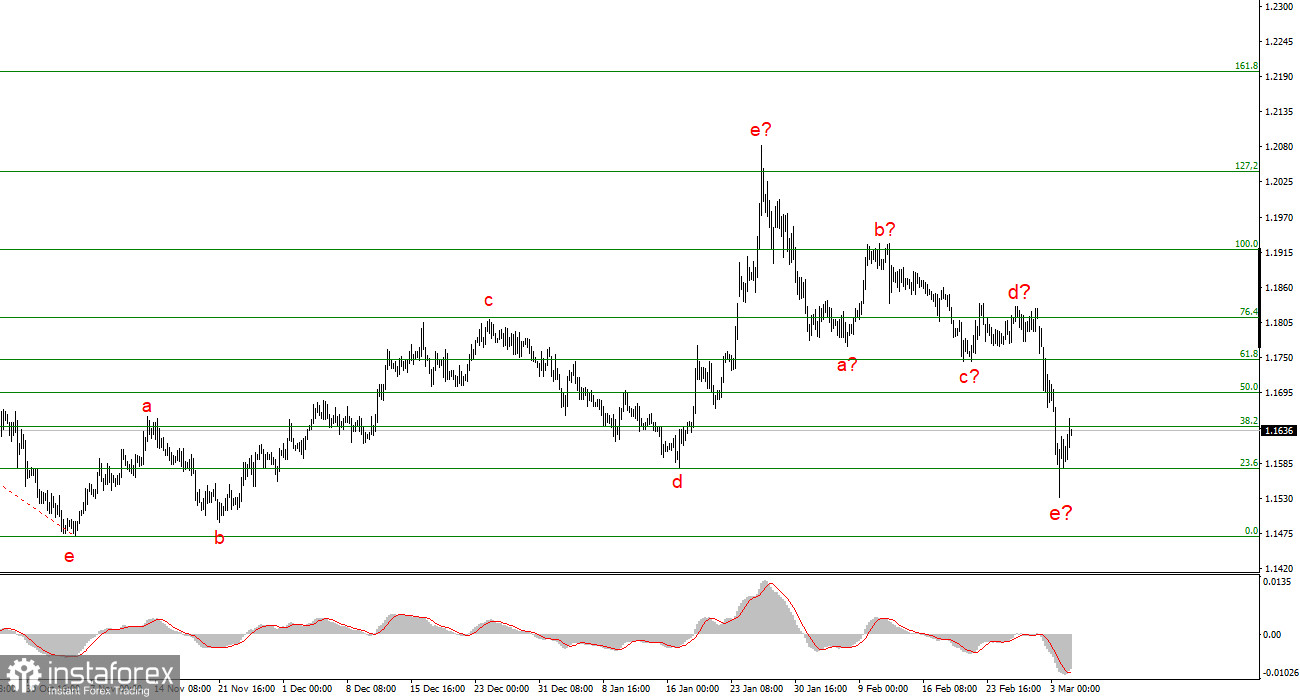
Based on the analysis of EUR/USD, I conclude that the instrument continues to build a bullish segment of the trend. Trump's policies and the Fed's monetary policy remain significant factors in the long-term decline of the American currency. The targets for the current segment of the trend could reach the 25 figure. At this moment, I believe the instrument remains within the framework of the global wave 5, so I expect prices to rise in the first half of 2026. The corrective structure a-b-c-d-e can finish at any moment, as it has taken a convincing form. I believe it is sensible to search for areas and levels for new purchases with targets located around 1.2195 and 1.2367, which correspond to 161.8% and 200.0% Fibonacci.
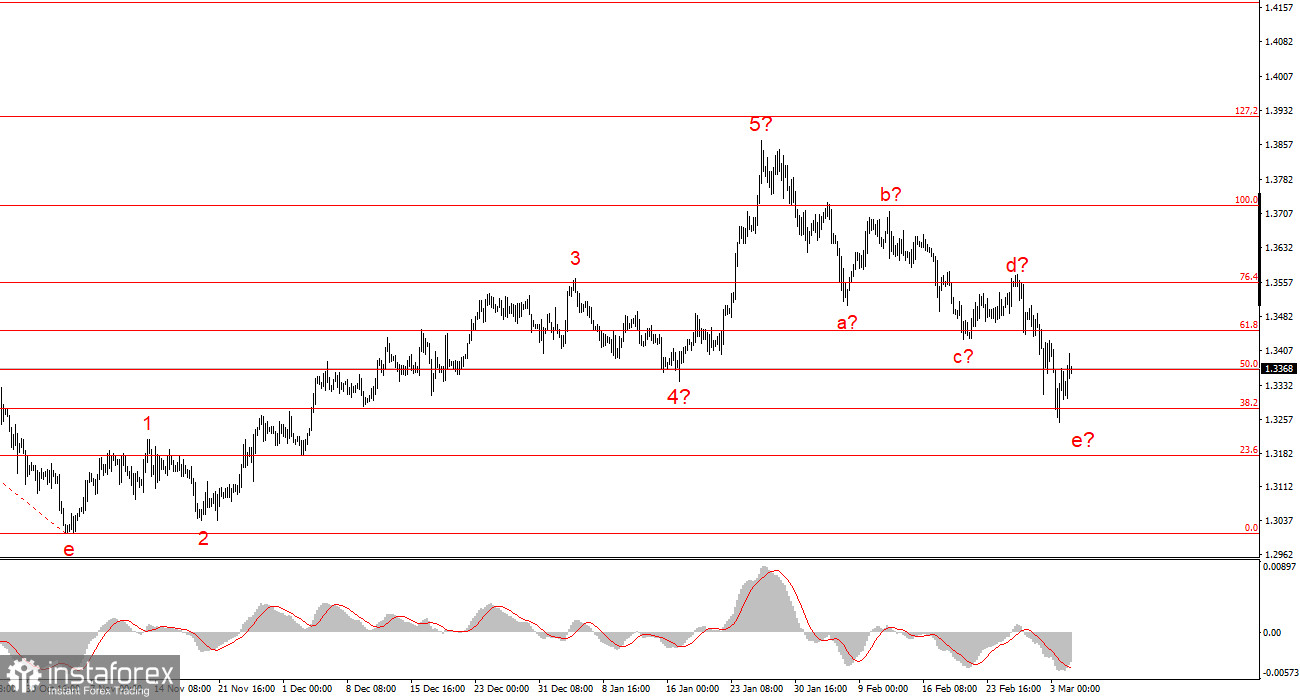
The wave structure of the GBP/USD instrument appears quite clear. The five-wave upward structure has completed its formation, but the global wave 5 may take a much more extended form. I believe that the construction of a corrective wave set may be completed soon, after which the upward trend will resume. Therefore, I can currently advise looking for opportunities for new purchases with targets positioned above the 39 figure. In my view, under Trump, the British pound has every chance of rising to $1.45-$1.50, but recent events in the Middle East are currently complicating the corrective structure.


