
यह भी देखें


 03.11.2026 03:39 PM
While the euro remains in a narrow channel, news has emerged that eurozone governments must nominate candidates to replace Christine Lagarde as ECB president by Friday, November 6. Eurogroup chair Kyriakos Pierrakakis asked countries to submit proposals by that date, and ministers will take stock at a meeting on November 9.
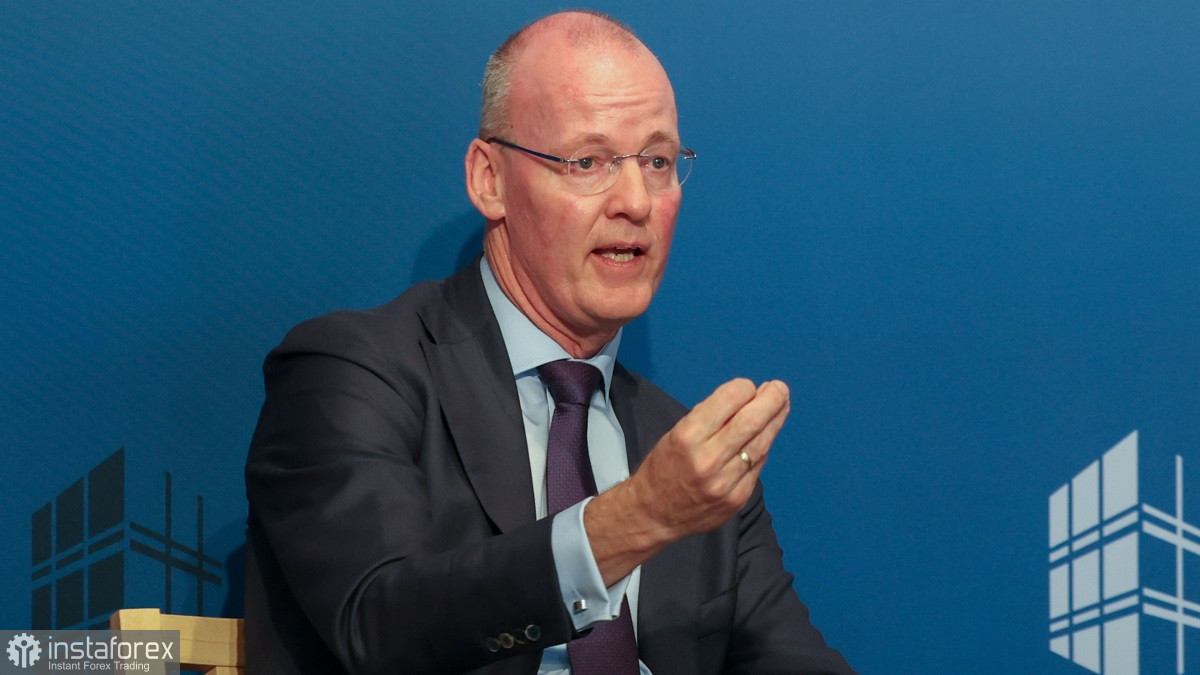
Two names are currently on the list: former Bank of Spain governor Pablo Hernandez de Cos, now heading the Bank for International Settlements, and former Dutch central bank chief Klaas Knot.
A reminder: Lagarde has not yet departed. Last week she informed the Governing Council and European Council President Antonio Costa that she will leave the post on February 7, 2027. That is roughly nine months earlier than her term's scheduled end on October 31, 2027. She has served as ECB president since November 2019, so meetings on December 17 with fresh staff projections and sessions early next year remain on the calendar.
The ECB offered no official reason for the timing, but Lagarde explained her step candidly. "I do not think I can remain neutral," she said at the October 29 press conference. She argued that leaving will allow her to speak on matters beyond monetary policy, and she has expressed interest in discussing next year's French presidential elections. She declined to say whether she would back any candidate. Note also a more pragmatic explanation published earlier this year by the Financial Times and Reuters, when the first rumors surfaced: Lagarde reportedly wants to depart before the French spring elections so that Macron—who cannot run again—and Merz can choose a successor while current leadership remains in place. The idea is that Lagarde's February departure would give current EU leaders time to pick a successor before elections in which polls show Marine Le Pen leading. The ECB previously denied this.
The urgency stems from the fact that more than one seat is at stake. Three of six Executive Board positions will change. Isabel Schnabel, responsible for markets, will leave in early January, about a year before her term ends. The mandate of chief economist Philip Lane expires in May.
What Macron wants. France would support Klaas Knot for ECB president, provided the chief economist role goes to a French candidate. The proposal is informal but backed by Macron himself. As noted, the current chief economist Philip Lane's term expires in May. The post is important because the chief economist produces the ECB's projections, rate models, and advice to the council. The French rationale is clear: public debt is rising, bond yields are above 5%, and Paris wants influence over monetary policy.
What Merz wants. Berlin is no longer considering Bundesbank president Joachim Nagel. Germany has never held the ECB presidency, and with European Commission President Ursula von der Leyen being German, this works against a German candidate. Berlin will likely back someone with "stability ideas," i.e., a strong inflation-targeting stance, while securing another key seat for itself.
For now, both capitals, according to reports, lean toward Knot, valued for his experience and seen as a hawk. For Germany he is "one of their own," and for France he is acceptable if the chief economist slot goes to a French nominee. That is precisely the sticking point: both governments want the same post, complicating a package deal. If de Cos becomes president, the chief economist role would almost certainly go to a representative of the "frugal" north.
Knot looks like the most likely candidate at present, but nothing is decided. His election would probably increase expectations of further rate rises and give the euro modest support. De Cos, by contrast, is perceived as dovish; his victory would soften market expectations. I expect the euro to remain largely insensitive to candidate news until the November 26–27 summit and to continue trading on the logic of a December rate hike and oil prices.
Technical picture for EUR/USD
Buyers should consider how to take 1.1200. Only then would a test of 1.1230 be possible. From there a move to 1.1255 is attainable, but achieving this without support from major players will be difficult. On a decline, I expect meaningful action from large buyers only around 1.1170. If no one appears there, it would be prudent to wait for a fresh low at 1.1140 or to open longs from 1.1110.
Technical picture for GBP/USD
Pound buyers should aim to take the nearest resistance at 1.3425. Only then would a move to 1.3444 be possible, above which further progress will be difficult. The furthest target is around 1.3467. On a drop, bears will try to seize control at 1.3395. If they succeed, a range breakout would inflict serious damage on bulls and push GBP/USD toward 1.3374 with the prospect of extension to 1.3354.

