
Veja também


 14.08.2026 05:33 AM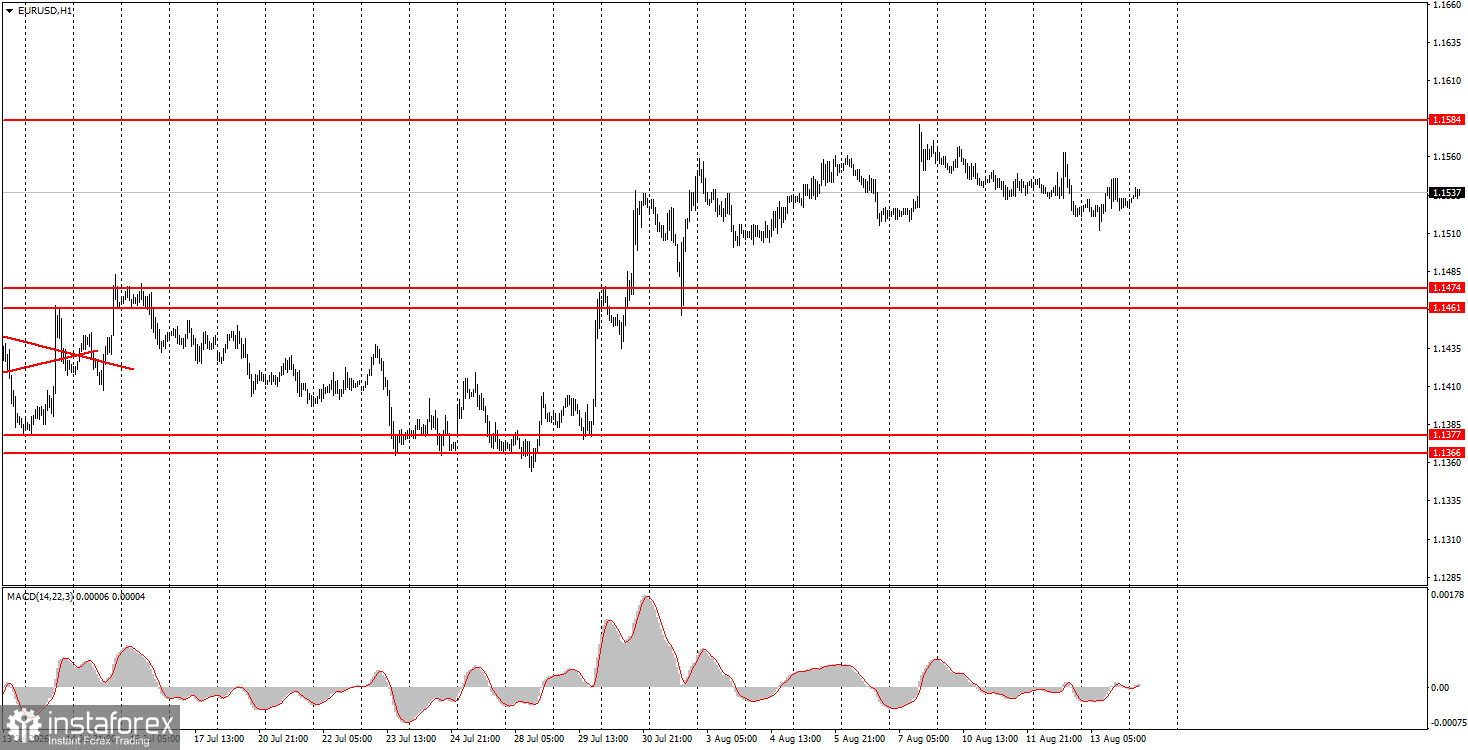
Several macroeconomic releases are scheduled for Thursday. In the European Union today, the Q2 GDP report will be published, but most experts say this indicator is not important. In the United States today there are medium-significance reports: retail sales and the University of Michigan consumer sentiment index. If the actual values deviate strongly from forecasts, they could provoke a market reaction. However, volatility in the currency market has been rather weak for two weeks now. Therefore, it is unlikely we will see strong movements today.
There is absolutely nothing to single out among Friday's fundamental events. Comments from Federal Reserve representatives would be interesting at this time, because traders need to understand the current stance of the US central bank. Recent US labor market reports have been disappointing; inflation has slowed for the second consecutive time, yet it remains fairly high. On the one hand, the key rate should be raised; on the other hand, why raise it if inflation is falling and the labor market is experiencing renewed problems? The more "dovish" comments we hear, the worse the dollar's position may become. We believe the Fed will not tighten monetary policy in September.
The geopolitical background still leaves much to be desired. The US and Iran continue to exchange strikes regularly; negotiations are not being conducted at this time; the Strait of Hormuz remains closed or partially closed, Yemeni Houthis maintain a blockade of Saudi Arabia, and Tehran threatens to completely close the Bab-el-Mandeb Strait if Washington again tries to pressure it. The market does not believe Donald Trump's statements, and Iran now prefers to negotiate with Oman rather than with the US. Tehran has presented a list of demands to Washington that are necessary for reopening the Strait of Hormuz, but Trump is unlikely to comply.
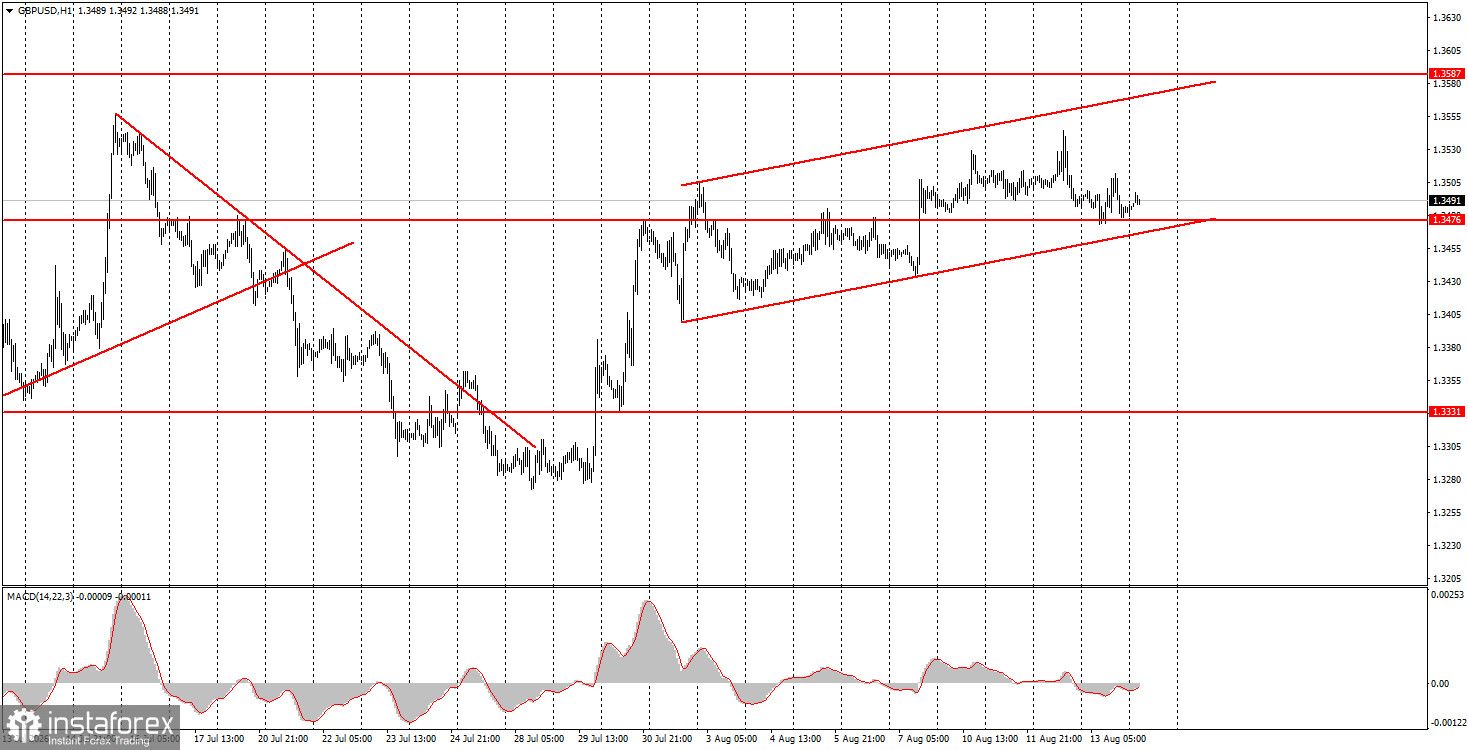
During the last trading day of the week, currency pairs may again trade rather weakly, since even this week's inflation report failed to stir the market. The euro can be traded today from the area 1.1527–1.1531, and the pound sterling from the area 1.3456–1.3476.
Support and resistance price levels (areas) are the targets when opening buy or sell orders or sources of signals.
Red lines denote channels or trend lines that reflect the current trend and indicate in which direction trading is currently favored.
The MACD indicator (14,22,3) – histogram and signal line – is a supporting indicator that can also be used as a source of signals.
Important speeches and reports (as listed in the news calendar) can significantly influence the movement of the currency pair. Therefore, during their release, trading should be approached with utmost caution, or one should exit the market to avoid sharp price reversals against the preceding movement.
Beginners in Forex trading should remember that not every trade can be profitable. Developing a clear strategy and proper money management are essential for long-term trading success.


