
Vea también


 15.09.2026 01:57 PM
Last week, spot crypto ETFs delivered a mixed but telling picture. Bitcoin funds saw net outflows of $462.73m, while Ether funds drew inflows of $197.11m. Smaller altcoin ETFs posted mixed but mostly positive results: XRP +$18.98m, Solana +$10.3m, Chainlink +$5.36m, HBAR +$1.25m, DOT +$0.633m. Notable exceptions: HYPE suffered $26.42m of outflows, while BNB, TRX, DOGE and LTC showed virtually no flows.

The cause?and?effect here is straightforward: the week before a Fed decision is traditionally a period of reduced risk appetite for the most liquid and institutional crypto asset — Bitcoin — whereas Ethereum in this instance played the role of an intra?crypto allocation vehicle rather than an exit route from the market. Beneficiaries of this rotation were Ethereum holders and certain altcoins with positive flows, while Bitcoin acted as a profit?taking vehicle ahead of uncertainty.
Importantly, the market itself has been able to trade calmly up to the Fed meeting: there was no panic flight from crypto overall, because Bitcoin's outflows were almost entirely offset by inflows into Ether and altcoins. Yet the structure of flows indicates that money has largely been reallocated ahead of the decision rather than being redistributed reactively after the rate announcement. That creates the risk that the market's reaction to the Fed could be sharper than implied by the outwardly calm price action of recent days — large institutional positions are already set and merely awaiting a trigger.
My view is that this combination — calm price behavior accompanied by a significant internal regrouping of flows — is the main signal of the week: the market is not afraid enough to flee to cash en masse, but neither is it confident enough to increase total exposure ahead of the event.
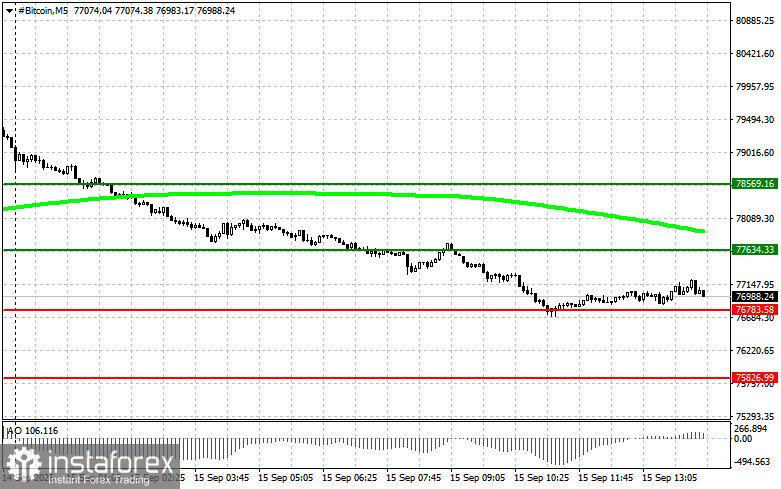
Trading plan (BTC)
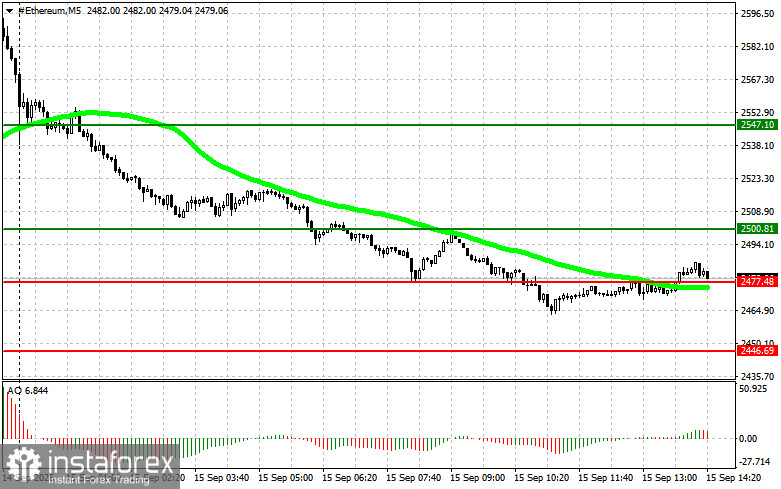
Trading plan (ETH)
Both the 50?day moving average and the Awesome Oscillator are used solely as filters to weed out false moves, not as standalone entry signals — trades should be executed only after price has confirmed the specified levels.


