
Vea también


 13.10.2026 09:42 AM
Today, oil eased after three days of gains driven by fears that an expanding Middle East war would disrupt the recovery of regional supplies. Brent fell to $105 per barrel after rising more than 6% over the previous three sessions, while WTI trades below $93. For comparison, on October 9 Brent was $102.94 and WTI $90.37, and on Monday morning Brent rallied to $105.63. Diesel in New York fell for a third day after Russia agreed to release more volumes at Donald Trump's request.

The main source of the rise was Houthi strikes on Riyadh's main airport, which increased pressure on Washington to participate more actively in the Yemen conflict. Weekend attacks killed at least 16 people, including a US citizen, and wounded about 300, and Trump said he would consider joining strikes on the Iran-backed group alongside Saudi forces. This followed a Riyadh-led campaign to retake areas from the Houthis and came amid growing strikes on tankers in the Strait of Hormuz.
Meanwhile, the statement about an "energy truce" between Russia and Ukraine has begun to fall apart. Trump said the agreement was being violated, and Volodymyr Zelensky replied that Ukraine will continue strikes on Russia because the country's energy infrastructure remains under attack.
Saudi Arabia is seeking ways to export oil without transiting the Strait of Hormuz. Energy minister Prince Abdulaziz bin Salman said on Monday that Saudi Aramco could add 1.2 million barrels per day of export capacity within seven to eight weeks by repurposing existing pipelines. In two to three years, the country plans to expand total bypass pipeline capacity by 40% to 10 million barrels per day. Recall that the East-West pipeline resumed operations after a September shutdown, and on October 7 it carried 5.8 million barrels, so this is a real cushion though not a quick fix.
Some Wall Street banks say crude shipments from the region have returned nearly to prewar levels, and JPMorgan estimates they reached 98%.
In my view, Brent will remain in the $100–108 range in the coming sessions, with risks skewed to the upside. US participation in strikes on the Houthis or a new attack on Saudi infrastructure could quickly push prices above $106, while a close below $100 is unlikely as tankers reroute from the Gulf and the risk premium remains high. Easing diesel pressure from Russian supplies and European reserves is more likely to affect refined products than crude, meaning inflationary pressure on the Federal Reserve and European Central Bank will persist.
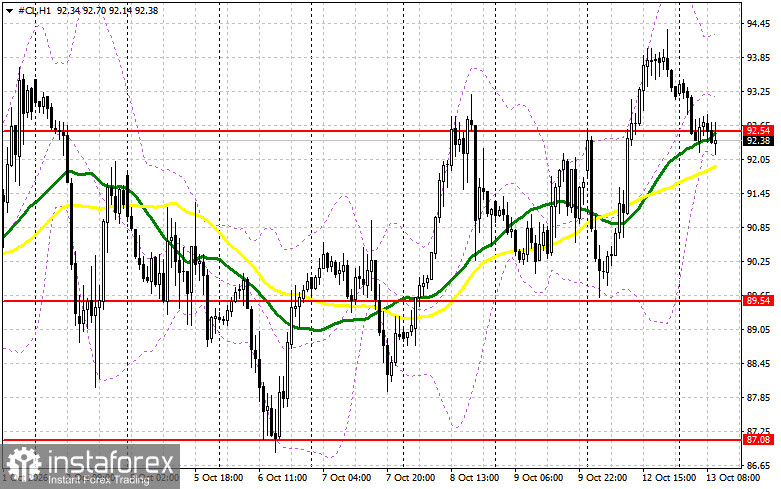
On the technical side, buyers need to take the nearest resistance at $92 to reach $96, above which a breakout will be difficult. The most distant target is the $100 area. If oil falls, bears will try to take control of $89. If they succeed, a range breakout would deal a serious blow to bull positions and push oil down to a low of $87, with the prospect of extending to $83.


