
Vea también


 03.11.2026 05:42 AM
The geopolitical conflict in the Middle East persists; the geopolitical spring has been compressing for several weeks, and the market is frozen in anticipation of a new explosion. Recall that Iran and the US took a voluntary pause in the war because Donald Trump needed to preserve the remnants of his former electorate support before the congressional elections. Iran, for its part, did everything possible to prevent a Republican victory in those same elections. Trump tried by all means to somewhat lower oil and diesel prices, while Iran did everything it could to keep prices at maximum levels, constantly attacking ships in the Strait of Hormuz. As a result, during the geopolitical pause, Brent crude rose for the third time to $120 in 2026.
Thus, even without the resumption of hostilities, oil has already returned to record levels. What will happen if the conflict resumes? From our point of view, oil prices will continue to rise either way. The world now lives off energy reserves stockpiled for a rainy day. The rainy day has come and has already lasted eight months; supplies will run out sooner or later, while demand for energy resources will only increase as it gets colder outside. Therefore, if the situation in the Strait of Hormuz is not resolved this month, the world faces a real energy shock this winter.
Against this background, Iran again said it is ready to open the Strait of Hormuz within 48 hours at any moment. For this, Washington would only need to meet all of Iran's demands, which, as we all recall, include lifting sanctions, unfreezing Iranian assets, withdrawing the US contingent from the region, and much more. In essence, Tehran takes a fairly reasonable position, since it likely discussed all this in the infamous Memorandum of Understanding reached in the summer. It remains unclear who violated the memorandum's terms. Only one thing is certain: it no longer functions. Therefore, Iran can offer to open Hormuz 28 more times, but Trump will not accept that option to resolve the conflict.
In any case, the world no longer needs negotiations that can drag on for months. The world does not need piecemeal concessions. The world does not need words and promises. The world needs oil. Therefore, we believe that any news that "talks will resume any moment," "diplomacy will be given another chance," "the Strait of Hormuz can be unblocked within 48 hours," etc., is meaningless. Oil fell to $108–109 per barrel on Monday, but who felt any relief? It is worth recalling that oil is a market instrument like any currency pair or stock. Price cannot move in only one direction indefinitely. Thus Monday's decline in "black gold" may be a banal pullback. We believe that without a real ceasefire in November, prices should be expected to rise to the $130–140 per barrel range.
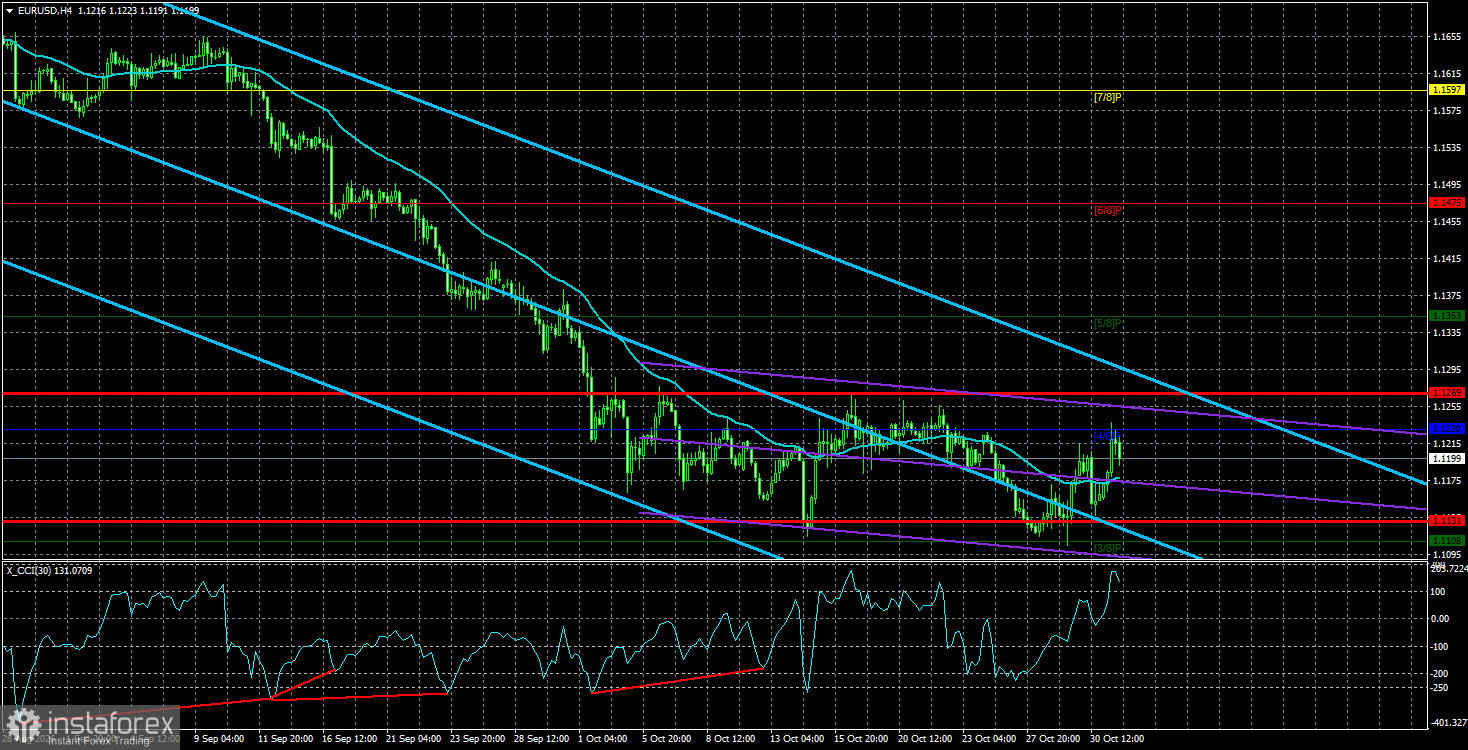
The EUR/USD pair continues to move downward, but we still view the pair's decline as a correction before a new upward trend. The global fundamental backdrop for the dollar remains negative, but in 2026, geopolitics first and then the Federal Reserve's hawkish stance provided strong support for the US currency. When the price is below the moving average, consider short positions with targets of 1.1131 and 1.1108. Above the moving average, long positions are relevant with targets of 1.1269 and 1.1353.
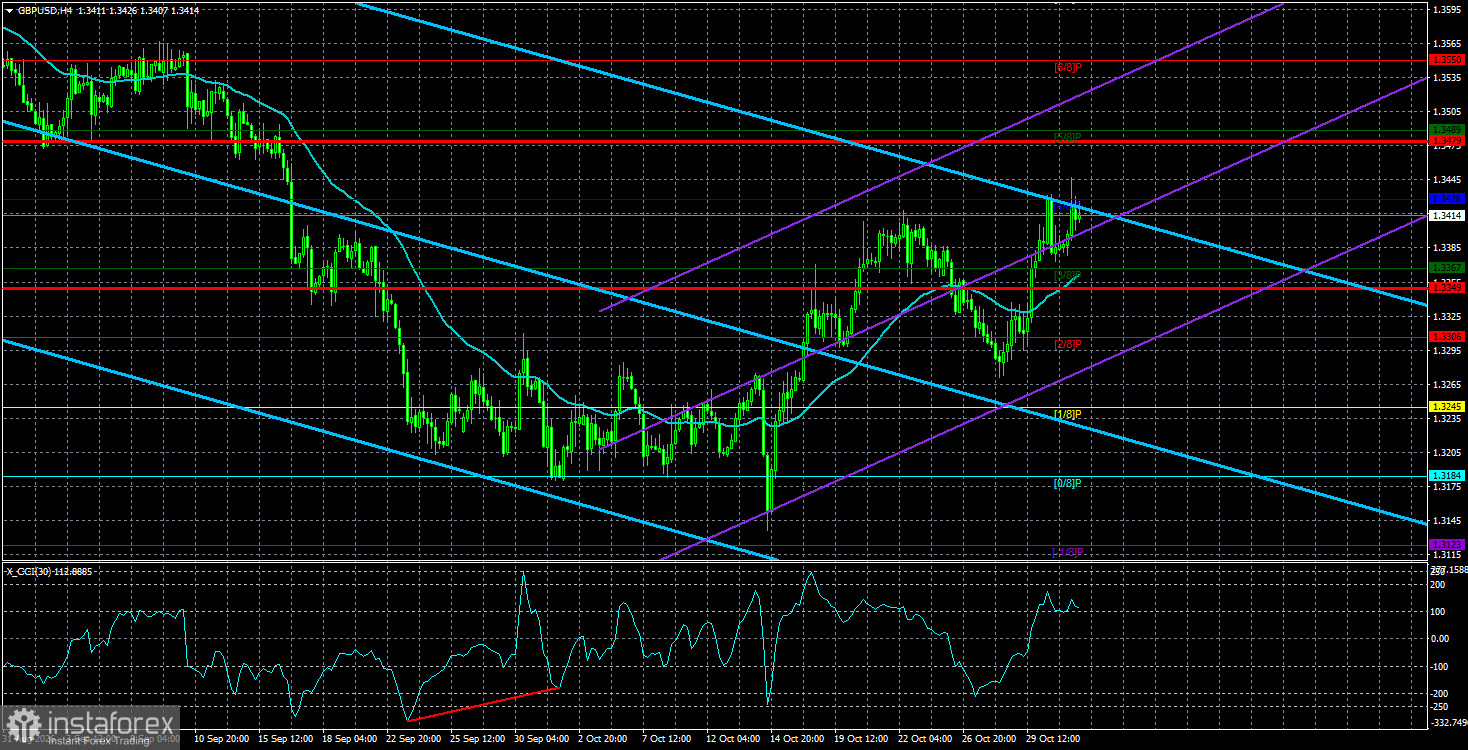
The GBP/USD pair has begun an uptrend that could become the start of a sustained trend. Trump's policies will continue to put pressure on the US economy, so we do not expect long-term appreciation of the US dollar. The year 2026 has been positive for the dollar so far due to geopolitics and inflation, which forced capital to seek safety and prompted the Fed to return to monetary tightening. However, on the weekly timeframe, a flat range between 1.3150 and 1.3780 within a four-year uptrend supports expectations of sterling's appreciation in the medium term. Consider long positions with targets of 1.3479 and 1.3489 when price is above the moving average. Price below the moving average allows downside trading, with targets of 1.3306 and 1.3245.


