
See also


 31.03.2026 10:38 AM
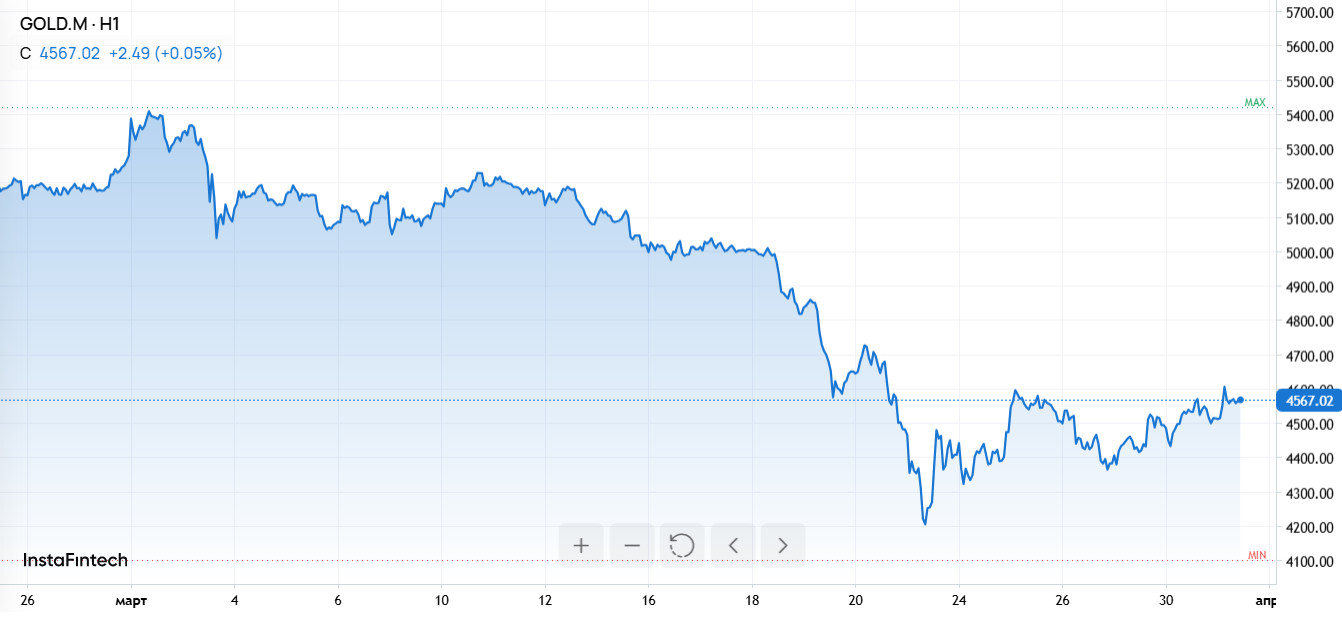
Gold prices rose notably during the Asian session on Tuesday, recovering part of the losses from March. The market was supported by expectations of a possible near-term end to the US-Iran conflict amid easing inflationary risks and discussions about the funds rate trajectory.
Why gold and other metals are rising
Precious metals gained momentum following significant March losses. One of the drivers was news that US President Donald Trump is considering ending military actions against Iran, with reports suggesting that the conflict may not involve an operation to open the Strait of Hormuz.
Additional support came from comments by Federal Reserve Chairman Jerome Powell. The Fed chair stated that long-term inflation remains stable even amid short-term shocks. This is important for gold, as it reduces concerns about persistent inflation and, consequently, interest rate trajectories.
Key levels
As of 09:17 GMT, spot gold grew 1% to $5,556.54 per ounce. Gold futures increased by 0.6%, trading at $4,587.01 per ounce.
Against this backdrop, other precious metals also gained on Tuesday:
Both metals are still preparing for amazing March results, after previously showing notably negative trends.
Trump and Hormuz: what it means for traders
The Wall Street Journal, citing a Monday evening briefing, reports that Donald Trump is discussing with aides the possibility of ending the military campaign against Iran without opening the Strait of Hormuz.
According to the article, the US side assessed that attempting to open the strait could extend the conflict beyond the original 4–6 week timeline and might require a complex military operation.
The logic, as noted, is focused on achieving key US goals: damaging Iran's naval capabilities and missile potential.
Further, the report indicates that Washington plans to exert diplomatic pressure on Tehran to reopen the strait, while also encouraging allies in the Persian Gulf and Europe to take the initiative.
For the market, there is a dual implication: even if the likelihood of conflict escalation decreases, the risk to energy supplies remains. The Strait of Hormuz accounts for 20% of global oil production, so prolonged closure could continue to fuel concerns about fuel prices and inflation.
Gold on the rise: the worst month in almost 20 years ahead
Despite the recent uptick, the overall trend remains concerning. According to market data, gold is heading toward its worst monthly performance in nearly two decades.
In March, spot gold fell by almost 14%, poised to end a seven-month winning streak. Pressure was fueled by growing doubts about further Fed rate cuts, while the start of the Iran conflict pushed oil prices up, raising expectations of higher inflation.
Signals from major central banks also contributed. The European Central Bank and the Bank of Japan indicated the possibility of raising rates to curb energy-driven inflation. In such an environment, yields on assets competing with gold rise, reducing the appeal of non-yielding assets.
What to expect for silver and platinum
This logic also applies to other metals. Amid continued pressure from interest rate expectations:
In other words, Tuesday's gains appear more like a technical and news-driven correction, while the key question for the market remains: how long will inflation and interest rate risks tied to geopolitics and energy supplies persist?


