
Vea también


 12.11.2026 09:20 AM
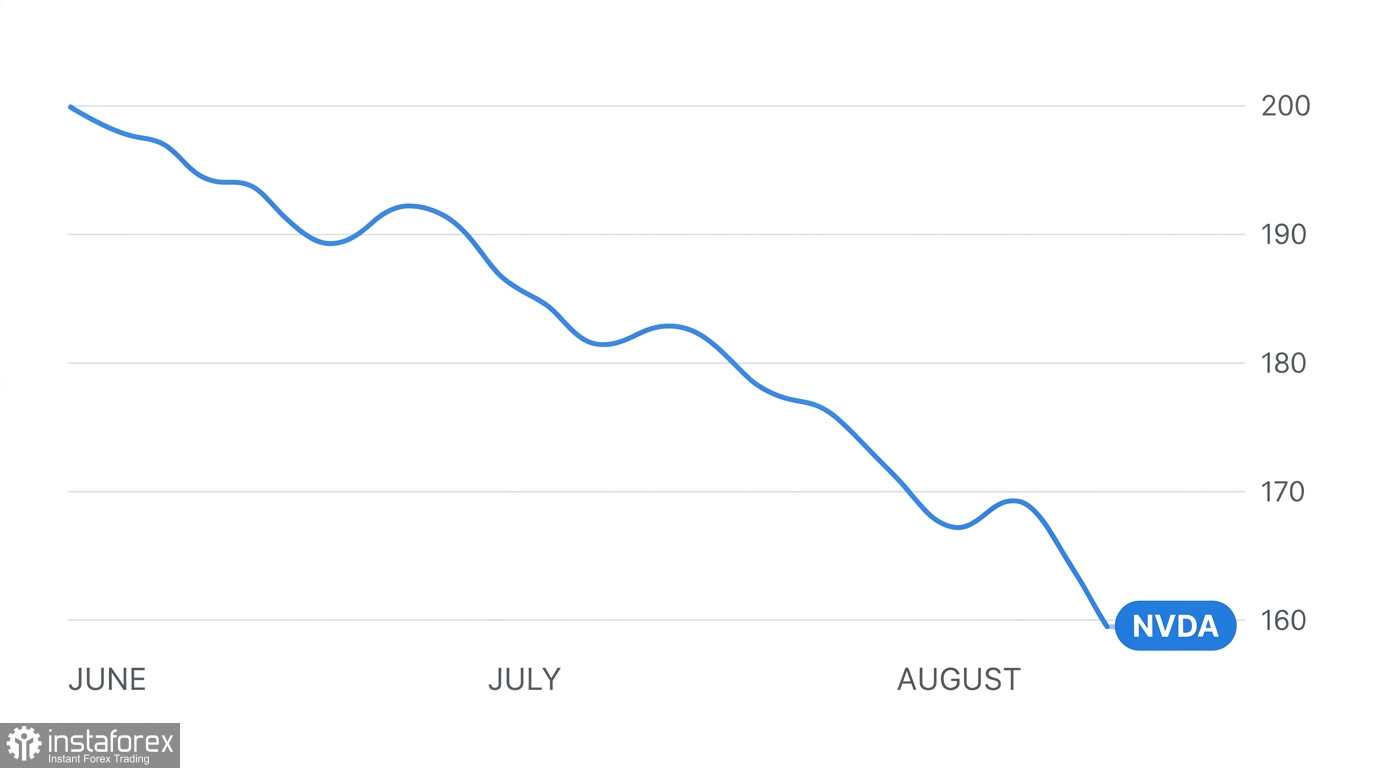
Nvidia shares plunged -8.61% in after-hours trading on November 11, 2026, falling to $158.78. The stock had closed the regular session up +2.87% at $173.73 following a two-day, 10% slide toward spring lows. The evening sell-off was triggered by reports from The Wall Street Journal that the board of directors is preparing to oust CEO Jensen Huang. Since its October peak of $243.37, the stock has dropped by a third, reducing the corporation's market value to $4.2 trillion.
The emergency board meeting was prompted by a New York Times report revealing a second extramarital affair involving the chief executive. Journalists uncovered that Huang had been in an intimate relationship with Kimberly Powell, Nvidia's Vice President of Healthcare. Powell has worked at the corporation since 2008 and reports directly to the CEO. In March 2026, eyewitnesses photographed the pair at a hotel during a corporate conference, after which the company's security team required the witnesses to sign non-disclosure agreements.
This latest revelation compounded an ongoing scandal surrounding Huang's relationship with former Megaspeed senior executive Alice Huang, whom U.S. intelligence agencies suspect of passing classified information to Chinese authorities. According to The Information, these ties helped facilitate the shipment of $7.5 billion worth of Nvidia computing chips to China in circumvention of U.S. export bans. On Sunday, the head of the corporation publicly apologized to his family and employees for violating business ethics.
Nvidia's independent directors have retained the law firm Wachtell Lipton and former federal prosecutor Joon Kim to conduct an internal investigation. Amid the governance crisis, investment bank Baird downgraded the stock to Neutral and slashed its price target—the share price analysts expect in a year—from $500 to $200. Morgan Stanley and Bank of America removed the chipmaker's stock from their priority investment lists, while analysts at Citi and Wells Fargo cut their price forecasts to $285 and $300, respectively.
Five key risk factors are weighing on Nvidia's share price and business stability:
•Threat of Jensen Huang's abrupt departure The company's founder has led the business for 33 years and personally built relationships with its largest server hardware customers. The exit of its longtime leader would create a management vacuum. According to Wedbush analysts, without Huang, the corporation's market value could shrink by another 30%. Moreover, the CEO holds only a 3.6% stake without controlling voting rights, leaving him unable to block a board decision.
•U.S. Congressional investigations and threat of sanctions American lawmakers have demanded that Nvidia's leadership submit a report on the $7.5 billion processor shipments to China and are preparing a subpoena to summon Huang to a House of Representatives hearing on November 18. Confirmation of export control violations exposes the company to heavy fines and bans on foreign contracts.
•Shareholder class-action lawsuits and loss of institutional trust Investors have already filed a class-action lawsuit against the corporation and its leadership for concealing a conflict of interest. An office romance with a direct subordinate violates the internal corporate governance code and is forcing pension funds to reduce their Nvidia holdings.
•Capital rotation into direct competitors While Nvidia shares declined, stock in chipmaker AMD rose 13%, and the semiconductor industry index gained 7% following a strong earnings report from cloud provider CoreWeave. Major buyers of server capacity are distributing orders across different suppliers to reduce dependence on the scandal-embroiled company.
•Tight monetary policy from the U.S. Federal Reserve Fresh consumer inflation data has reinforced expectations of further benchmark interest rate hikes by the U.S. central bank. Expensive credit reduces the appeal of tech stocks and restricts the inflow of available capital into the stock market.
Our outlook for Nvidia's stock performance remains cautious and accounts for governance risks not priced into the optimistic estimates of investment banks. In the coming trading sessions, shares will remain under selling pressure. Key catalysts will be the board's decision on Jensen Huang's fate and the release of quarterly financial results on November 17, 2026.
Even with strong third-quarter financial results, the corporate crisis will overshadow operational achievements. If the board announces the founder's departure, the stock will break below the $158 support level—a price mark where buyers previously halted declines—and head toward spring lows in the $140–$150 range per share. If Huang remains in his post under external oversight, the stock will get a temporary reprieve, though it will be unable to hold above the $185 mark until Congressional inquiries conclude.
Through the end of 2026, Nvidia shares will enter a phase of sharp price swings within a $145–$180 trading range. The November 18 House briefing and ongoing legal investigation will regularly trigger waves of sell-offs. Investors are advised to refrain from buying the current dip and wait for the board's official decision and the response from U.S. regulators.


