
Vea también


 15.07.2026 09:54 AM
Yesterday, Kevin Warsh presented his first semi-annual monetary policy report as Federal Reserve Chair before the House Financial Services Committee, and the central theme of his speech was the unprecedented investment boom surrounding artificial intelligence. According to him, the most striking feature of the current economy is business investment, which is growing rapidly and appears to be accelerating, reflecting the construction of data centers and the colossal demand for AI-related equipment and software. Equipment investment rose by approximately 8 percent year-over-year through the first quarter, while within this category, spending on high technology showed impressive growth of nearly 25 percent over four quarters.
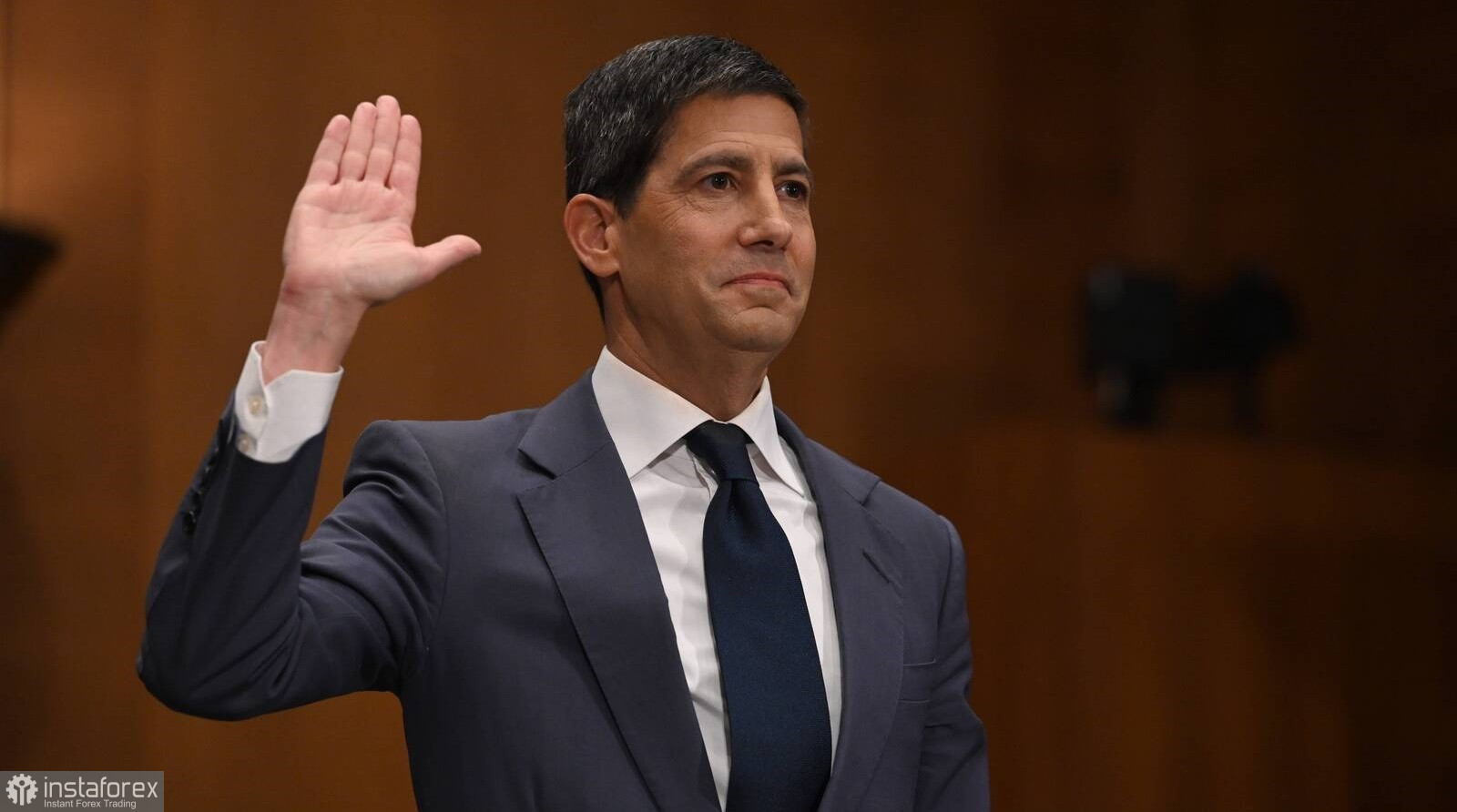
Warsh articulated a thought that will likely remain the most quoted phrase from this speech. He does not know to what extent the economy will benefit from the development of AI; however, it seems inevitable that what is now called "AI investments" will soon simply be referred to as "investments." This means that the central bank sees AI capex not as a temporary bubble or a separate niche but as a factor that will soon be organically integrated into the structure of the entire American economy. At the same time, he emphasized that new economic opportunities create new challenges for regulators, and the Fed is monitoring the consequences of this boom for inflation and the labor market.
The overall picture of the economy presented in the report was mixed across sectors. Economic activity is expanding at a steady pace, demonstrating resilience amidst recent shocks. Household consumption growth is moderate, while industrial production has been steadily rising all year. The housing sector, on the other hand, is out of sync with the overall picture and continues to lag, as reflected in home sales data and high mortgage rates. From the supply side, Warsh noted strong growth in labor productivity, preceding the effects of AI implementation. The labor market appears stable overall: job creation is keeping pace with labor force growth, unemployment is low and has changed little over the year, layoffs are relatively few, and nominal wages are rising steadily.
Regarding monetary policy, Warsh confirmed the decision made a month ago to maintain the target rate range at 3.50-3.75 percent, which was adopted at his first meeting as chair. He stated that committee members will not tolerate persistently high inflation and share a firm resolve to restore price stability, emphasizing that while monthly price fluctuations are inevitable, especially in an unstable world, core inflation over longer horizons is predominantly determined by monetary policy. He named the proper calibration of policy as "the star by which we steer," expressing confidence that with the right policy, the inflation surge of the past five years will remain a thing of the past.
A significant part of Warsh's speech was devoted to institutional reform, which he has been promoting since taking office. He confirmed the establishment of five working groups focused on key policy areas and for the first time detailed the tasks of each. The first will examine the form and effectiveness of Fed communications, the second will review balance sheet policy, including the excess reserve regime and asset structure, the third will focus on new data sources and methodologies, the fourth dedicated to productivity and employment will study the scale and speed of the impact of new general-purpose technologies on productivity and the labor market, and the fifth will revisit the models and frameworks for targeting inflation.
In closing his speech, Warsh stated that the Fed is beginning a new chapter at a significant moment for the country and intends to remain adaptive to its forward-looking mandate.
Regarding the current technical picture for EUR/USD, buyers need to focus on reclaiming the 1.1442 level. Only then can they aim for a test of 1.1459. From there, it is possible to climb to 1.1479, but doing so without support from large players will be quite challenging. In the event of a decline, I expect significant action from major buyers around 1.1425. If there are no buyers there, it would be wise to wait for a new low of 1.1400 or to open long positions from 1.1380.
As for the current technical picture for GBP/USD, pound buyers need to reclaim the nearest resistance at 1.3415. Only this will allow for targeting 1.3440, above which it will be quite difficult to break through. The further target will be around 1.3481. If the pair declines, bears will attempt to take control over 1.3378. If successful, a breakout from this range will deal a serious blow to the bulls' positions and push GBP/USD down to a low of 1.3342, with the potential to reach 1.3298.


