
See also


 06.11.2026 10:57 AM
Brent is back near $100/bbl after a volatile week, as traders reassess the odds of military escalation versus diplomacy. Since Monday, the commodity has traded in a roughly $19 range. Despite today's bounce, the front-month contract is still down about 15% on the week, marking the largest weekly drop since April 2020. For comparison, Brent closed at $104.77 on Monday, $94.62 on Wednesday, about 93.6 Thursday morning, and had climbed to 118 at the end of October.

The key factor that triggered the sell-off is that the market priced out a wartime premium after the Democrats won the midterms. The president is signaling restraint, and Democratic control of both chambers of Congress could limit his ability to expand military action. Recall that on November 4, he said he was "ready to fight," but political constraints may remove the justification for a strike.
Hopes of a near-term end to the conflict are rising, but deep disagreements remain. Iran demands an end to the US maritime blockade, sanctions relief, and the unfreezing of assets before fully reopening the Strait of Hormuz. US outlets report that Tehran is reviewing mediators' proposals on its nuclear program, and Qatar's shuttle diplomacy is intensifying. The frozen assets issue is not new — on October 21, reports surfaced about an interest-bearing arrangement for $6 billion in Qatari banks — but today, the political weakness of Washington is a new element.
Meanwhile, the physical market is softening. Gulf crude exports continue despite frequent attacks on vessels in Hormuz, and Saudi Arabia has cut prices for Asian buyers even though Asian margins are at six-year lows. Producers are now competing for market share; Asian refiners and importers benefit, while exporters lose out on price, not volume.
The price path matters for central banks. If oil climbs back toward the highs, the Bank of England will be closer to a second hike, in Andrew Bailey's words, and the Fed, already weighing a December move, would have another reason to tighten. That is why Brent's $19-range swings ripple through FX: expensive oil supports the dollar and pressures the pound and euro.
I believe the market is paying not for actual supply shortfalls, which are not currently the problem, but for the White House's decision. With Trump weighing a strike versus a deal and Tehran making unacceptable demands, any report from Axios or similar outlets can swing prices by 3–4%. I expect Brent to trade around $100 in the near term, with risk of sudden moves both ways. Only a real agreement to secure Hormuz would produce a sustained downtrend.
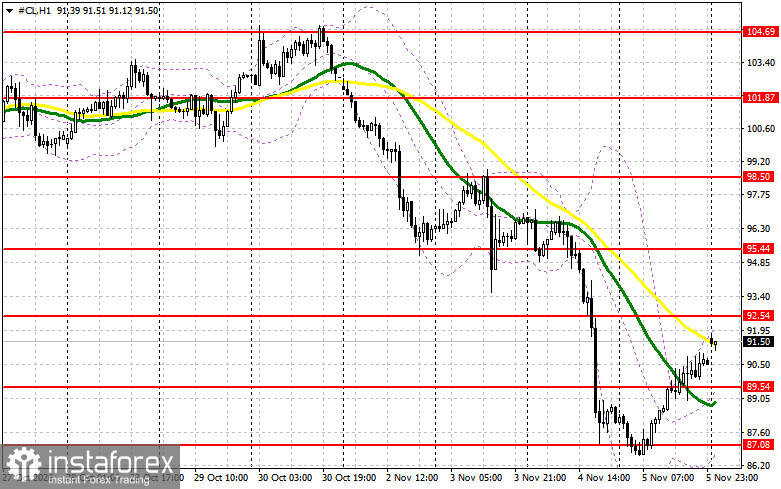
Technically, the immediate task for buyers is to reclaim resistance at $92. That would open a target near $95, above which progress becomes more difficult. The next target is around $98. On the downside, bears aim to take control at $89. A break below that level would be a serious blow to bulls and could drive oil to $87, with a further target near $84.


