
Vea también


 04.11.2026 09:12 AM
Yesterday's US data were strong, but they did not help the dollar. The currency remained under pressure after the midterms, and the market appears to be focused primarily on politics and Iran-related risks rather than on the numbers.

Start with the labor market. According to the Bureau of Labor Statistics, job openings in September were little changed at 7.5 million, with the openings rate at 4.5%. Hires remained at 5.4 million, the hires rate 3.4%. Total separations were 5.3 million, the separations rate 3.3%, unchanged. Note that August data were revised up: openings were revised by +111,000 to 7.2 million and hires by +79,000 to 5.3 million.
The structure of the report is most interesting. Voluntary quits rose to 3.4 million, an increase of 375,000 year on year. That is a signal of worker confidence: people quit jobs when they expect to find another. Employer-initiated separations were essentially unchanged at 1.6 million, the rate 1.0%. After August's revision, they were 1.8 million, so there is no sign of broad mass layoffs. By industry, the hire and separation gains were concentrated in accommodation and food services: hires rose by 158,000 and voluntary quits by 197,000.
The second part of the release concerns manufacturing. Factory orders rose 1.8% in September versus a 1.2% forecast and a prior 0.3%. That is a notable beat, showing that demand for durable and intermediate goods remains firm. So the labor market is not collapsing, separations are under control, and manufacturing is surprised to the upside. In normal circumstances these data would support the dollar by lowering the odds of Fed easing. Recall that the policy rate is now 3.75–4.00%, and markets had priced in a high probability of a hike in December. Nevertheless, the market reaction was muted.
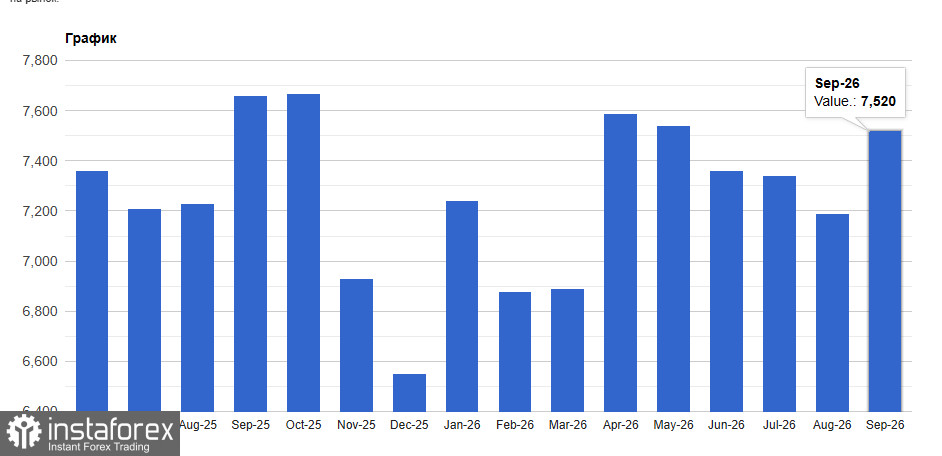
I see two reasons. First, Democrats won both chambers of Congress in the midterms, reducing the dollar's political premium. Second, the external backdrop remains tense. Trump retains freedom of action in the Middle East, so investors are not rushing to buy the dollar on strong macro prints alone. The next real test arrives Friday with the October employment report, where roughly 65,000 payroll gains and a 4.2% unemployment rate are expected.
All this indicates that politics and geopolitics currently outweigh data. In my view, without a strong Friday jobs print and without clarity on Iran, dollar purchases will be cautious, and any deterioration in the conflict would quickly restore demand for the dollar as a safe-haven asset.
Technical picture for EUR/USD
Buyers should think about taking 1.1255. Only then would a test of 1.1300 be possible. From there a move to 1.1335 is feasible, but achieving that without support from major players will be difficult. On a decline, I expect meaningful intervention from large buyers only around 1.1225. If nobody appears there, it would be prudent to wait for a fresh low at 1.1200 or to open longs from 1.1170.
Technical picture for GBP/USD
Pound buyers need to take the nearest resistance at 1.3475. Only then would a move to 1.3495 be possible, above which further progress will be difficult. The furthest target is around 1.3515. On a drop, bears will try to seize control at 1.3450. If they succeed, a range breakout would inflict serious damage on bulls and push GBP/USD toward 1.3425 with the prospect of extension to 1.3395.


